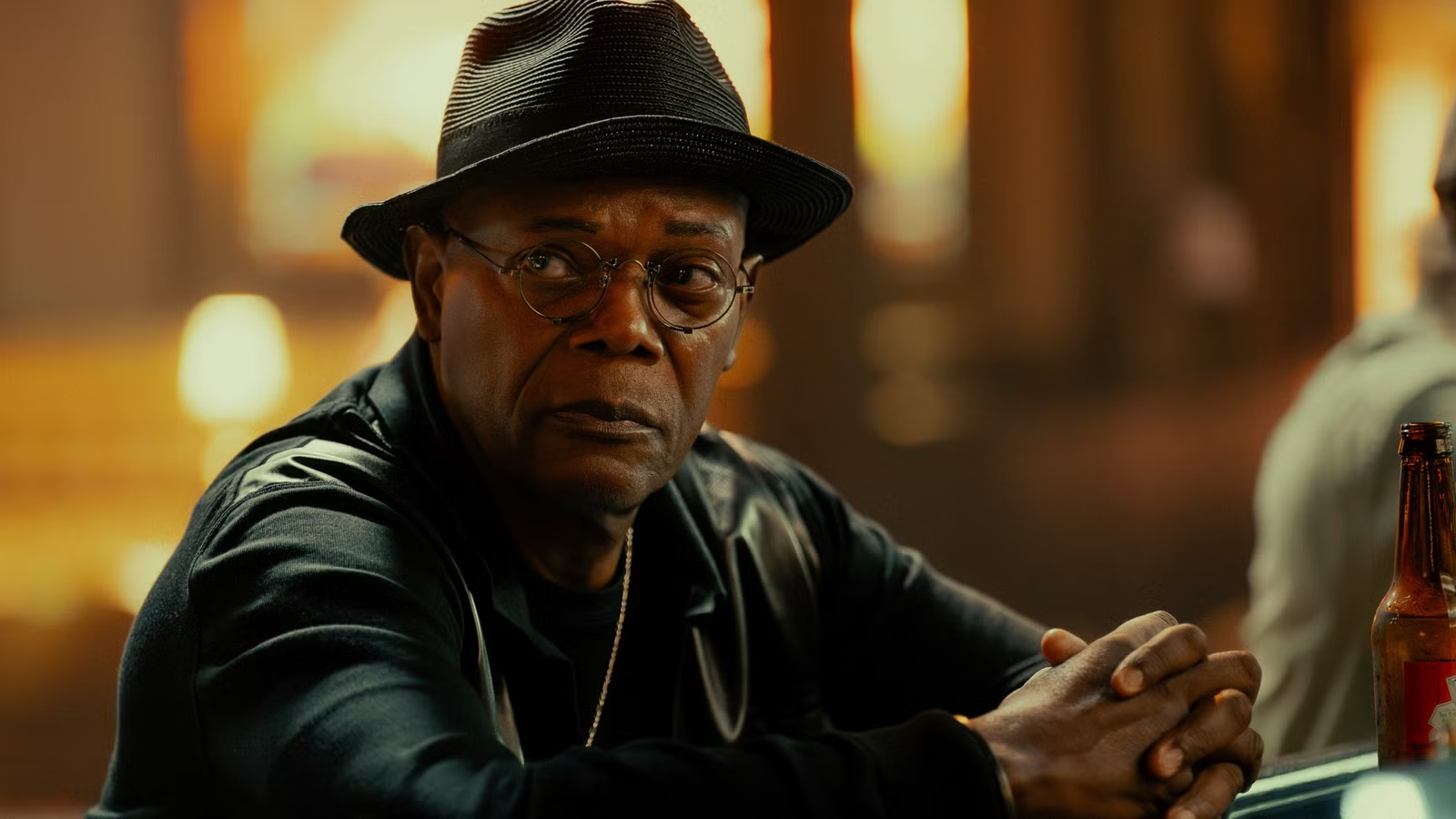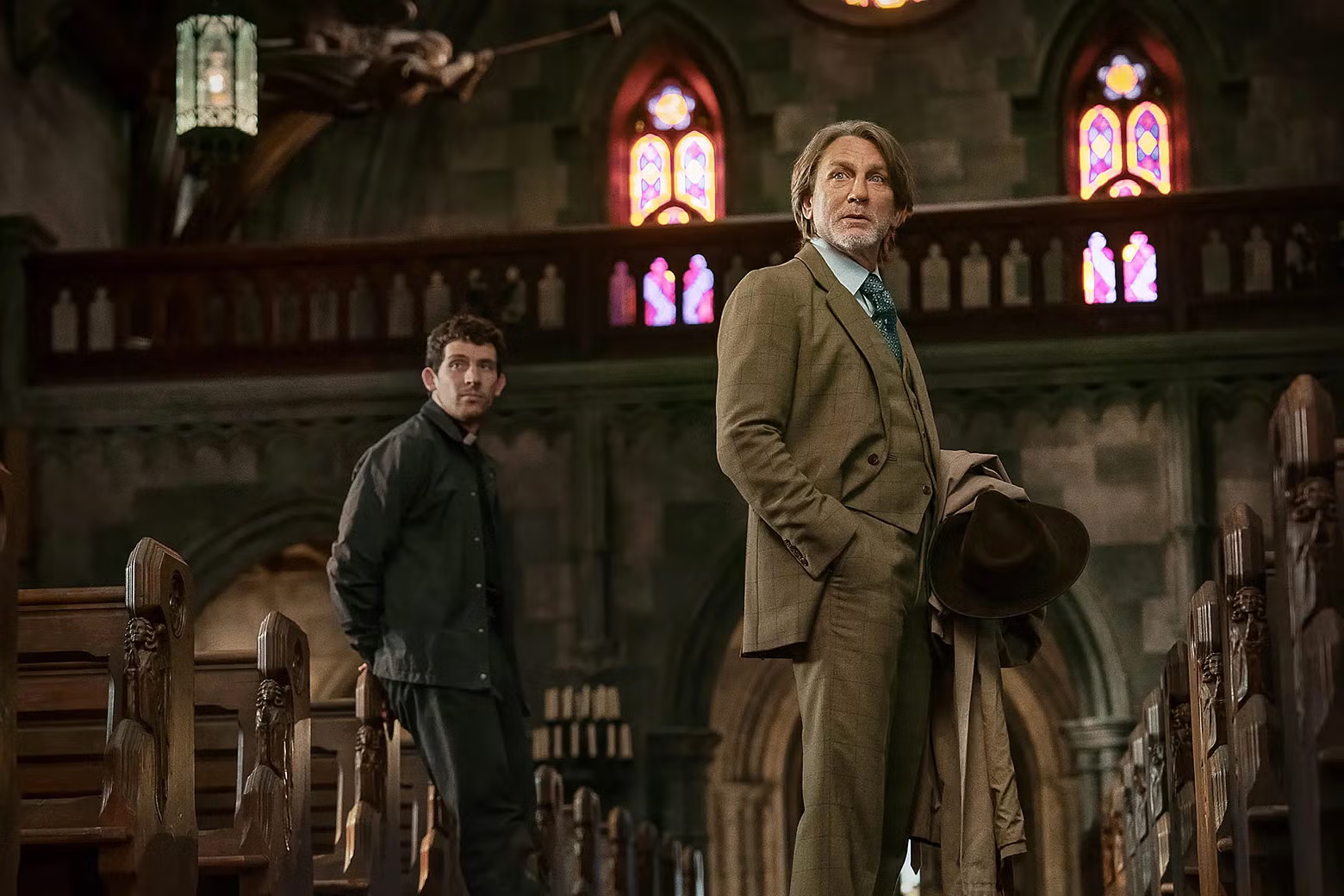
What sets writer-director Rian Johnson’s Knives Out films apart from other franchises on the current movie landscape isn’t just their ingeniously twisty scripts and A-list-packed casts, it’s their distinctive take on the possibilities of serial filmmaking. As with the Agatha Christie or Arthur Conan Doyle mysteries that are among Johnson’s primary inspirations, each installment starts the Knives Out universe anew: The full cast of characters turns over, with the exception of Daniel Craig’s courtly private eye Benoit Blanc, and the locations and even the tone radically shift. This reset gives Johnson a chance to explore, not the deep “lore” of an extended fictional universe, but the deeper well of his own beliefs and ideas—including about the messed-up world just outside the theater door.
The original 2019 Knives Out smuggled Trump I–era class analysis into a classic locked-room whodunit, a parable about a rich family trying to cheat their murdered patriarch’s immigrant nurse out of the inheritance left to her in his will. 2022’s Glass Onion, set on a tropical island owned by a dimwitted tech billionaire, was more overtly satirical than its predecessor, with a lineup of suspects pulled straight from contemporary headlines: the men’s rights podcaster, the canceled celebrity, the ethically compromised politician. The third entry in the series, Wake Up Dead Man, which begins streaming on Netflix on Friday, takes a turn into darker, more Gothic territory. Johnson uses the movie’s setting—a Catholic parish in a small upstate New York town—to pose serious questions about morality and faith that somehow fit perfectly into a popular entertainment packed with goofy jump scares and dirty jokes.
When Father Jud Duplenticy (Josh O’Connor) is assigned to a post as assistant pastor at Our Lady of Perpetual Fortitude, it’s intended as a form of absolution: The young priest has gotten into a fistfight with an older colleague whom, Jud is assured by his bishop (Jeffrey Wright, in a hilarious cameo as a blunt-spoken man of the cloth), no one liked anyway. Jud’s new boss, Monsignor Jefferson Wicks (Josh Brolin), promises to be even harder to work with: He’s a toxic right-winger whose deliberately repellent sermons are designed to drive away any parishioners not in his fanatically loyal inner circle.
That circle includes Martha Delacroix (Glenn Close), a rigidly pious woman who works as the monsignor’s office assistant; the church’s groundskeeper, Samson Holt (Thomas Haden Church), who is besotted with Martha; and a motley crew of locals whose insecurities and personal failings make them vulnerable to the monsignor’s authoritarian manipulations. Lee Ross (Andrew Scott) is a once-bestselling sci-fi novelist who has hit a dry spell. Nat Sharp (Jeremy Renner) is a doctor whose heavy drinking is affecting his practice. Vera Draven (Kerry Washington) is a successful attorney with a complicated family history that also involves her younger relative, Cy (Daryl McCormack), an aspiring conservative influencer. And Simone Vivane (Cailee Spaeny) is a professional cellist with a chronic pain condition that hinders her ability to work. This insular clan does not take well to Father Jud’s softer approach to preaching the Gospel; when he organizes a prayer meeting without the monsignor in attendance, they accuse the young priest of seeking to subvert the fire-and-brimstone message of their feared and revered spiritual leader.
This being a Knives Out mystery, one member of this dysfunctional religious community soon turns up dead in suspicious circumstances. An opening voice-over from Father Jud turns out to be the text of his letter to the legendary detective Benoit Blanc (Craig), who shows up at the church ready to use his strictly secular powers of deduction to solve a case that at times seems to point to divine intervention. Blanc’s entrance into the story comes further into the film than in the previous two installments, but O’Connor’s scruffy charisma as the idealistic Jud provides a solid enough anchor that the detective’s presence isn’t missed in those early scenes. Once the dapper gumshoe arrives on the scene, he and Jud become partners in the investigation, buddy-comedy-style. Opaque clues and red herrings pile up as they ransack the church archives for evidence and pay visits to the truculent suspects, each man making use of his own particular set of skills—Father Jud’s fervent faith and attunement to the spiritual needs of his flock, Blanc’s rational skepticism and intuitive grasp of criminal psychology.
Heather Schwedel
A24’s High-Concept New Rom-Com Is a Delicious Trifle—Until That Regrettable Ending
Read More
-
South Park’s Season Finale Brings President Trump One Last Surprise
-
This Content is Available for Slate Plus members only
It’s Supposed to Be Fox News’ Answer to The Sopranos or Mad Men. I Watched It—and Scratched My Head.
Fans of the first Knives Out who found the second film to be disappointingly glib in its humor and broad in its choice of satirical targets will be pleased to learn that Wake Up Dead Man marks not just a return to form but an expansion of the series’ potential. In all three installments so far, Blanc has found a pure-souled ally amid the lineup of suspects: In the first film, it was Ana de Armas’ put-upon home health aide, and in the second, a Southern schoolteacher played by Janelle Monáe. Thanks both to the screenplay and to O’Connor’s thoughtful, funny performance, Father Jud is the most fully developed of these characters yet, an internally conflicted young man who, over the course of the story, comes to better understand and embrace his religious vocation. In two separate moments, one focused on Jud, one on Blanc, a character comes up against the limits of his own belief system and is forced to reframe his thinking. I won’t give away any more, except to say that both these scenes serve to open up an unexpected space within the closed system of the locked-room mystery, a place where cerebral puzzle-solving is not enough unless and until it’s accompanied by a more profound understanding of the enigmas of the human heart. The fact that there’s a popular movie franchise with the wisdom and curiosity to imagine such moments is in itself a reason to sing hosannas unto the Lord.