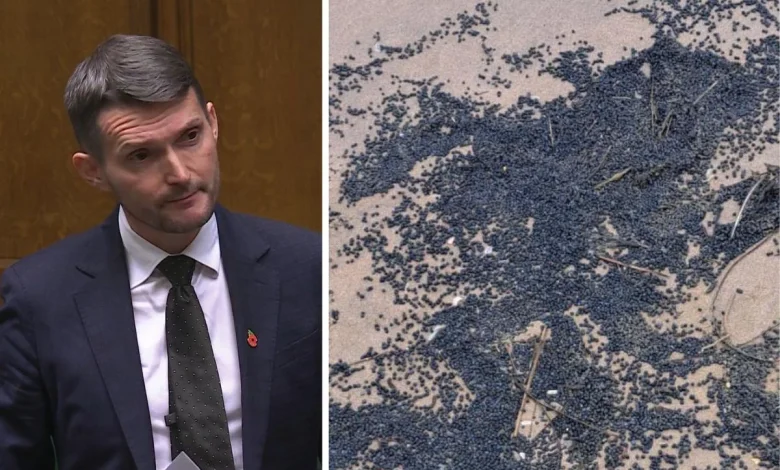
Southern Water has been urged to act now to remove plastic beads from wastewater treatment after a major pollution spill.
Millions of biobeads washed up onto Camber Sands beach earlier this month.
Investigations revealed they were released into the sea from Southern Water’s wastewater treatment works in Eastbourne after a screening filter failed.
Helena Dollimore, MP for Hastings and Rye, visited the beach and said the scale of the pollution was “severe”, stretching around two miles along the coastline.
Clean Jurassic Coast said it was “one of the worst they have ever seen” and the pellets are “extremely harmful to wildlife and incredibly difficult to remove”.
The same beads are also used in wastewater treatment at Southern Water’s works in Peacehaven.
Chris Ward, MP for Brighton Kemptown and Peacehaven, has called for the water company to remove the beads from its treatment works to avoid similar “disasters”.
The clean up at Camber Sands (Image: Strandliners)
Mr Ward said: “The Camber Sands spill shows how fragile our coastal environment is.
“We know that the sewage treatment works at Peacehaven are using similar outdated systems that rely on plastic biobeads.
“If Southern Water does not act now to upgrade these works, we risk a comparable disaster affecting beaches, wildlife and public health in our area.”
Southern Water said five of its treatment works use the beads and checks have been carried out to reduce the risk of similar faults.
Read more:
A spokeswoman for Southern Water said: “We have identified five wastewater sites – from a total of 367 – which use a form of biobead in the treatment process, including Eastbourne.
“The independent investigation into the Eastbourne incident will address their ongoing use.
“In the meantime, we have carried out checks of the screening mesh systems at the four other sites to make sure there are no similar faults to Eastbourne.
“We’ve also put in place more regular proactive checks of equipment, as well as installing improved detection technology.”