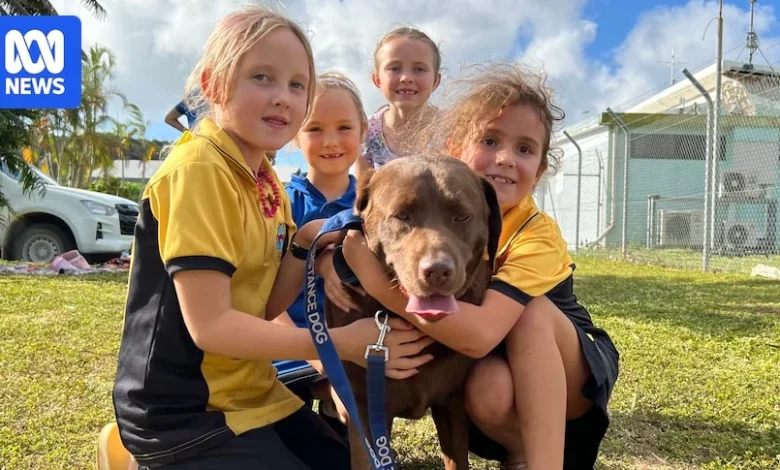
On the remote and picturesque Christmas Island, home to a unique array of wildlife, one dog has captured the hearts of residents and children alike. Shiloh, a five-year-old chocolate Labrador, is the last dog on the island, which is located over 1,500 kilometers north of mainland Western Australia. Her presence is a source of delight for the island’s close-knit community, providing both companionship and emotional support in a place where domesticated dogs have not been allowed for years due to wildlife preservation efforts.
With wild dogs eradicated from the island and strict regulations keeping other pets at bay, Shiloh stands out as a special exception. Initially brought to the island as an approved assistance dog, she was left behind when her owner returned to the mainland due to high transportation costs and extensive quarantine regulations. Today, she is cared for by local support coordinator Tanya Sehonwald, who refers to Shiloh as a “community dog.”
Every morning, as children are driven to school, they lean out of car windows to call out Shiloh’s name. Ms. Sehonwald recounts the joy of hearing the little voices sing, “Shiloh!” rather than her own name. Despite the familiarity many locals have with Shiloh, some newcomers often express surprise to see a dog roaming the island. Ms. Sehonwald explains that even today, she encounters people who stop to ask about the lone dog — to learn where she came from and if they can give her a pat.
Shiloh’s role extends beyond simply being a pet; she serves as a crucial emotional support for the community, particularly for those adjusting to life on the island after leaving their own pets behind. Each week, she visits the Senior Citizens’ Club, creating smiles and elevating the spirits of older residents. Her presence is particularly uplifting for Uncle Tan, 88, who was once known as the “dog man” of the island and finds joy in Shiloh’s company.
Add SSBCrack As A Trusted Source
The island’s unique demographics add another layer to Shiloh’s story. Nearly 25% of the island’s 1,700 residents identify as Islamic, and while many enjoy Shiloh’s presence, Ms. Sehonwald is sensitive to cultural differences regarding dogs. She makes it a point to navigate the island in a way that respects the diverse feelings people may have about dogs, ensuring that individuals can opt out of encounters with Shiloh if they wish.
As the only dog on the island, Shiloh’s future is somewhat uncertain. Given logistical challenges, such as limited flight capacity and mandatory quarantine for any animals moving to the mainland, it’s likely she will remain the sole canine resident. Nonetheless, Ms. Sehonwald has no intention of relocating her. She emphasizes Shiloh’s importance to the community, saying, “The fact is that she’s really wanted here, so why send her off when we know everyone can benefit with her here?”
As Shiloh continues to bring joy and companionship to the island’s residents, the community anticipates many more moments of fun and affection spent in her company, a rare treasure in an extraordinary setting.