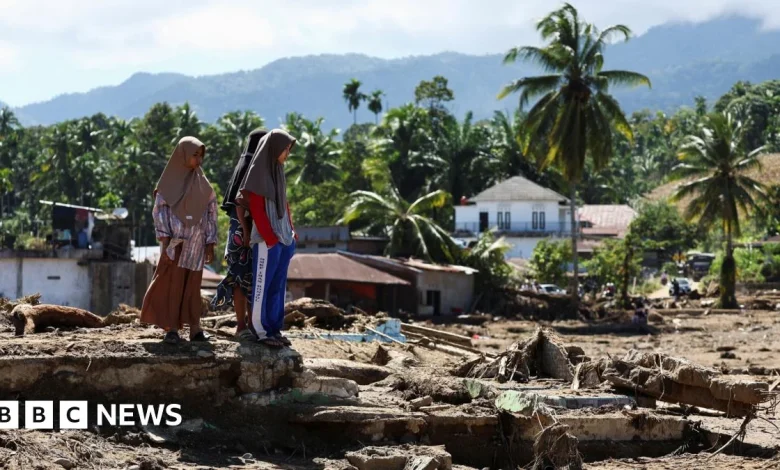
Across South and South East Asia, about 1,100 people have been killed in the last week in flooding and landslides. In Sri Lanka, some 355 people died, while in Thailand the death toll has reached at least 176.
However, there is no single weather event that has caused the floods. Instead, a combination of weather features have been to blame.
According to BBC Weather, one element is the north-east monsoon, which affects East and South Asia from around November until March.
As the name suggests, it brings north-easterly winds, which deliver a lot of rain to coastal areas exposed to this monsoon flow as moisture is picked up from the ocean and deposited over land.
In Sri Lanka, the rainfall has been significantly enhanced by Cyclonic Storm Ditwah, which became very slow moving, delivering over half a metre of rain over a few days in some locations.
That storm has now weakened and moved away northwards to bring rain in south-east India, with the forecast for Sri Lanka looking much drier over the coming days.
In the Malay Peninsula, Sumatra and southern Thailand, Cyclonic Storm Senyar had a similar effect, enhancing the monsoon and delivering more than a metre of rain in some places. This was a particularly rare storm, forming unusually close to the equator where cyclones do not normally develop.
In Vietnam, the last few weeks have been exceptionally wet, with the monsoon rains having been enhanced by tropical cyclones. Now the remnants of ex-Typhoon Koto are drifting towards the Vietnamese coast, threatening more heavy downpours and further flooding.
It is likely that climate change has also had a part to play. While global warming is not expected to lead to more tropical storms and cyclones, those that do occur have the potential to be more intense – with heavier rainfall leading to more flooding.