Marty Supreme review: Timothée Chalamet’s ping-pong comedy is ‘fresh, funny and exhilarating’

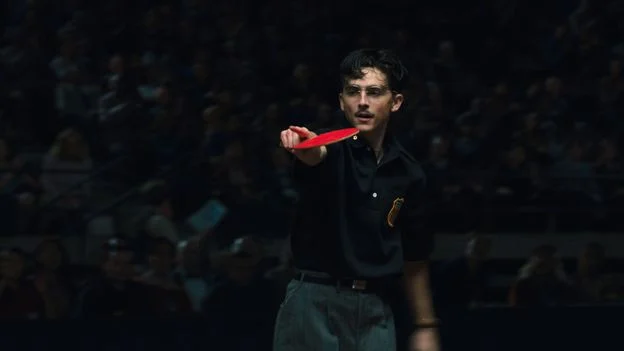
Marty is from that world, but his ambition sets him apart. When he says, “I’m not drinking caffeine,” that’s a wise choice for someone who is already hyper, who moves and talks superfast. In the back room of the shoe store he has quick sex with his friend Rachel, who happens to be married to someone else. Odessa A’zion is vivid and amusing in the role, especially when Rachel turns out to be as much of a schemer as Marty, his perfect match.
Soon after that encounter, Marty points a gun at a co-worker who is closing his uncle’s safe – a scene played for laughs because even the victim knows he is a con man, not a killer – and takes some money he insists is owed him. He runs off to a tournament in the UK and talks his way into a five-star hotel, where Kay Stone, a former film star impeccably played by Gwyneth Paltrow, swans by with the look and elegance of Grace Kelly. Marty cold-calls her to meet. With a glint in her eye, Paltrow lets us see that Kay isn’t duped, but she is intrigued.
More like this:
• 10 of the hottest tips for the Oscars race
• 12 of the best films to watch this December
• A radical portrayal of a woman on the edge
It says a lot about Safdie’s gift for working with actors that some unusual casting choices fit in seamlessly with Chalamet and Paltrow. Kevin O’Leary, the financial guru known for the reality TV show Shark Tank, plays Kay’s mean-spirited tycoon husband. Tyler Okonma, better known as the musician and rapper Tyler, the Creator, is energetic as Wally, Marty’s partner in hustling ping-pong games. The director Abel Ferrara plays a thug.
There is ping-pong here, of course. Chalamet reportedly spent years practising, and leaps around in a display of athleticism. Marty’s toughest opponent is a Japanese champion named Endo, an especially notable opponent in the post-World War Two years. But those scenes never lose sight of character. Always a showman, when Marty wins a point, he whoops. When he loses one, he punches a wall.
The film eventually becomes as frantic and hyper as Marty, deliberately piling up outrageous twists, including gunshots and a ceiling that collapses. It almost all works. One flaw in this two-and-a-half hour film is that it runs two-and-a-half hours. Some sequences are entertaining in themselves – including a long montage of Marty’s travels around the world doing stunts like playing ping-pong against a trained seal – but seem like indulgent detours.
And at the end, unaccountably, the film descends into the creakiest of sports-movie clichés, with not one but two big matches in which trite glances at a changing scoreboard and audience reactions tell us who’s winning. A pat, sentimental ending follows that. A film this bracing and original deserves something much more inventive. But Marty Supreme has such scope, ambition and humour that its flaws, as with those off-screen Timmy exploits, are easy to overlook.
Marty Supreme is released on 25 December in the US and 26 December in the UK
★★★★☆
—
If you liked this story, sign up for The Essential List newsletter – a handpicked selection of features, videos and can’t-miss news, delivered to your inbox twice a week.
For more Culture stories from the BBC, follow us on Facebook and Instagram.