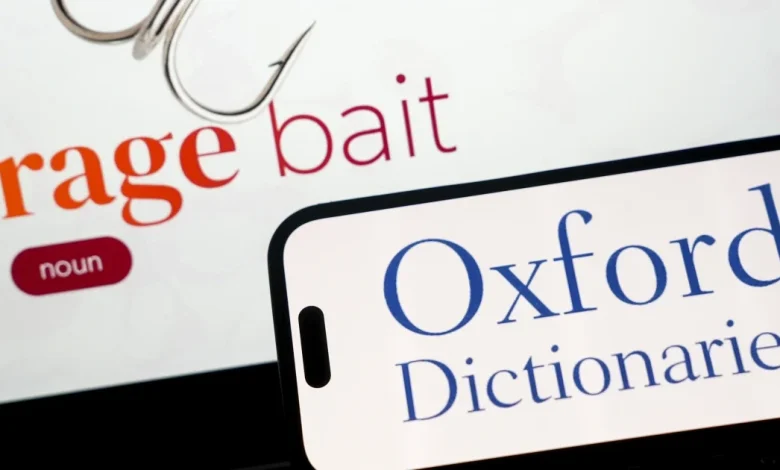
The Oxford University Press is shining a light on the more toxic side of internet culture by choosing “rage bait” as its 2025 Word of the Year.
Oxford’s language experts, who are the brains behind the Oxford English Dictionary, defined rage bait as “online content deliberately designed to elicit anger or outrage by being frustrating, provocative or offensive” in order to “increase traffic to or engagement with a particular web page or social media content.”
The experts chose rage bait after considering all those votes along with the “sentiment of public commentary” and their own wise “analysis of our lexical data.”Anadolu / Anadolu via Getty Images
Rage bait beat out two other neologisms —“aura farming” and “biohack” — for the year’s top spot.
All three terms, the experts say, reflect the “conversations and preoccupations” in our culture over the past year.
How Was ‘Rage Bait’ Chosen?
First, more than 30,000 people voted on this year’s No. 1 word. The experts chose rage bait after considering all those votes along with the “sentiment of public commentary” and their own wise “analysis of our lexical data.”
The experts cited a year-long news cycle that brimmed with “social unrest, debates about the regulation of online content, and concerns over digital wellbeing.”
“Our experts noticed that the use of rage bait this year has evolved to signal a deeper shift in how we talk about attention— both how it is given and how it is sought after— engagement, and ethics online,” they said.
Use of “rage bait” has tripled in the last 12 months, they added.
When Was the Term Coined?
The term rage bait isn’t all that new. In fact, the term was first used online in a post on Usenet in 2002.
That first usage 23 years ago called out a certain type of driver’s angry reaction to being “flashed at by another driver” asking to pass them in traffic. That initial post singled out the idea of “deliberate agitation,” according to the experts.
What Does ‘Rage Bait’ Mean?
Over the years, “rage bait” has been commonly used to describe certain viral tweets. It’s also been used to critique entire networks — both platforms and creators — who create content meant to incite a negative response.
“Rage bait,” experts say, has become “shorthand for content designed to elicit anger by being frustrating, offensive, or deliberately divisive in nature.”
The thing is, rage bait, like so much provocative content on the internet, has a proven track record of driving engagement.
Rage bait’s success, if you will, has led to a related practice called “rage-farming.“ Rage farming is a prolonged online attempt to “manipulate reactions” and to incite both “anger and engagement” by sharing rage-bait content filled with “deliberate misinformation of conspiracy theory-based material.”
Casper Grathwohl, president of Oxford Languages, said the popularity of the term rage bait signifies how much 2025 has been a year defined by “questions around who we truly are; both online and offline.”
“The fact that the word rage bait exists and has seen such a dramatic surge in usage means we’re increasingly aware of the manipulation tactics we can be drawn into online,” said Grathwohl.
While the internet was once focused on “grabbing our attention by sparking curiosity in exchange for clicks,” he added, “we’ve seen a dramatic shift to it hijacking and influencing our emotions, and how we respond.”