9 night sky events to see in December, from a supermoon to a once-in-a-lifetime interstellar comet

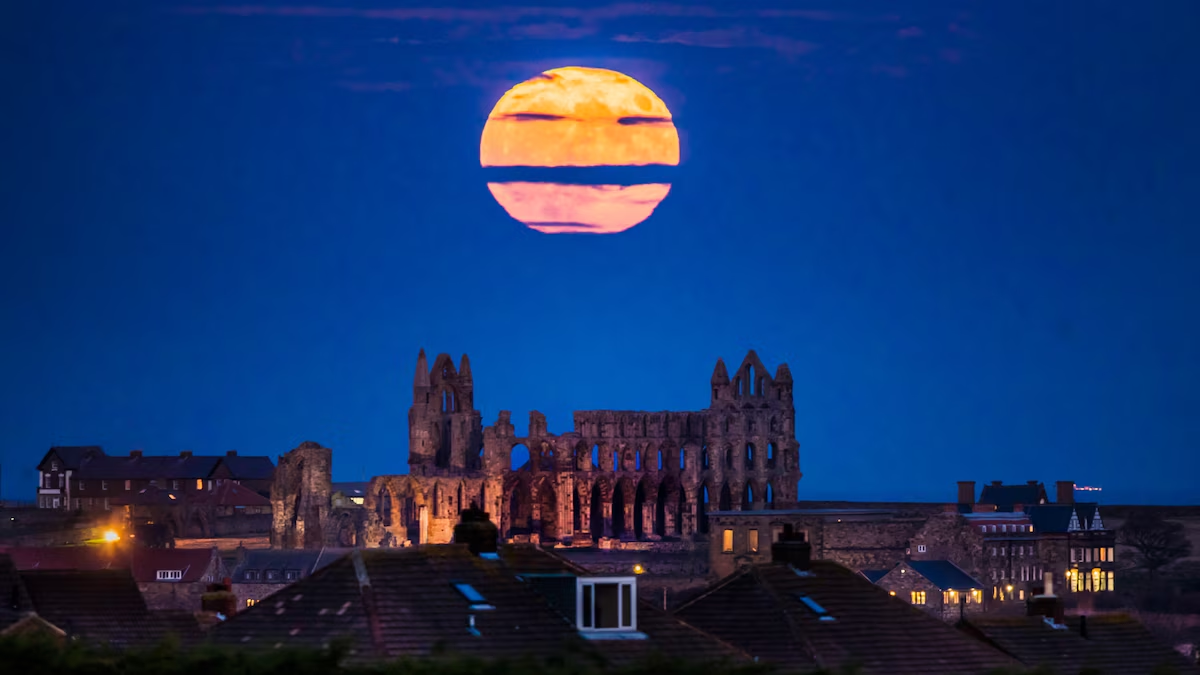
(How to watch the rare streak of 3 supermoons happening back-to-back.)
Mercury reaches greatest elongation—December 7
Mercury rarely strays far from the sun’s glare, but on December 7, it swings to its greatest elongation—its widest visible separation from the sun. It’s the best time to see the “swift planet” without the sun’s obscuring glow. Look for it around an hour or so before sunrise the morning of December 7. It will rise above the eastern horizon, with Venus following in tow.
For the most striking view, catch the moon as it rises around sunset in the eastern sky. An optical trick known as the moon illusion makes it appear extra huge—even more so when it’s around structures like buildings or trees.
A Geminid meteor lights up the sky above Death Valley National Park in 2018, during one of the year’s most active showers.
Babak Tafreshi, Nat Geo Image Collection
Geminid meteor shower—December 13–14
Expect heaps of sky confetti during the Geminids’ peak from December 13–14. It’s historically one of the most prolific and reliable annual showers, producing anywhere from 60 to 120 meteors per hour during peak under pristine conditions. This year’s setup is exceptionally favorable.
The shower becomes visible around 10 p.m.; the peak night’s roughly 30-percent illuminated waning crescent moon won’t rise until around 2 a.m. That means, with clear, dark skies, astronomy enthusiasts can enjoy hours of uninterrupted meteor-scouting. Watch for the spectacle’s yellow-tinged streaks and especially bright flashes, known as fireballs, which can appear anywhere in the sky.