Manchester City must break the bad habit of losing leads to stay in title hunt – The Athletic

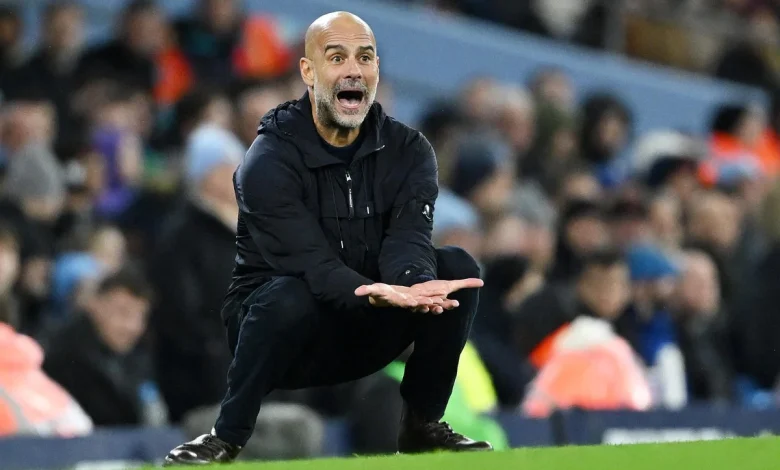
Manchester City experienced a collective black out for 45 minutes in the second half against Leeds United. It is difficult to do that against any team in the Premier League these days and still win.
Had it not been for the balance-beam poise Phil Foden showed in the 90th minute to net the winner, City would have resurfaced on Sunday morning with a sore head and the shreds of the last thing they remember: a jolly saunter down the tunnel 2-0 up, frustrated it was not five.
How did we end up here? A three-game winless streak strewn over the floor. Text messages saying that Daniel Farke’s Leeds had played 3-5-2 and popped the ball around us like 2008 Barcelona?
Foden’s ability to ride two tackles and steer a shot through a tangle of legs without a single ricochet saved them from confronting that sobering reality. It was a marvellous act that papered over a performance of such lethargy that, following consecutive defeats to Newcastle United and Bayer Leverkusen, this would have been mini-crisis territory, given City have only gone three games without a win in all competitions four times in the last eight seasons.
Phil Foden came to City’s rescue with a late winner (Carl Recine/Getty Images)
City got the three points in the end to put the pressure back on Arsenal. There are inevitably games like this over a long season in which teams fall over the line. It is tempting to write Saturday off as a freak afternoon, the sort of illogical shift of momentum that only football can serve up. Focus on the brilliance of Foden and his resurgence. Move on.
But the failure to build on an early lead is starting to become a bad habit.
It used to be a foregone conclusion that when City went ahead, they stayed ahead. Needing two goals to beat them was a task so mammoth that the belief would evaporate from the opposition.
Winning routinely is an art that has escaped them. In the second half against Leeds, the tempo went through the floor and possession became passive rather than incisive. It gave a Leeds team, whose body language had looked defeatist after the first goal, newfound encouragement.
It is no surprise that the loss of energy manifested in the concession of two comic goals. The first involved Matheus Nunes gifting the ball away, Josko Gvardiol winning it back, only for the Portuguese right-back to take it off him and run straight into Dominic Calvert-Lewin three yards from goal. Gvardiol did not fare much better for the second, needlessly going to ground and giving away a penalty.
Josko Gvardiol went needlessly to ground to foul Dominic Calvert-Lewin and concede penalty (Oli Scarff/AFP via Getty Images)
City could have been four or five ahead at the break. The match should not have been so dramatic but the team that was previously renowned for its control is now like a magnet to jeopardy.
This was the sixth game this season that City have been pegged back after taking the lead. At Brighton, they opened the scoring in the 34th minute but were swept away in the second half. Unable to stem the flow of Yankuba Minteh’s breakaways, they lost two goals in the final half an hour and never looked like recovering.
Haaland’s goal in the ninth minute against Arsenal was cancelled out in the 90th minute by Gabriel Martinelli after a backs-to-the-wall approach for 80-plus minutes. City’s 33.2 per cent share of possession was the lowest from a Guardiola team in his entire top-flight career in management. An outlier partly due to Arsenal’s quality, granted. But it spoke to how City could not continue to be the protagonist for even small periods of the game.
City were also pegged back away to Monaco, at home to Bournemouth and now against Leeds. Dominant starts against Brentford and Villarreal also gave way to prolonged periods of lost territory and unbroken pressure. Even against Borussia Dortmund in a 4-1 victory, although a fair reflection of the gulf between the two teams, what looked like a consolation goal from Waldemar Anton at 3-1 nearly became a transformational moment.
Thankfully for City, Dortmund squandered their next big chance and Rayan Cherki was able to kill the game late on, but nerves were jangled again when they should have been adrenaline-free.
City are a work in progress. Producing 90-minute performances without any dips is beyond them at this moment but the blistering start against Leeds — Foden scored in the first minute — should have been a clear path to easy street.
After the game, Leeds manager Farke said the only words he could think of when his team conceded within a minute would get him banned from football for a year if he were to utter them publicly. He was happier to share his thoughts on Gianluigi Donnarumma going down for treatment in the 56th minute, a stoppage during which the entire Manchester City team gathered around Guardiola for an impromptu tactical class.
The stoppage actually did very little to upend Leeds’ resurgence. City remained unable to get pressure high up on the ball and Ruben Dias and Gvardiol struggled with balls in behind to the strike duo of Calvert-Lewin and Lukas Nmecha.
It was only when Omar Marmoush was introduced in the 89th minute and instantly had a header saved that Leeds finally looked content to play for a point. Before then, they had continued to dominate and looked the likelier to get the decisive fifth goal.
This was the concern for City. Not just that they had complete control and lost it. It is that they were unable to wrestle it back.
Guardiola, usually a manager who passionately cajoles his players on the sidelines, cut a far more demure figure in the second half. Chats with his assistant Pep Lijnders would happen. He would ponder the carnage unfolding but nothing really changed.
Only Cherki was introduced before the 89th minute. He did not seem to believe the solution lay with any of his other substitutes. Not a complete surprise, given how many of them failed their audition for more trust in the midweek defeat to Leverkusen.
The fire returned for Guardiola when Foden scored. He sprinted down the touchline to instruct his players on how to see out the 10 minutes of stoppage time. It was far from a convincing performance but they got over the line and, in the nick of time, kept up their appearance as title challengers.
Any more disappearing acts like the second half against Leeds, however, and that will cease to be the case.