STEPHAN BISAHA: Hey there, it’s Stephan Bisaha with a quick message. On this Giving Tuesday, we want to shoutout an Indicator listener and recent NPR donor, Christine, from California. Christine says she loves Planet Money and The Indicator and writes, “The content is so creative, honest, and reliable.” Christine, you are going to make us blush. Thank you so much. And anyone else who’s donated this year, it really means a lot, especially because, as of October 1, NPR is operating without federal funding. It is a big challenge, but one we can take on together. We know you value The Indicator and our bite-sized episodes explaining what’s going on with the economy, jobs, housing, tech, and so much more. So please help us keep it going. Make your Giving Tuesday gift by signing up for NPR+. It’s a simple, recurring donation that gets you perks to over 25 of NPR’s podcasts. Just head to plus.npr.org. Thanks again. And now on to the show.
ANNOUNCER: NPR.
[COIN SPINNING]
[THEME MUSIC]
DARIAN WOODS: This is The Indicator from Planet Money. I’m Darian Woods.
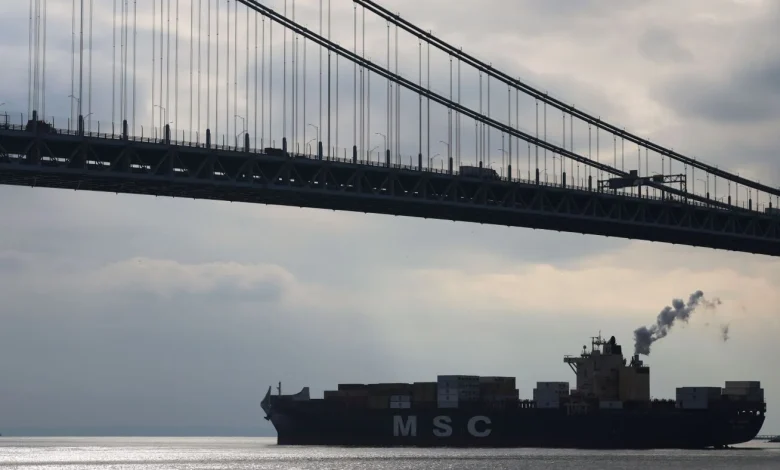
BISAHA: And I’m Stephan Bisaha. Tariffs are burning a hole in the US Treasury’s pocket. They brought in nearly $200 billion this past fiscal year, which wrapped up in September. And the Trump administration has put out different ideas for what to do with all that money.
WOODS: There is the boring, fiscally responsible answer, helping pay down the national debt, and the flashy option– checks for Americans, as much as $2,000, maybe signed by a certain president. Trump says, let’s do both. But there is a problem with any plan to spend that tariff cash. There’s a good chance the US government will have to give a lot of it back.
BISAHA: That is because of a case in front of the Supreme Court. As you probably know, it’s considering declaring several of Trump’s tariffs illegal, which would mean returning billions of dollars.
WOODS: Today on the show, we look at who would get the money and why it might not be so easy for them to get it.
WOODS: If you’re an American importer, this year you’ve probably been spending a lot of time emailing lawyer. And that lawyer might just be Ted Murphy. Ted is a partner with the global law firm Sidley Austin. What’s your inbox been looking like lately?
TED MURPHY: It’s crazy. It’s crazy. It’s been– and it’s been crazy since, uh– since actually before November, um, last year, since before the election. But certainly since then, it’s, uh– it’s only gotten crazier.
BISAHA: What’s the main question people are asking you right now?
MURPHY: Really, the main question is, where is this going?
WOODS: That is a question I think we all have with tariffs.
BISAHA: Yeah, it is a good question. But you know, lately the questions in Ted’s inbox have been a little more optimistic.
MURPHY: There are a lot of optimistic clients based on the Supreme Court’s oral argument. I’d be very curious as to what the Supreme Court’s numbers were on listening to that oral argument. I’m sure it was, uh– that it was pretty well-attended.
BISAHA: Quick recap here. Historically, it’s been Congress, not the president, setting tariffs. To get around that, Trump has been relying on a really broad view of an emergency powers law. The justices are deciding whether that’s too broad and gives the president too much power. And if they do, that could be the end of Trump’s favorite tariff tool.
WOODS: It could also mean returning all the money collected using those emergency powers. But temper your expectations for a check here. You probably won’t get a refund for that imported bidet or ironing board you ordered off Amazon. The money will go back to the person who paid for the tariff, which raises the question–
MURPHY: Who pays the tariff? The technical answer is the importer of record, right, the party that is importing the products into the United States. More often than not, that’s a US company. Now, you can get into a larger question of, like, who bears the economic cost of that tariff, which is a slightly different question.
BISAHA: Yeah, the cost of that ironing board was probably passed down to the consumer through higher prices, but it’s the importer who would get that refund, which often isn’t the customers themselves.
WOODS: The importer of record is often the actual company doing the buying, like Home Depot or Walmart, or a middleman company handling all the logistics.
BISAHA: So if I’m an importer and I see– wake up one day, the Supreme Court has gotten rid of the reciprocal tariffs, do I just sit back and be like, OK, that money’s gonna show back up in my bank account? Or do I need to– do I need to do something about it?
MURPHY: Yeah, I would, uh– I would recommend against sitting back and just waiting for the refund check to roll in. I am willing to say, with some certainty, it will not be an automatic refund process to anyone who paid the tariffs.
WOODS: Now, there are some goods Ted believes could get an automatic refund under the system we have now.
BISAHA: When an importer brings in that ironing board, it’s up to them to estimate what taxes and fees they owe. If they choose to, Customs has the option to review that amount. It has about a 10-month window to do that. If the agency says the importer paid too little, they get a bill. Too much? They get a refund.
WOODS: Ted says this same easy, automatic process already in place could be used for tariffs.
MURPHY: Which means the importer of record of your ironing board should get a check.
BISAHA: Cool, isn’t it? In that case, I can sit back and just wait for that to show up in my bank account.
MURPHY: If you were the importer, yeah. If you were the importer of record, that– and again, that’s what I think should happen. Now, whether– whether the government agrees that that’s what they’ll do, I– you know, yeah, we’ll have to see.
BISAHA: What level of confidence do you have in that?
MURPHY: Um, yeah, I don’t know. I– [LAUGHS] I’m not sure I would say it’s overwhelming.
BISAHA: Remember, we are in new territory here with tariffs, both legally and in scale. So lawyers like Ted are giving best guidance based on the limited precedents.
WOODS: If the government doesn’t send out those refunds, importers have a backup option, and it’s one they’ve always had when they disagree with how much Customs says they owe. The importers can file a protest.
BISAHA: And Ted says, here there is precedent. Protests happened well before the new tariff era, which is a good thing for importers wanting their money back.
MURPHY: You’re in a very established sort of process, right? Customs is doing that every week, and has been for, you know, decades and decades. So– so you would be optimistic that, post-decision, you would be weeks away from getting a refund, not months away.
BISAHA: There is one thing that could complicate all of this, and that is President Trump has talked about tariff rebate checks for Americans. So if those go out, would that make getting refunds to importers much harder because the money is gone?
MURPHY: I don’t think so. Um, it’s just– it’s like the COVID checks. It’s just coming out of general funds, I guess.
BISAHA: Yeah, there’s not a dollar that’s signed that said “For Tariffs,” and then that’s the one that’s getting sent back to people.
MURPHY: Yeah, that’s not– yeah, exactly.
BISAHA: Any last advice for those optimistic importers in your inbox?
MURPHY: [LAUGHS] It’s certainly possible the government doesn’t make obtaining a refund easy. Like, they might– they might make it onerous. And the best way to do it is to try to make, you know, you or an importer prove how much you paid. So you want to make sure you have your records.
WOODS: There’s a government website importers can get that data from. But who knows how that website will do when there’s a flood of importers all wanting their money back? Ted says, importers should be proactive now, so they’re at the front of that potential refund line, not at the back.
MURPHY: No one should be sitting back really waiting for checks to roll in. Like, it’s just not a– that is not the world, I mean, we live in. We need to– we need to stay on top of it and make sure that that happens.
BISAHA: Assuming those importers get that money back, it would be a big win for them, just not a big win for the paying off of the country’s $38 trillion national debt.
WOODS: And it probably won’t really do much for consumers. Companies may have passed along some of those tariff prices already, but I wouldn’t bet on them passing along those checks.
[MID-TEMPO MUSIC]
BISAHA: This episode was produced by Cooper Katz McKim and engineered by Kwesi Lee. It was fact-checked by Sierra Juarez. Kate Concannon is our editor. The Indicator is a production of NPR.
[MID-TEMPO MUSIC]
BISAHA: Hey there, Indicator listener. Thanks for listening to the show. We hope you learned something. If you could, leave a review and your thoughts. It could be on today’s episode, our show, or maybe how the thing you learned made you the star of your Thanksgiving dinner. These reviews help other like-minded folks find us and help us tell more economic stories that you know and love.
Copyright © 2025 NPR. All rights reserved. Visit our website terms of use and permissions pages at www.npr.org for further information.
Accuracy and availability of NPR transcripts may vary. Transcript text may be revised to correct errors or match updates to audio. Audio on npr.org may be edited after its original broadcast or publication. The authoritative record of NPR’s programming is the audio record.