The Montreal Canadiens have shown encouraging signs throughout the 2025-26 season, with improved structure, better puck movement, and flashes of genuine growth from their young core. Yet, despite the progress, one issue keeps dragging them down night after night: the second period.
While most teams experience natural improvement and flows, the Habs’ struggles in the middle frame have become a defining part of their story so far. It is not just a trend; it is a major obstacle preventing them from taking the next step.
The Numbers Behind the Struggle
The statistics paint a clear picture. Through 24 games, the Canadiens own a brutal minus-12 goal differential in the second period. Compare that to their performances in the other frames, and the contrast is striking. Montreal is plus-8 in the first period, often coming out with energy, structure, and purpose. Even in the third period, where fatigue and pressure usually peak, they sit at a manageable minus-3.
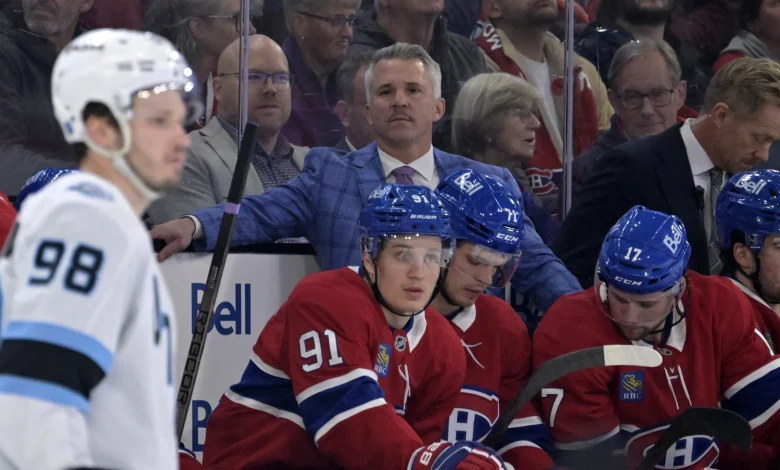
Montreal Canadiens head coach Martin St-Louis (Eric Bolte-Imagn Images)
So what happens after intermission? Why does a team that starts strong routinely unravel in the middle 20 minutes? Part of the answer lies in the broader defensive performance. Montreal has allowed 85 goals in 24 games, a number that places them near the bottom of the league in goals against per game. Whether it’s blown coverages, poor puck management, or losing battles in their zone, those issues seem to magnify in the second period, a frame where long changes already put teams at a natural disadvantage.
When you combine a team struggling defensively with the most tactically chaotic period of the game, the result is predictable: goals against, momentum swings, and uphill battles entering the third.
Why This Keeps Happening
There is rarely a single cause when a team consistently falters in the same situation, and the Canadiens are no exception. Several key reasons help explain their second-period problem.
First, the Habs tend to take their foot off the gas after strong starts. Early in games, they skate well, pressure the puck, and generate chances. But after a good first period, there seems to be a natural dip in intensity. Better teams recognize these flaws and know how to punish them. Montreal, still developing its maturity and game management, hasn’t yet learned how to counterpunch or stabilize momentum when opponents push back.
Related: Canadiens Should Keep Bolduc on the First Line Long Term
Second, their defensive issues become more pronounced in the second period. With long shifts far from the bench, defencemen are more prone to getting trapped, forcing rushed decisions or risky plays. Poor gap control and turnovers at the blue line often morph into extended defensive-zone time, something this team has struggled with all season. The 85 goals allowed in 24 games are not just bad luck; they reflect a structural issue that reappears most prominently in the middle frame.
Third, youth and inconsistency remain major factors. This roster is filled with players still learning how to navigate the NHL grind. Young teams often have difficulty sustaining effort and execution across 60 minutes, especially on the road or after momentum swings. The Canadiens’ second-period woes are partly a sign of a group still figuring out how to play with leads, how to defend when tired, and how to avoid mental lapses in the most dangerous moments of a game.
How They Can Fix It
You can’t win consistently in the NHL if you spend every night digging out of a second-period hole. For Montreal to turn their season around, their goals must be simple but crucial: stay motivated, stay structured, and defend with urgency for a full 60 minutes.
The first piece of improvement comes down to mindset. The Habs need to understand that strong first periods do not guarantee anything. Momentum in the NHL is fragile, and maintaining focus after intermission is a skill that veteran teams have mastered. For Montreal, maintaining urgency, even with a lead, is essential.
Second, the team must tighten defensively. Allowing 85 goals in 24 games is simply not sustainable. The Canadiens need better puck support from their forwards, cleaner breakouts, and quicker recognition when plays break down. Improving defensive-zone communication and minimizing risky pinches would also help stabilize second periods. A young team will always make mistakes, but they cannot afford the volume they are currently producing.
Finally, they must play better in front of their goaltenders. Whether it’s Samuel Montembeault or Jakub Dobes in net, both have faced too many high-danger chances and odd-man rushes in the middle frame. Reducing those breakdowns is a team responsibility, not a goalie one.
If the Canadiens can fix their second periods, they give themselves a completely different path forward, a path that doesn’t involve scrambling late or relying on third-period heroics. Solving this issue won’t happen overnight, but doing so is one of the key steps in their long-term growth toward becoming a competitive team.