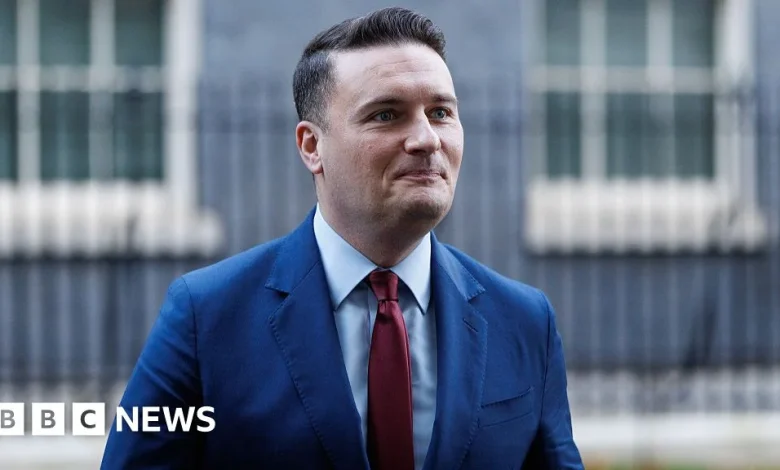
Health Secretary Wes Streeting is launching an independent review into rising demand for mental health, ADHD, and autism services in England.
It will look at both whether there is evidence of over-diagnosis and what gaps in support exist.
The government said it was already investing in expanding services, but there are long waits for therapy in many areas.
NHS figures show rates of mental health problems and ADHD have increased significantly over the past two decades.
Streeting has previously suggested mental health conditions are being “overdiagnosed”, and the government has argued that increased pressure on the system has led to long waits for people with an urgent need for help.
The review comes as ministers seek to tackle a growing welfare bill.
Earlier this year, the government was forced to climbdown on planned cuts to disability benefits, including for those with mental health conditions, after facing major backlash from more than 100 of Labour’s own backbenchers.
But on Monday, the prime minister promised a renewed push on reforming the welfare system, which is said had “trapped people in poverty” and “wrote young people off as too ill to work”.
Led by clinical psychologist Prof Peter Fonagy, the new review’s findings will be published in Summer 2026.
Streeting said said: “We must look at this through a strictly clinical lens to get an evidence-based understanding… That’s the only way we can ensure everyone gets timely access to accurate diagnosis and effective support.”
Prof Fonagy said the aim was “to test assumptions rigorously and listen closely to those most affected, so that our recommendations are both honest and genuinely useful”.
NHS figures show that the number of adults aged 16 to 64 reporting mental health problems reached 22.6% in 2023-24, up from 17.6% in 2007.
Rates are higher in the young and among the unemployed.
As of March this year, around four million working-age adults in England and Wales claimed either disability or incapacity benefit – up from almost three million in 2019, according to research from the Institute for Fiscal Studies (IFS).
The DHSC said the increased pressure on the NHS “means that for too long, people with acute needs have faced long waits, had to navigate overstretched services, experienced inequalities in care and felt abandoned when support was needed most”.
The review will look at how NHS services are working and what support people could be given earlier.
Investment is already being made in incresing support in schools and expanding talking therapy services.
But the review will also look at how people are being diagnosed and whether there is any evidence of over-diagnosis.
Royal College of Psychiatrists president Dr Lade Smith said: “We expect the review will adequately consider the many complex reasons that more people are in need of mental ill-health, ADHD and autism.
“We have a real opportunity to ensure that millions of people receive the care they need both now and for generations to come.”
Mental health charity Mind welcomed the government’s announcement and signalled their willingness to contribute to the review.
“This is a huge opportunity to really understand what is driving increasing levels of mental illness, especially among our young people,” chief executive Dr Sarah Hughes said.
President of the Royal College of Psychiatrists, Dr Lade Smith, called for the review to “rigorously identify gaps in care” while considering the “many complex reasons” people reach out for help.
The National Autistic Society said: “We need urgent action because, while we are currently seeing the number of people seeking an assessment levelling out, the average waiting time is rocketing.”