Approximately 50 broadcasters, including the BBC, attended a meeting of the European Broadcasting Union (EBU) on Thursday to discuss the future of the contest, which is watched by more than 150 million people each year.
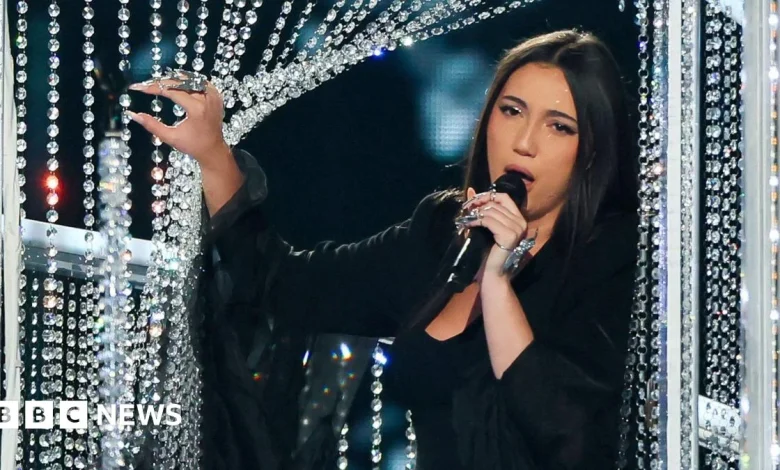
They were asked to back new rules intended to discourage governments and third parties from organising voting campaigns for their acts, after allegations that Israel unfairly boosted its entrant, Yuval Raphael, this year.
BBC News understands that voting to accept those measures was tied to a clause whereby members agreed not to proceed with a vote on Israel’s participation.
“This vote means that all EBU Members who wish to participate in the Eurovision Song Contest 2026 and agree to comply with the new rules are eligible to take part,” the EBU said.
Martin Green, director of the Eurovision Song Contest, said he was “pleased” that members had been given an “opportunity to debate” Israel’s place in the contest before the vote.
“It was a full, frank and honest and quite moving debate, but as we can see from the emphatic result, they really came together on a belief that the Eurovision Song Contest shouldn’t be used as a political theatre, it must retain some sense of neutrality.”
Israel’s President Isaac Herzog praised the decision, external to allow the country to compete, calling it “an appreciated gesture of solidarity, brotherhood, and co-operation, symbolising a victory over those who seek to silence Israel and spread hatred”.
He said he was “glad that Israel will participate again in Eurovision and I hope that the competition will remain one that sanctifies culture, poetry, and friendship between peoples and cross-border cultural understanding”.
He added that Israel “deserves to be represented on every stage in the world, and I am fully and actively committed to that”.
The CEO of Israel’s broadcaster, KAN, said the attempt to disqualify its entry “can only be understood as a cultural boycott.
“A boycott may begin today – with Israel – but no-one knows where it will end or who else it may harm,” said Golan Yochpaz.
“Is this what we truly want this contest to be remembered for on its 70th anniversary?”
The BBC, which broadcasts Eurovision in the UK and is a member of the EBU, said in a statement: “We support the collective decision made by members of the EBU. This is about enforcing the rules of the EBU and being inclusive.”