Australia tops 50 pct renewables again, but its biggest isolated grid did better with 55 pct wind and sola…

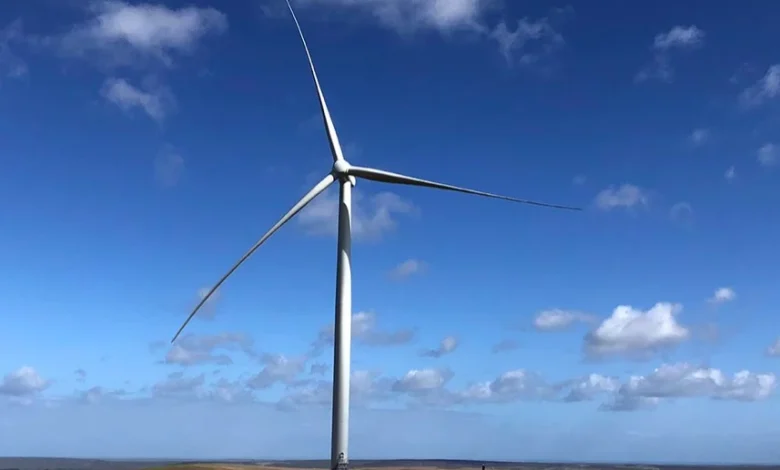
Australia topped 50 per cent share of renewables for the second month in a row in November, thanks to a surge of new connections and good conditions in spring. But it was outdone by an even stronger performance in Western Australia, host to the world’s biggest isolated grid.
The figure for the National Electricity Market was put at 50.1 per cent for the month, but W.A.’s main grid achieved a remarkable 55 per cent share of renewables, and entirely wind and solar with no hydro, thanks to a surge in rooftop PV and the addition of new giant batteries that have reduced curtailment levels.
The new milestone was hailed by state premier Roger Cook, energy minister Amber Jade Sanderson and co-ordinator of energy Jai Thomas. And it comes a week after wind and solar reached a remarkable new instantaneous milestone when wind and solar producer produced enough power to meet all domestic demand.
Enough of the output was stored in batteries to allow some coal and gas generators to keep spinning and maintain an appropriate level of synchronous power.
See our story: Solar and wind reach 100 pct of demand in biggest isolated grid, as batteries allow it to keep its thermals on
Screenshot
And it was notable that Western Australia also played host to the top performing wind and solar farms during the month, according to data posted by David Dixon, an analyst with Rystad Energy.
The three best-performing wind assets in the country were all located in Western Australia, led by Badgingarra (with a capacity factor of 51.7%), Flat Rocks (50.4% CF) and Yandin (49.2% CF).
Western Australia also played host to the top utility PV asset for the month, the Merredin facility with a capacity factor of 38.5%, followed by another WA solar farm at reenough River (38% CF), and the relatively recent Wellington North (37.0% CF) in NSW.
Screenshot
According to Dixon, there were a number of records in the month of November, when Australian utility PV and wind assets generated 5,271 gigawatt hours (GWh), up 28% from 4,107 GWh in November 2024.
Including rooftop PV, it was the second highest month of renewables on record, a total of 9,030 GWh, in the NEM.
Dixon says it was the third lowest month of gas generation since January 2011, thanks to the growing role of utility scale and household batteries, and it was also the 3rd lowest month of coal generation since January 2011, and possible since the NEM began.
It was also a monthly record for the amount of hours of negative prices in NSW (214 hours), South Australia (346) and Victoria (320). South Australia and Victoria both averaged more than 10 hours a day over the month with negative prices.
If you would like to join more than 28,000 others and get the latest clean energy news delivered straight to your inbox, for free, please click here to subscribe to our free daily newsletter.
Giles Parkinson is founder and editor-in-chief of Renew Economy, and founder and editor of its EV-focused sister site The Driven. He is the co-host of the weekly Energy Insiders Podcast. Giles has been a journalist for more than 40 years and is a former deputy editor of the Australian Financial Review. You can find him on LinkedIn and on Twitter.