This article is written by a student writer from the Her Campus at Illinois State chapter and does not reflect the views of Her Campus.
The romantic comedy, also known as “the rom-com,” has been a beloved genre of film since the Golden Age of Hollywood. The 1990s and 2000s were the era when rom-coms were mass-produced and featured stars like Julia Roberts, Kate Hudson and Meg Ryan.
In recent years, there has been a deficit of the beloved “rom-coms” in mainstream media. While streaming services and Hallmark channel push out endless films that could be considered romantic comedies, major production companies like Universal, Sony and Lionsgate seem to have left them behind.
In my circle of friends and family, people love rom-coms and crave them! We grew up with them. In a recent interview, Reese Witherspoon, rom-com queen and Hollywood royalty, revealed a theory that the lack of romantic comedies is actually hindering the dating world, and new generations are not learning to interact properly because of it.
“Social media started, and then we stopped. We started kind of going ‘rom coms are cringe.’ But it is actually where we learned social dynamics– from Tom Hanks and Meg Ryan”
-Reese Witherspoon
@hellosunshine
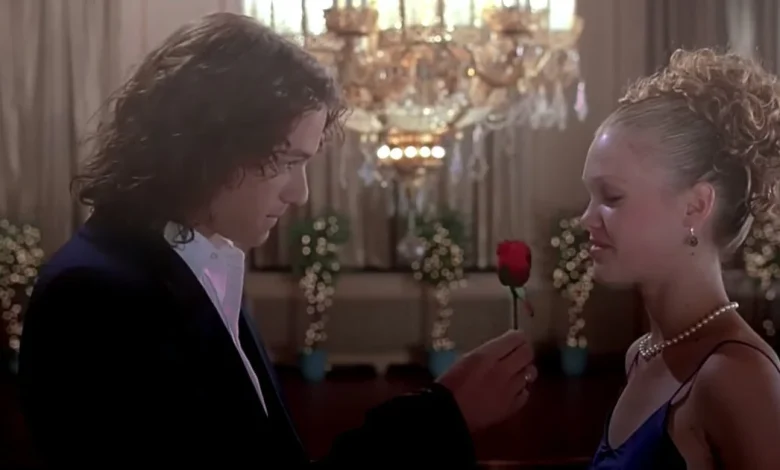
I think this is such a fair assessment! We learn social skills from what we watch and consume. There has been a lot of chatter about the “lack of tween media” lately, a topic I think perfectly concedes with this statement. Audiences, especially children, learn how to socialize and learn norms from watching it on TV, whether it’s the Duncan family from Good Luck Charlie or Kat and Patrick in 10 Things I Hate About You. Romantic subplots in shows demonstrate how to balance relationships with life, as well as showing what a healthy or unhealthy relationship may be.
While romantic comedies or chick flicks became a punchline in the 2000s, the lack of these fundamental movies and portrayals of relationships have left a mark.
The Evolution
Romantic comedies are nothing new, although they are heavily associated with the 1990s and 2000s. Even in Shakespearean times, plays like A Midsummer Night’s Dream could be considered a romantic comedy at its core.
During the golden age of Hollywood, screwball comedies and romantic movies like Shop Around the Corner, Roman Holiday, or It Happened One Night, were a staple of the industry. Famous actors like Cary Grant, Katharine Hepburn, Clark Gable and Marilyn Monroe all took part in romantic comedy movies.
In the late 1980s and 1990s, a new age of romantic comedy came about. Some consider these “neo-traditional” romantic comedies. Think When Harry Met Sally, which was an Oscar-nominated film, and in my opinion, stands to be one of the best rom-coms out there. It’s the Nora Ephron and Nancy Meyers movies!
“Romantic comedies are dealing with the fundamental aspects of human existence: desire, love, loneliness”
– John Alberti
https://www.cnn.com/2021/08/29/entertainment/romantic-comedy-evolution-trnd
The 2000s hits were the beginning of the end for the rom-coms. Some of my personal favorites, like 13 Going on 30 and How to Lose a Guy in 10 Days, came out in this era. Silly movies with an all-star cast: Matthew McConaughey, Kate Hudson, Jennifer Garner, Sandra Bullock, Ryan Reynolds. These are the rom coms that make Gen Z nostalgic. They inspire Halloween costumes, Pinterest boards, and movie nights.
These movies are popular and play into the basic human need of wanting to be loved and accepted. However, by the mid-2000s, it seemed like they had hit a roadblock.
The Decline
The formulaic nature of the romantic comedy has begun to be received as redundant. While some herald the genre for this nature, as it is comforting to know two characters will end up happily together at the end of the film, others were bored. Movies were delivering very similar stories, and often with the same profile of actors. Think Katherine Heigl’s rom-com dominance with The Ugly Truth, 27 Dresses and Knocked Up. But what happened? These used to be “mega movies”.
Hollywood as a whole seemed to pursue a new direction. The industry began to pepper in quips about rom-coms, writing them off as chick flicks, unserious, and essentially foolish (with a heavy dose of misogyny to go along with it). Dynamics shifted in the audience, too. The focus now lay in big-budget blockbusters. The perception of a stagnation in the romantic comedy genre had dwindled the audience. Many would prefer to watch a classic romantic comedy that they knew they loved, rather than pay to go see a brand new one with a not-so-amazing rating. Audience fatigue is a real issue and definitely leads to a dip in demand. Streaming services rushed in to become the new home for romantic comedies. This became the model for the genre disruption from the mid-2010s to today. They had guaranteed financing and audience, reducing the risk of a box office flop.
Netflix, especially, became the new beacon of romantic comedies. They have some hits, like the To All The Boys I Loved Before series and Set It Up. These services maintained the general romantic comedy market, taking away some of the risk, and garnered positive reviews. Prime Video has also been releasing its own rom coms with stars like Camila Mendes and Madelyn Cline. Although sometimes, it seems they do favor quantity over quality.
The Revival?
There is still an obvious demand for romantic comedies. The question is: will they deliver? I feel optimistic; when many streaming services hold most “modern rom-coms”, it seems other production companies are dipping their toes in the water. Even Hollywood royalty-backed production companies, like Reese Witherspoon’s Hello Sunshine, seem to be invested in the “new rom-com”.
In 2023, the hunger for a traditional mainstream romantic comedy film was finally answered with Glen Powell and Sydney Sweeny’s Anyone But You. Playing on classic troupes like of a Shakespeare telling (Much Do About Nothing) and “fake dating” driven plots, this movie seemed to be Sony’s test to see if a romantic comedy could hold up in the 2020s, and to the company’s surprise (but not mine), it was a hit! Two huge up-and-coming stars, who had a pre-existing fan base in a silly romance movie, have always been the perfect recipe in my mind! The movie was a box office success, yet we still haven’t seen a great competitor to the 2020s rom-com. This is not to say it is not coming!
In the wake of the decline of mainstream rom coms that carry the heart, soul and comedy of the iconic 90s and 2000s films, literature has begun to spill into the void. “Chick-lit” books have come to be rebranded as “rom-com” books on BookTok. Authors like Emily Henry, Abby Jimenez, and Mhairi McFarlane have been pumping out witty, goofy and heartfelt romance novels that have scratched the rom-com itch. And it seems film companies have begun to finally notice that this may be the new era of romantic comedies: book adaptations. BookTok favorites such as Ali Hazelwood’s The Love Hypothesis are in production, starring Lili Reinhart, to name one!
Now, book-to-movie adaptations are nothing new, especially in the rom-com field. Cult favorites like Bridget Jones’ Diary, Confessions of a Shopaholic, and more, are based on books (some more loosely than others). Of course, as mentioned before, we have the classic literature-inspired movies like 10 Things I Hate About You (The Taming of the Shrew)and Clueless (Emma). And with the popularity of “BookTok” romances, I think we’ll be seeing more adaptations coming. Emily Henry’s People We Meet on Vacation movie is coming out in January of 2026, and the anticipation is bubbling. Again, I think this is another experiment by Hollywood to see not only if Emily Henry’s internationally best-selling books will be well received by moviegoers, but also if the rom-com can continually be received with open arms.
We’ve also been seeing the uptick in the television rom-com. Shows like Modern Love, The Sex Lives of College Girls, or the hit Netflix show Nobody Wants This, once again fill that rom-com-sized hole in audiences’ hearts.
With all these new forms and styles of rom com, I don’t believe we will be seeing a “new rom-com”; a lot of these books and movies have a little more “spice”. While sexual innuendos are nothing new in the rom-com genre, the new and modern rom-coms we have been seeing, like Anyone but You and the romance books of TikTok, reference and often show sex scenes more than 2000s movies did. I’m interested to see if this is a continuing trend and will be part of the evolution of the rom-com. It may even be part of the appeal.
Only time will tell if the rom-com can come back in full swing, but I’m hopeful. Netflix will no doubt be pumping out these movies with varying success and quality, but it seems like big-name film producers are getting back in the game. We are also in an age where we have more of a platform to portray more diverse stories! Book adaptations are lined up as well as 2026 romantic comedy releases, like You, Me, and Tuscany, an original film from Universal with Rege-Jean Page and Halle Bailey. I’ll keep my fingers crossed. Movie taste changes and evolves, and while romantic comedies rely on cliches and tropes, there is always room to grow, and I’m interested to see where the rom-com will go next.