Can anything really matter in a prequel? It’s a question I’ve wrestled with in TV pieces for The A.V. Club before. (I am, after all, the guy who wrote something like 15,000 words about the second season of Andor, one of the most interesting sci-fi TV shows ever made that also had to somehow work to set up a pretty good Star Wars movie featuring an above-average funny robot.) We already knew, going into the first season of IT: Welcome To Derry, that a sequence of pretty fundamental things were guaranteed to happen. The Black Spot was going to burn. Will Hanlon would get out of this all alive, so as to father future Loser Mike. And, most especially: Nothing in 1962 could majorly screw with the status quo of either Derry, Maine, or its favorite monster, because IT has to be in place to wake up and kill again for Andy Muschietti’s cameras in 1989.
“The Black Spot,” the penultimate installment of Welcome To Derry, plays around with some of these core assumptions. It flirts especially hard with the idea that, now that “the augury has passed”—i.e., that a whole bunch of Black airmen, their dates, and one almost messianically perfect little kid have all been murdered in cold blood in a big, head-explosion-heavy burst of violence—it’s time for Pennywise to take a nap and chill until Sophia Lillis and Finn Wolfhard are free to pop up, in about three decades, to go another five rounds. The fact that the series tries to sell us on this obvious fiction, when we all damn well know that this is an eight-episode season of television, is the TV equivalent of getting two-thirds through a thriller novel and being told the killer is supposedly dead. This just isn’t the kind of show that has the patience to handle a long, slow denouement following a penultimate, violent climax, so some other shoe obviously has to drop.
It is, in hindsight, pretty clear that the only place Welcome To Derry was going to be able to carve out some breathing room for itself, to try to tell a story more complicated than what has mostly been a straight-line roadmap from “here” to “there,” is in those elements that it brought to the party personally. And that is, indeed, where the show’s attempts to be about something, despite its prequel status, ultimately take root at the end of this hour: in Operation Pennywise The Dancing Clown Bomb, now revealed to be a ruse by General Shaw, whose latest delusion of grandeur is that he can impose a late-season dose of political relevance onto a simple carb like Welcome To Derry.
Bless James Remar. He sure tries to bring conviction to Shaw’s final sales pitch to Leroy Hanlon, as he has while being handed silly speech after silly speech throughout this entire season. See, General Shaw doesn’t actually want to drop IT on the commies: He wants to inflict it on the American people, as a way to scare the national populace into giving up all our 1960s factionalization in favor of nice, safe, shit-the-bed-scared order. (I get the metaphor, and its clankingly obvious parallels to modern politics, but the plan itself is just laughable, given how IT seems to be limited by physical proximity. The idea of Pennywise hitching from town to town, slowly trying to pull IT’s schtick on a nation of millions, is very funny to contemplate.) I’ve complained, a lot, this season about how Welcome To Derry seemed bizarrely disinterested in saying anything interesting about the nature of fear or the way it impacts a society, so I have to give the show credit for at least feinting toward a bigger idea as it heads into the homestretch. Talking about fear as a tool of political manipulation by the established order is at least an idea, even if the show doesn’t have much to say about it besides having Leroy point out what a stupidly high bodycount Shaw’s dumb plan already has. (“Fewer than die in car accidents every single year,” Remar yells, reaching the full limits of his ability to coat this stuff in gravitas.)
But that intent also runs straight into what I can now say, with some confidence as we near the end of our time here, is the show’s single biggest storytelling flaw: its inability to make Derry feel like any kind of place at all. We have no sense of the unrest Shaw is hoping to quell with his supervillain master scheme, just as we had only the merest glimpses of the town’s cruelty before it exploded into one singular incident of horrifying violence. Earlier in this episode, Charlotte Hanlon goes full thesis statement when she chides that “This town is the monster!” But Welcome To Derry has been so focused on the cheap scares of the actual creature in its midst that it’s done almost nothing to bolster the metaphorical one. With its characters so isolated into sequestered scenes, and its supporting cast a loose assemblage of mean girls, bad husbands, and drunk-hick cops all pulled directly from central casting, the show has failed to make Derry feel like anywhere—let alone cultivate the vibe of fearful cruelty Shaw is trying to invoke here. There’s a version of this idea that works, where we’ve spent seven episodes watching dread narcotize a town’s population into fitful order, only to reveal that it’s been the master plan all along. But it’s simply not what this team has been able to put up on the screen.
Apologies are in order, though: I’ve put the reviewing of this whole episode back-to-front, as I often do when something big and structural and irritating is gnawing at me. Let’s double back: We open on what is, inarguably, the best sequence of the night: an extended glimpse at the act and ambitions of Pennywise The Dancing Clown. The real one, that is: traveling circus performer Bob Gray, who is—once you get over Bill Skarsgård doing some kind of weird British Tom Waits impression for his voice—both a pretty good dad and a shockingly effective clown. (For a minute there, I thought Bob was going to take the act too dark for his audience of 1908 fair kids, but Skarsgård does a genuinely great job of getting their, and our, sympathy on his side. Seeing his real eyes, instead of the CGI glow, is surprisingly affecting.) This sequence doesn’t move the needle in terms of either plot or character development—we already knew young Ingrid Gray loved her dad enough to gloss over watching “him” eat a child in front of her, so getting confirmation they were close isn’t exactly a revelation. But there are worse things a prequel can do than give a little-glimpsed character like Bob a chance to shine.
After the credits, we’re right back to where we left off last week, with Clint Bowers and his crew going from being, seemingly, the world’s most reasonable mob to its most psychotic with a shocking quickness. At first, it really does seem like the masked killers invading The Black Spot just want Hank Grogan, who volunteers to get himself killed to spare everybody else. But as soon as the assembled airmen pull their own weapons to force Bowers et al. back out, the group switches to “lock the doors, burn the building, and kill every single man, woman, and child inside” without a second’s hesitation. As far as escalations go, it’s cartoonishly evil—something that isn’t helped once Muschietti (stepping in to direct tonight) fills the ensuing shoot-out with twanging bullet noises and gorily popping craniums. With extremely polite flames that wouldn’t dream of making more work for the show’s makeup team, and faceless extras dropping like flies, it’s far more weightless than a history-making incident of violence should be. The whole show has been building to this orgy of horror, and when it finally arrives, the performance anxiety is palpable.
The best bits, per usual, come from Chris Chalk, as Dick Hallorann taps into his Shine to find a way the fuck out of the burning death house without really worrying about anybody else following him out. Watching Dick seriously consider leaving the kids to die to save his own ass is the kind of thing that makes this character compelling. Chalk makes it palpable that this guy’s every instinct leans toward self–preservation—except for the one that kicks in at the very last minute and drags him back into the fray. Escaping a confrontation with a barbecue-snacking Pennywise, Dick manages to get Will and Ronnie to safety, making them three of the very few survivors of the Black Spot fire. As for the other two kids…
Look, I don’t want to make fun of the cinematic spectacle of a heroic child dying of smoke inhalation in a house full of burning corpses set alight by a bunch of psychopathic, subtextually racist adults. But if I’m being honest, there was very little about the death of Rich Santos tonight that did not strike me as ridiculous at best and laughable at worst—from his plan to Kingdom Of The Crystal Skull Margie to safety to his surprisingly composed (for a kid dying of smoke inhalation) farewell monologue to the dying declarations of love to the final sight of Rich’s perfectly preserved, totally unburnt body once the flames died down. (Seriously: most polite fire ever.) I mostly liked Rich and thought Arian S. Cartaya acquitted himself relatively well as the season went on. But as far as big, motivating character deaths go, this felt way more “script says we have to bump off a kid to make the ending land” than genuinely moving.
Speaking of dead/Deadlighted characters, “The Black Spot” also brings to an end the incredibly frustrating, go-nowhere story of Ingrid Kersh. (And there’s also Stan Kersh, but at least The Butcher gets a cool-looking death. That little flapping tongue!) Having successfully lured IT out by calling in the mob on Hank, Ingrid/Periwinkle is unflappable when the creature chops off half of her abusive husband’s head right in front of her. But when he mentions that this is a one-hug-per-massacre deal, and that it’s time for him to ditch her again for his big nap, that’s when she apparently realizes that the brain-eating monster with like 90 teeth jammed into its maw isn’t somehow her dead daddy returned to her and gets a big dose of the Deadlights for her trouble (presumably to be seen again as one of IT’s guises in IT: Chapter Two, although maybe she’ll surprise me and show up in the finale next week). I will confess to being utterly flummoxed by this character: Beyond a vague message that holding on to dead relatives will drive you crazy—and a little bit of extra “never trust a goddamn adult” for Lilly, who didn’t really need it—I don’t really understand what she was meant to be or do, beyond tying up a loose end from Muschietti’s movie. This is getting to be a common refrain with this show, but there’s an interesting story to be told about someone attaching themselves to IT’s “abusive family member” routine in a way that even the creature itself finds kind of creepy. Here’s hoping someone puts it into a TV show someday.
All of which brings us back to the military’s response to the Black Spot fire, which is light on caring about a shit-ton of U.S. soldiers being murdered and heavy on using Hallorann’s latest tip to finally find one of the Pillars. (Dick! I love you, but buddy, you gotta stop being so helpful.) Having dug up what I take no pleasure in reporting looks like a shiny magical turd rock, we then build back up to that big reveal: Shaw intends to melt the Pillars, releasing IT from its cage, and not even Leroy impotently pointing his pistol at a bunch of people multiple times in the span of a single scene is enough to stop it. This apparently excites a drowsy IT enough to give the creature one of those classic “three a.m. and I’m feeling pumped” second winds, which it immediately uses to go attack Will. Credits!
Not to get all “Fool me seven times, shame on you; fool me eight times, shame on me”—because that’s not a real expression— but at this point I have basically no faith left that Welcome To Derry is saving up energy to surprise us all by suddenly getting really smart right before it ends. I think this show has turned out to be largely what detractors feared it would be when it was first announced: a chance to do a bunch of Pennywise scare scenes with kids dressed up in 1960s costumes and not much else. This episode, especially, is hurt because all of the real estate devoted to its big, flashy set piece means it has little time for the things the series is good at, i.e., grounded character work from its gifted adult cast. Instead, we’re sprinting toward an ending that, as far as I can tell, has no choice but to put the show right back where we found it, leaving the whole series as not much more than an exercise in extremely IP-friendly, and ultimately hollow, horror.
Stray observations
- • As someone who’s a sucker for anything clockwork, the mechanisms in Pennywise’s stage act were incredibly charming to me.
- • I’m enough of a Stephen King dork to wonder if Bowers’ “Give us what we want, and we’ll go away” is a deliberate Storm Of The Century reference.
- • Last week I thought the show was going really on the nose and outfitting the mob with clown masks, but on closer look, they’re all classic movie monsters.
- • Muschietti shoots the Black Spot fire as a roughly three-minute oner (give or take a few obvious cut points), stretching from when the mob locks the door to when Dick finds his escape route under the fridge. Rather than impress, though, the artifice of it all gives the enter sequence even more of a stage-y air.
- • Some smartass included a Calumet Baking Powder can in the shot when Dick spots the ghost of the Native leader.
- • How embarrassing to be the guy at the lynch mob who has car trouble after the murder. So awkward! (I know Ingrid presumably sabotaged the car, but still.)
- • That tiny ice chest sure can hold off a lot of flames and hold in a lot of air, huh?
- • Chalk’s “No, no…” when Leroy asks Dick if he’s all right is a nice little moment.
- • “Well…see you shitasses in 27 years.”
- • When we cut back to the military executing its latest stupid plan, the music gets very “end of Raiders Of The Lost Ark,” as if to emphasize how bad this is going to get.
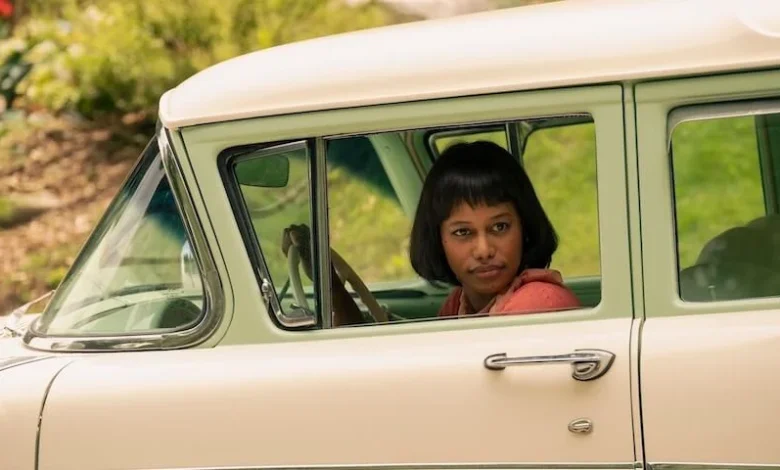
- • Taylour Paige doesn’t get much to do this week but her read on “In this town?” when Hank’s wondering if people will be able to tell the difference between him and Leroy while in uniform is worth a lot.
- • The dug-up Pillar was apparently buried in a turtle shell. Turtles are a whole thing in King’s novel, and the wider Dark Tower cosmology as a whole, with a universe-creating creature called Maturin The Turtle interceding (passively but helpfully) on Bill Denbrough’s behalf during the Losers’ Club’s first confrontation with IT. Both IT adaptations have jettisoned all this more cosmic material in favor of more winking references like this one though.
- • Leroy Hanlon dares to ask: Exactly how many dudes can one man hold at gunpoint in a single go?
- • When Shaw is trying to make his pitch for America The ITiful, I was really expecting Leroy to point out which bodies get sacrificed to buy this much-ballyhooed peace. But this show really is averse to speaking on those (rather glaring) terms.
William Hughes is a staff writer at The A.V. Club.