This article is taken from our new weekly film and TV newsletter, INTERMISSION fromGQ’s culture editor Ben Allen and the crew. Sign up here to navigate the avalanche of streamer slop to find the stuff actually worth hitting play on.
One thing about the Academy of Motion Picture Arts and Sciences: they love a guy in a fat suit. Look at the last ten years of Best Actor winners. Brendan Fraser in The Whale? Fat suit. Gary Oldman in The Darkest Hour? Fat suit. And if you can’t get your hands on a fat suit, you’d better be skinny as hell. Adrien Brody in The Brutalist? Thin. Cillian Murphy in Oppenheimer? Thin. Joaquin Phoenix in Joker? Scarily thin. The bigger picture here is that the “guys who transform on screen win awards” trope refuses to die, even in a transformative (sorry) time for the Oscars, where indies and foreign films are thriving. If you’re campaigning and your body remained roughly the same shape and size throughout filming, you may as well cancel that Tonight Show appearance, ’cause you’re not getting that statue, buddy.
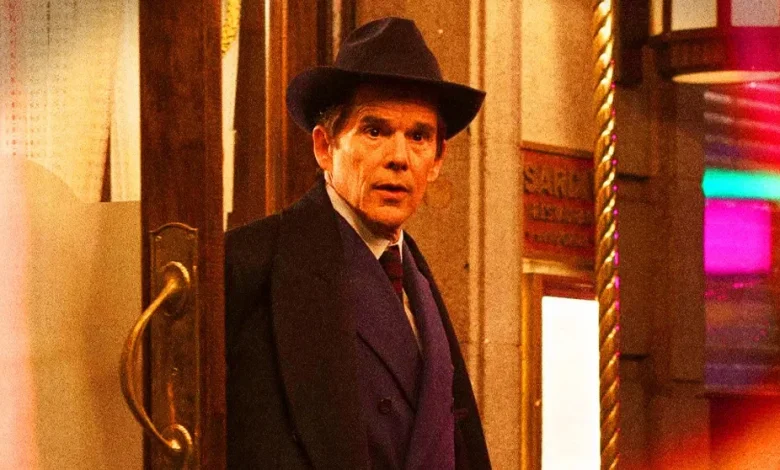
It’s a full-on Oscars cliché now, and we all know it’s a bit silly. And yet… I just watched Ethan Hawke in Blue Moon, a movie in which he appears to have the holy trinity of body transformation shit going on – little bit of a fat suit, bald cap, and he shot many of his scenes while standing in a trench on set to make him look at least a foot shorter than he actually is. I think it could win him Best Actor next time – and I wouldn’t be mad about it at all. So maybe I’m part of the problem.
Ethan Hawke, as I’m sure you’re aware, is a legend of indie cinema who has often played characters quite like himself – charming, romantic, artsy guys who look like Ethan Hawke – most notably in Richard Linklater’s romantically upsetting Before trilogy. That is absolutely not the case in Blue Moon, his latest collaboration with Linklater. In it, he plays Lorenz Hart, the 5ft tall musical theatre lyricist with a combover and a booze problem who died in 1943 at the age of 48, about six months after the movie takes place.
Hart is a tragic guy. He is arrogant and pretentious about his art – he is the writer behind “My Funny Valentine”, “The Lady is a Tramp” and the titular Manchester City theme song – but that seems to be about the only thing he really likes about himself. And now even his work seems to be slipping from his grasp. The movie takes place across one night, at the afterparty for the musical Oklahoma!, which his longtime collaborator, Richard Rodgers (Andrew Scott) has made with his new writing partner, Oscar Hammerstein. Oklahoma! pretty much immediately becomes a massive success. But that doesn’t stop Hart from desperately following Rogers around, trying to convince him that they should write something new together (for what it’s worth, Rodgers stopped working with Hart because his alcohol problem made him too chaotic a collaborator). On top of this, Hart is trying to sleep with Margaret Qualley’s Elizabeth, a 20-year-old college student who seems to see him only as a funny little man who might just be able to help her get acting career off the ground.
Hawke doesn’t quite disappear in Blue Moon, though that’s the cliché with these kinds of roles. But he is absolutely convincing – pathetic, funny, sad and self-aware – and flashes of the warmth and charm we’ve seen in his previous roles make Hart likeable. There are moments when Hart is telling an anecdote, or monologuing about musical theatre, which made me think of Jesse, Hawke’s raconteur from Before Sunset – the middle movie in the trilogy, where he and Celine (Julie Delpy) meet in Paris nine years after a brief encounter in Vienna had altered the course of their lives. (It’s probably the best Hawke has ever been, so that’s a very big compliment, by the way). In that one, Jesse has been rendered cynical by a loveless marriage, but is still chasing Delpy, even though they’re grown up enough by that point to know they don’t really know each other at all. Before Sunset, like Blue Moon, is so great because watching Hawke talk about love and ideas is so captivating and entertaining. It’s his secret sauce, and he’s been doing it for decades now without proper award recognition.
Blue Moon does feel like it demands more out of him as an actor. He really has to embody a guy who had one thing going for him, and is watching that one thing slip away. I don’t think I’ve seen him do that before – at least not this well. I’m still not sure all of the tweaks to his image were necessary. But if it gets him over the line at the Oscars in March? Fill your boots, son. Let’s get Timothée Chalamet in one next.