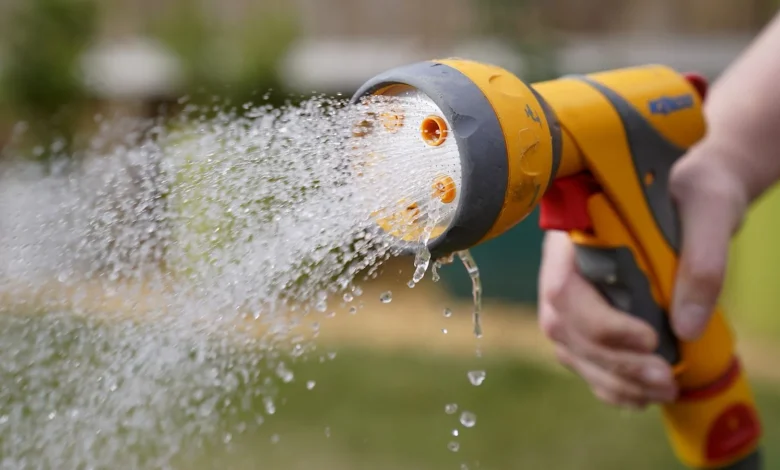
The hosepipe ban across Yorkshire has been lifted after a rise in reservoir levels across the region.
Yorkshire Water imposed restrictions in July after the driest spring in 132 years and a record-breaking warm summer meant 22 reservoirs dropped below 20%.
But the company said levels are now at 91.6% and Hull aquifer levels are at 77%, above the average for the time of year, meaning they can safely lift the rules.
Dave Kaye, director of water and wastewater at Yorkshire Water, said: “We are incredibly grateful to our customers for their efforts to save water throughout the dry spring and summer, and into the wetter months.
“When restrictions were first introduced and the weather was warm, customer usage went down by 10%, taking pressure off our reservoirs.
Low water levels at Lindley Wood Reservoir near Otley in September 2025 Credit: PA
“Continuing those water-saving actions when we finally started seeing rainfall, as well as us making use of drought orders and permits, meant that our reservoirs could recover as much as possible – and it’s part of the reason why we’re able to end the restrictions earlier than we initially thought.
“While the restrictions are lifting it is important people continue to think about their water usage and consider using water wisely throughout the year, not just during periods of drought and hot weather.”
Yorkshire Water said the restrictions saved 1.3 billion litres of water, or the equivient of 69 days of York’s average usage.
The company also fixed almost 15,000 leaks while the ban was in place.
Mr Kaye added: “While we are back to normal, we’re continuing our work to manage our water resources carefully both in the weeks and months ahead, and over the long-term so that we can meet growing demand for water in an increasingly challenging climate.
“This means continuing to bring down leakage, with a £38m investment planned over the next five years, and progressing our plans to bring additional sources of water into our network through the installation of new boreholes and storage reservoirs.”
Want a quick and expert briefing on the biggest news stories? Listen to our latest podcasts to find out What You Need To Know.