Whitecaps prep for MLS Cup not knowing where – or if – they’ll have a future home in Vancouver – The Athletic

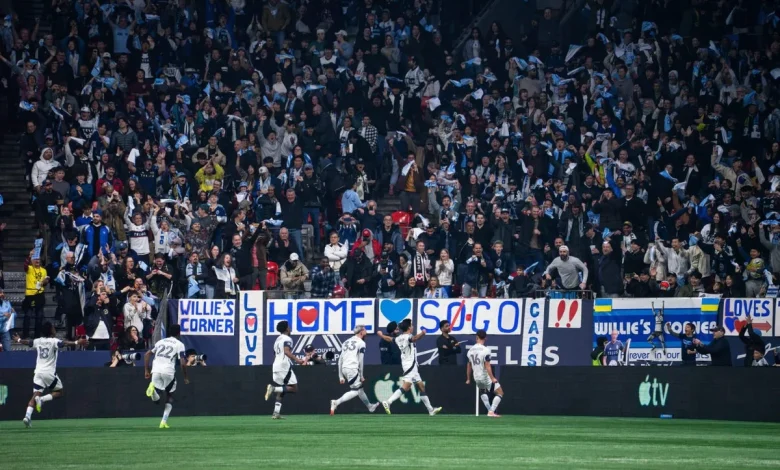
In their last home game of 2025, the Vancouver Whitecaps played in front of over 53,000 fans. They rewarded their faithful by staving off a fellow title contender with a heroic and emotional playoff performance, embodying everything a league should want to see when it comes to the connection between club and city. The scenes were organic and authentic. The Whitecaps may be the best story in MLS this season.
And yet, even if they win a championship, that story could have a drastic and dire ending.
A perpetually middle-of-the-pack side, the Whitecaps have been one of the best teams in the league from start to finish. They took out Lionel Messi and Inter Miami and multiple Mexican clubs on their springtime run to the Concacaf Champions Cup final. On Saturday, they’ll get another shot to shock the greatest player of all time and his club in MLS Cup.
Saturday marks Vancouver’s first MLS Cup appearance. It has gotten there with what was mostly a group of career MLS players who have turned into bonafide stars, including Sebastian Berhalter, son of former U.S. men’s national team coach Gregg Berhalter. Then, this summer, the Whitecaps added German legend Thomas Müller to turn an underdog group into more of a star-driven side.
It’s been a historic year in nearly every respect. And it’s all happened with the team up for sale and, potentially soon, homeless.
The Whitecaps’ lease with BC Place is up at the end of 2025. The team and British Columbia have held some talks about a new lease, but MLS commissioner Don Garber has not minced words that the arrangement as it currently stands is a non-starter for the team and the league.
“We have a suboptimal stadium situation, and we’re trying to fix that. And there’s a short-term fix that’s very specific: We want a better lease at BC Place, and the club has made a very specific request about that,” Garber told reporters in Vancouver last month. “Those restrictions and those challenges make it untenable for the Vancouver Whitecaps. Economically they don’t participate in any revenue.”
If the status quo remains, the reality is that the city of Vancouver — with the potential 2025 MLS Cup champions and as a World Cup host city — could lose its team to a relocation effort.
“There is a possibility,” Garber said last month. “That’s not the path we want to be on. It’s part of what I’m here for. This just requires a different vision and a different way to go about thinking about what a path forward can be.”
That impact of relocation — albeit a scenario that all parties say is not the aim — would be substantial for the region.
“As important as (the 2026 World Cup) is, I think keeping the Whitecaps in the city of Vancouver is more important than the World Cup,” said Concacaf president Victor Montagliani, a native of East Vancouver.
Officials from the province insist they are working to ensure that the team stays.
“We are in discussions with the Whitecaps both about their agreement that they have in place currently, which expires and needs to be renewed, as well as the opportunity to look at a new stadium,” said Ravi Kahlon, Minister of Jobs and Economic Growth for British Columbia, who has been the liaison in discussions between the province and the team. “So we’ve been in conversations with them about both. And I think it’s important to note that we obviously value the Whitecaps a lot here in British Columbia. We believe the Whitecaps and MLS have provided a lot to BC. But I also believe the fans here have provided a lot to the MLS and to the Whitecaps.”
Thomas Müller and Sebastian Berhalter are at the center of Vancouver’s on-field success in 2025 (Rich Lam / Getty Images)
The contrast between what’s happening on the field and off the field is stark.
The Whitecaps sold out BC Place, the largest crowd in over three decades (spanning past club iterations and leagues), the team said, for an epic Western Conference semifinal against LAFC. That crowd only got louder as the Whitecaps defended with nine men in extra time, staving off Korean star Son Heung-min and LAFC as they pushed for a game-winner. Vancouver won on penalties.
When the team put tickets up for sale in case they hosted the conference final, they sold out in one hour. (The game instead was played in San Diego, where the Whitecaps took down the top-seeded expansion team; 8,000 fans showed up for a watch party at BC Place, and more than double that will reportedly do the same for MLS Cup.)
Their on-field success and resonance in their home market, however, hasn’t had meaningful influence on the business.
The Whitecaps rank near the bottom of MLS in revenue, including sponsorships and gameday intake, which is the lifeblood of all MLS teams, because the league still lags in media revenue. Vancouver carries significant operating costs at BC Place, but only receives a fraction of the revenue. They also have little control over scheduling. The Whitecaps had to forfeit home-field advantage last season in the wild card round of the playoffs because of a conflict at BC Place, going on the road to take on the Portland Timbers rather than hosting their Cascadia rivals.
The team’s ownership group — Greg Kerfoot, Steve Luczo, Jeff Mallett and Steve Nash — announced last December that they were initiating a sale process. The goal, they said, was to find an investor that would inject capital into the team while also keeping it in Vancouver.
“We have so much at stake,” Mallett told The Athletic in April. “We want this to end up in great hands.”
But the stadium lease and the lack of certainty around a deal — both in the short term for BC Place and the long-term with a new stadium — has clouded that possibility, sources said.
Garber flew to Vancouver last month in part because lease conversations have moved slowly. The lack of urgency prompted Garber to visit and meet with Premier David Eby and other officials. Meanwhile, Vancouver mayor Ken Sim has been supportive of finding the team a site for a new stadium, and there are ongoing discussions for a new stadium at the PNE Fairgrounds. Kahlon said the city will drive those efforts forward.
But time is running down. Multiple sources briefed on or involved in discussions said the club believes it will likely need a formally approved stadium solution by the end of 2026 to prevent relocation.
The sources briefed on discussions said at least six cities are monitoring the situation with Vancouver, including groups with interest in Detroit, Phoenix, Las Vegas, Sacramento, Indianapolis and Edmonton, and that representatives from two of those cities attended the Western Conference semifinal last month.
“We know there’s a desire for the Whitecaps to explore a new stadium opportunity,” Kahlon said. “It’s not entirely clear where they want to explore that opportunity. We made it clear to them that we’re here, we want to be partners in finding that path forward. We’d like to keep them a BC Place, but we also understand that they may need something that’s more customized for them. And the opportunity of course as you’re seeing with stadiums all over the world, where there’s an entertainment zone built around it so you can attract more people. … And so we appreciate that desire for the Whitecaps to consider that. I’ve met with them multiple times, so I’ll be meeting again with them very soon. …
“The negotiations with PavCo, which is the body that owns the stadium, are happening. And we’re having discussions as well with the Whitecaps about what additional supports they may need.”
Garber last month floated the idea of MLS taking over the commercial naming rights to BC Place, which has never had a sponsor, but Kahlon pushed back on that idea.
“That would be the Province essentially writing a check to the Whitecaps,” he said. “The stadium is owned by the public. As I said, I’m a diehard Whitecaps fan. I have been for a long time. I’m in the supporters section and I’m there at every single game. And so I want to see the team here, but I also have responsibility to the taxpayers of British Columbia. That’s what I was elected for. If there’s discussions that need to happen, we’re happy to have them. There are some discussions happening, but the idea that we would just, without engaging the public, do something that large, I think is a challenge.”
Whitecaps fans have been turning out all season to raise their scarves for their home team (Elizabeth Ruiz Ruiz / Getty Images)
The prospect of losing the team threatens the progress being made in Canadian soccer, Montagliani said – especially when considering the impact the Whitecaps have had on the national team. That includes helping develop star player Alphonso Davies, as well as numerous other national team players.
“For the sustainability of the sport, it’s allowing our young athletes, boys and girls, to have that link to the game that is right in their backyard,” the Concacaf president said. “Nothing shows that more than this year, the images and scenes of young kids wearing Whitecaps gear all over the city or at a game, especially with some of the moments they’ve had this year, whether it be the Champions Cup run or obviously their playoff run.
“No economist or no political person can see how undeniable that emotion is for a young person and having that attachment. And I think when you don’t have that in your city, you lose a lot. It would be devastating to the sport and the city. We can talk about the economic impact, but you’re ripping out the heart of a lot of young people if they don’t have that in their backyard.”
Canada men’s national team coach Jesse Marsch agreed.
“Losing the Whitecaps would be catastrophic to the sport in Canada, and I know Greg (Kerfoot) will do everything in his power to prevent that from happening,” Marsch said. “I don’t even want to talk about the other alternatives, because I just think that club, and especially with how successful they’ve been and how they’re playing right now, the types of Canadian players playing there, it’s, it’s really important for us.”
The team has the chance to put an exclamation point on its season by lifting MLS Cup on Saturday. It’s the first Vancouver team to reach a league final since the Canadian Football BC Lions and NHL’s Canucks both did so in 2011. A title would be the city’s first for men’s pro sports since the Lions won that ‘11 Grey Cup.
But win or lose, the Whitecaps will return home to an uncertain future and looming deadlines.