Docu-drama Titanic Sinks Tonight creatives on recreating the survivors’ stories – “Instead of studying the ship as an object, we followed the human experience as it unfolded”

Published: 15 December 2025
Their testimonies guide every beat of the series. It’s not about how the Titanic was built, or even how it sank – it’s about what it was really like to be there.
— Kieran Doherty (Executive Producer)
On Sunday 14 April, Titanic was five days into her maiden voyage to New York, sailing with 2,208 passengers and crew onboard. She was the largest ship the world had ever seen.
As most passengers prepared for bed, a message was received from a ship 20 miles ahead, warning that they were surrounded by ice and had stopped for the night. At 11.40pm, Titanic hit an iceberg in the Atlantic Ocean. The collision didn’t cause immediate concern as those onboard believe the ship was designed to be unsinkable.
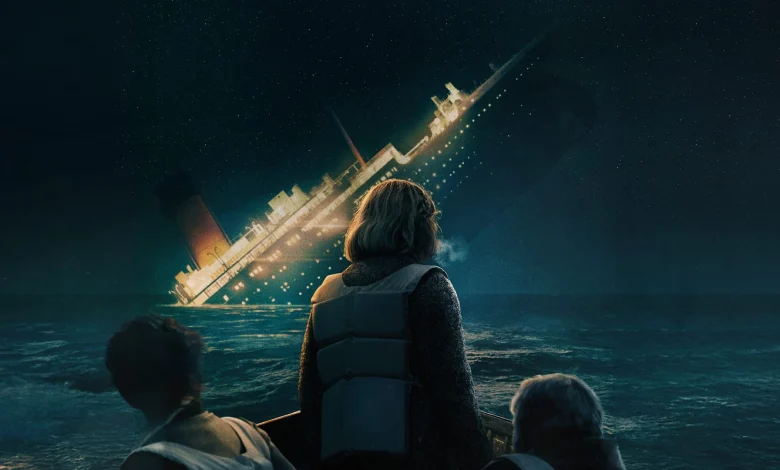
Titanic Sinks Tonight is a four-part dramatised documentary series exploring the most infamous 160 minutes in maritime history, as they unfold minute by minute from the moment of that fatal impact with the iceberg to the ship’s disappearance beneath the waves.
Having pieced together a vast archive of letters, interviews, memoirs and the accounts of public enquiries, the programme-makers have cast actors who resemble the survivors to recreate their eyewitness testimony. Nothing is invented, there are no “composite characters”, just the real words and memories of Titanic passengers and crew, revealing what it was like to be there that night.
Expert contributors including presenter and ex-marine JJ Chalmers, Professor Suzannah Lipscomb, Admiral Lord West and novelist Nadifa Mohamed provide analysis and fresh insight into the events.
The first episode follows the White Star liner’s journey across the cold Atlantic waters on its route to New York. Told through the words and experiences of survivors, we meet the crew and passengers – some of whom are emigrating to America in search of a better life and others who are travelling for business.
As news of the damage filtered through to the Captain that two, then three, then four of the ship’s watertight compartments have been breached, he realised his ‘unsinkable’ ship might be going under. The ship’s lauded designer, Thomas Andrews, then discovered the unthinkable, that a fifth compartment had been breached. Titanic would have just 117 minutes before she sank.
Titanic Sinks Tonight is a four-part dramatised documentary series, starting Sunday 28 December on BBC Two and BBC iPlayer
As the series continues, its captures the evacuation of the passengers and how panic set when people started to realise there were not enough lifeboat places for everyone on board. As Titanic quickly sank and people scrambled for lifeboat spaces in the hope of rescue, the series reveals the lengths many of the survivors went to escape the sinking ship.
In the final episode, the series shows how those still on board faced their fates, before Titanic disappeared under the waves. From the Captain’s horror to designer Thomas Andrews’ desperate bid to help others, and from the crew who resorted to a farewell drink to the people in the lifeboats who watched in horror as Titanic split in two, the series gives a blow by blow account of those final moments.
By 2.20am, Titanic had gone. A moment of stunned silence was followed by a chorus of despairing shrieks and cries, as over 1500 people drowned in the freezing water.
Cast in this four part series include: Tyger Drew-Honey (as Harold Bride), Charlotte McCurry (Eleanor Cassebeer), Patrick Buchanan (Bruce Ismay), Adam Rhys-Charles (Charles Lightoller), Lisa Dwyer-Hogg (Charlotte Collyer), Rhys Mannion (Jack Thayer), Vicky Allen (Violet Jessop), Hannah Wengård (Anna Sjoblom), Ethan McHale (Joseph Boxhall), Candida Gubbins (Lucy Duff Gordon), Steffan Boje (Cosmo Duff Gordon), Andrew Doherty (Eugene Daly) Charlotte Lavery (Marjorie Collyer), Sara Diab (Celiney Yazbeck), Oisin Thompson (Officer Lowe), Dino Luca (Thomas Dillon), Ciaran McCourt (Fred Barrett), Gerry O’Brien (Captain Smith), Parnell Scott (Jack Phillips), Michael Johnston (Harvey Collyer), Matthew Cassidy (Fred Fleet), Jonny Everett (Thomas Andrews), Killian Filan (Daniel Buckley), Forrest Bothwell (Herbert Stone) and Ian Davidson (Harold Cottam). Titanic Sinks Tonight is produced by Stellify Media and was filmed in Belfast with support from Northern Ireland Screen using cutting-edge Virtual Production technology at Studio Ulster.
The series was commissioned by Jack Bootle, Head of Commissioning, Specialist Factual and Eddie Doyle, Head of Commissioning, BBC Northern Ireland. Kieran Doherty and Matthew Worthy are Executive producers for Stellify Media, a Sony Pictures Television (SPT) company.
The Executive Producer for BBC Northern Ireland is Fiona Keane. The BBC Commissioning Editor is Simon Young, Head of Commissioning, History. The series is made with support from Northern Ireland Screen with international funding from the series is being provided by SPT, ARTE and SBS (Australia).
Watch Titanic Sinks Tonight on iPlayer from Sunday 28 December and on BBC Two from Sunday 28 December at 9pm.
ML
Titanic Sinks Tonight Passengers and Crew
This four-part series explores a vast archive of eyewitness testimony, documenting the sinking of Titanic through the experiences of the passengers and crew who were there.
The programme-makers have meticulously pieced together first-hand testimony from the below list of characters. Gathered from letters, telegrams, newspaper interviews, radio interviews, memoirs and the US and UK public enquiries into the disaster, this testimony has then been recreated by a cast of actors who vividly portray what it was like to be on board the night Titanic sank.
Harold Bride (played by Tyger Drew-Honey)
Age: 22 Nationality: British
Harold Bride was the Second Radio Operator on Titanic, and a young man at the start of an exciting career.
Fascinated by wireless telegraphy at the age of 20, Harold built a noisy spark transmitter and erected a massive antenna in his father’s garden. After that he went on to train with the Marconi Company in Liverpool and started working on ships in 1911.
Violet Jessop (played by Vicky Allen)
Violet Jessop (Vicky Allen)
Age: 24 Nationality: Argentine, with Irish parents
Violet Jessop was a Stewardess on Titanic and was an astute critic of wealthy passengers on the ship.
Born in Bahia Blanca, Argentina to Irish parents, Violet’s father was a sheep farmer, who passed away when she was very young. The family then moved to Britain and Violet’s mother took work as a stewardess. Violet left school when she was 13 to do the same.
Violet avoided the White Star Line for many years because of their reputation for overworking staff. In 1911, she was involved in a shipwreck, when Olympic when collided with a Royal Navy ship. And after Titanic she would also survive the wreck of Britannic.
Charles Lightoller (played by Adam Rhys-Charles)
Charles Lightoller (Adam Rhys-Charles)
Age: 38 Nationality: British
Charles Lightoller was a Second Officer on Titanic. Born into a wealthy family that operated cotton mills in Chorley, Lancashire, he first went to sea aged 13, and lived a life full of adventure, surviving a cyclone and several shipwrecks, prospecting for gold in the Klondike gold rush, and riding the rails through Canada as a hobo.
He started working for the White Star Line in 1900, hoping for more stability in his life, and worked there consistently as a First or Second Officer until Titanic.
Jack Thayer (played by Rhys Mannion)
Jack Thayer (Rhys Mannion)
Age: 17 Nationality: American
Jack Thayer was a first class passenger, sailing on Titanic with his family.
The only child of railroad magnate John Borland Thayer and socialite Marian Thayer, he lived a very sheltered life of wealth and privilege among the elites of Pennsylvania.
Jack and his parents were returning to America from holidaying in Europe and were travelling in first class cabins on D deck that cost £10,000 each.
Charlotte Collyer (played by Lisa Dwyer-Hogg)
Charlotte Collyer (Lisa Dwyer-Hogg)
Age: 30 Nationality: British
Charlotte Collyer was a second class passenger travelling on Titanic with her husband Harvey and daughter Margorie who was born in 1904.
The family had decided to move to the US after friends of theirs found success with a fruit farm in Idaho. Charlotte was also suffering from tuberculosis, and they thought the climate would help. Harvey sold the family grocery shop in Hampshire and splashed out on a second-class cabin on Titanic.
Anna Sjöblom (played by Hannah Wengård)
Anna Sjoblom (Hannah Wengard) Image: BBC / Stellify Media
Age: 18
Nationality: Finnish
Anna Sjöblom was a third class passenger from a rural, primarily Swedish-speaking part of Finland, which at the time was part of the Russian empire. Her father and brother had already migrated to Washington state in America and were working in the timber industry, Anna was on her way to join them.
Anna worked on a farm since she was 14, and coming from a poor rural family, her time on Titanic was likely to be her first experience of electricity and indoor plumbing. She had several friends travelling with her, but they did not survive.
Eugene Daly (played by Andrew Doherty)
Eugene Daly (Andrew Doherty) Image: BBC / Stellify Media
Age: 29 Nationality: Irish
Eugene Daly was a third class passenger from Athlone in County Westmeath. The oldest of eight siblings, his father was a policeman who died from an injury sustained while policing disorder in Belfast.
Eugene went to work in a woollen mill aged 12 and became a good mechanic, responsible for tuning the looms. He played the uilleann pipes in a local band. In 1912, aged 29, he had decided to emigrate to America, and was travelling with a cousin, Maggie Daly, and a friend, Bertha Mulvihill.
Fred Barrett (played by Ciaran McCourt)
Age: 29 Nationality: British
Fred was born in Bootle, a town right next to Liverpool and seems to have started working at sea before the age of 16. He was a Fireman on Titanic.
Joseph Boxhall (played by Ethan McHale)
Joseph Boxhall (Ethan McHale)
Age: 29 Nationality: British
Joseph Boxhall was a Fourth Officer on Titanic and was born in Hull into a family of mariners. He decided to follow in his father and grandfather’s footsteps, going to sea around the age of 15. He was at sea for 13 years when he began working on Titanic.
Lucy Duff-Gordon (played by Candida Gubbins)
Age: 49 Nationality: British/Canadian
Lucy was raised between England and Canada. In 1895 she divorced her first husband with whom she had a daughter and started dressmaking to support them both, building up a fashion house – Maison Lucile.
She pioneered the concept of the catwalk, and specialised in eveningwear and lingerie, opening shops in Paris and New York.
In 1900 she married Scottish aristocrat Cosmo Duff-Gordon, whose connections brought her business to British elites. She was travelling first class with Cosmo on Titanic.
Celiney Yazbeck (played by Sara Diab)
Celiney Yazbeck (Sara Diab)
Age: 17 Nationality: Syrian/Lebanese
Celiney came from the village of Hardin in Greater Syria (now Lebanon) and was a third class passenger on Titanic.
The region was under the control of the Ottoman Empire at the time, and Christians like Selini’s family were migrating to America in large numbers to escape oppression and poverty.
Celiney’s husband Antun had already settled in Wilkes-Barre, Pennsylvania and ran a shoemaking business. Selini and Antun were married just a few weeks when they started their journey to Pennsylvania. They boarded the Titanic at Cherbourg.
Thomas Dillon (played by Dino Luca)
Age: 33 Nationality: British
Thomas was born in Liverpool to an Irish father and a Scottish mother and had seven siblings. He joined the Royal Navy at 14, rising to the rank of able seaman.
When he signed onto Titanic it was as a coal trimmer with the engine crew, not an able seaman, for reasons unknown.
Q&A with Titanic Sinks Tonight Creatives
Q&A contributors: Kieran Doherty (Executive Producer), Hugh Ballantyne (Series Director) and Helen Sage (Showrunner).
The series features real life testimony from survivors; how did you find or research these stories?
Helen Sage: “The research team combed through newspapers, memoirs, letters and the official US and British inquiry transcripts to find Titanic survivors who had shared their stories in the years following the disaster. From these we selected a cast of passengers and crew who represented the range of experiences and choices people faced that night and were able to express the emotions they felt during and in the immediate aftermath of the event.”
How did you assemble the right team for this ambitious project?
Kieran Doherty: “Pulling the right team together meant embracing the fact that most of us hadn’t worked with virtual production before, so we looked for people who were not just the most talented storytellers out there, but they also had to be curious and ambitious enough to throw themselves into the unknown.”
Helen Sage: “There are so many elements to this project that required such specialist and varied skills like forensic research, acting talent, visual effects and graphics, cinematography and narrative storytelling, to name just a few. And then, most crucially of all, editors and producers who could bring all these elements together to weave a compelling and emotional story. It was great that so many of these skills could be found in Belfast itself, where the majority of the production process took place.”
How close is the ship we see in the series to the actual Titanic?
Helen Sage: “Our ambition was to create an exact representation of the ship. Titanic enthusiasts from all over the world will be the judge of whether we achieved this. I think they will be convinced that we did!”
Tell us about the virtual production elements?
Hugh Ballantyne: “Virtual production allowed the team to world build in an entirely new way, creating depth and scale for our series. Most of our visual effects were created in advance so we could shoot them ‘in camera’ rather than building them and assembling in post-production.”
“Once we had broken our scenes down, we were able to recce a 3D scale model of the ship with a VR headset to discover where each sequence would take place.”
“Working with the team at Poli productions, we could work out which part of our sets were going to be physical, where action with our actors could take place and those that could be virtual, where we could extend the world into the ‘volume’ [the screen].”
“The drama was all shot in the studio, apart from one scene, which we shot on a replica of the Titanic’s staircase, at the Titanic Museum.”
Rhys Mannion as Jack Thayer
What was it like being the first major production to shoot in Studio Ulster and did you face any technical challenges?
Hugh Ballantyne: “In February 2025 we were the first production through the doors in Studio Ulster’s brand-new facility. Declan Keeney, his team at Ulster studios, Poli productions and Nant [the screen providers and operators] were incredibly supportive and collaborative. We posed problems, they helped find solutions.”
“We faced a few technical difficulties, such as in one scene our digital sea became unnaturally geometric. But the Nant team were quick to respond. They also offered up creative possibilities in the moment, allowing the team to capture shots we weren’t expecting to achieve.”
Tell us how important you felt it was to shoot the series in Belfast, the birthplace of Titanic?
Kieran Doherty: “The original plan was to shoot in South Africa, but when Studio Ulster opened its doors to us – which is a short stroll from the docks where Titanic herself took shape – we couldn’t pass up that opportunity. Suddenly we weren’t just making a show; we were working in the shadow of one of the world’s most iconic pieces of engineering.”
“The cast and crew felt it every day. There was a real sense of pride, of place, and of history. Shooting Titanic Sinks Tonight in Belfast gave the series a texture and an authenticity that you simply wouldn’t have gotten anywhere else.”
Hugh Ballantyne: “Being the ship’s birthplace, Belfast provides a historical connection authenticity and a sense of place. Thomas Andrews, the ship’s architect and managing director of Harland and Wolff, was from Northern Ireland.”
“The city sees the Titanic as a source of pride, and the story is a deep part of its identity. Belfast was the ideal location for casting the series as many actors could tap into this rich historical and cultural legacy.”
Behind the scenes look at the Titanic Sinks Tonight set
How did you preserve the Edwardian look and feel of that era in a modern studio setting?
Hugh Ballantyne: “Our objective as documentary film makers is to make the world feel as real and authentic as possible. The challenge was shooting a story that takes place in the middle of the sea in a studio. We assembled a talented Belfast based creative team: production, costume, hair and make-up designers who were charged with replicating the world and bringing natural elements into the studio.”
“Our production designers weathered the sets and built a water tank in the studio. Costume, hair and make-up introduced ice to costume, hair and faces. During post-production we used devices such as digital breath to bring the environment into our world.”
What makes this series different from other films or documentaries about Titanic?
Kieran Doherty: “So many Titanic documentaries really focus on the ship and lean into the engineering. We focused on the survivors and told their stories using their actual words. Instead of studying the ship as an object, we followed the human experience as it unfolded.”
“Their testimonies guide every beat of the series. It’s not about how the Titanic was built, or even how it sank – it’s about what it was really like to be there.”
Helen Sage: “The sinking of Titanic has been represented in countless films and documentaries in the last hundred years. What makes this series distinctive is the ‘real time’ storytelling approach – with each minute of screen time broadly representing a minute on the ship – from striking the iceberg to sinking. This combined with the real words of the survivors, brought to life by actors, as well as a cast of expert storytellers, who draw out the raw emotion, tension and pathos of the night, create a wholly immersive experience for our audience.”
Follow for more