Jack Smith testifies in closed-door House Judiciary Committee session as GOP ramps up probe of Trump prosecution

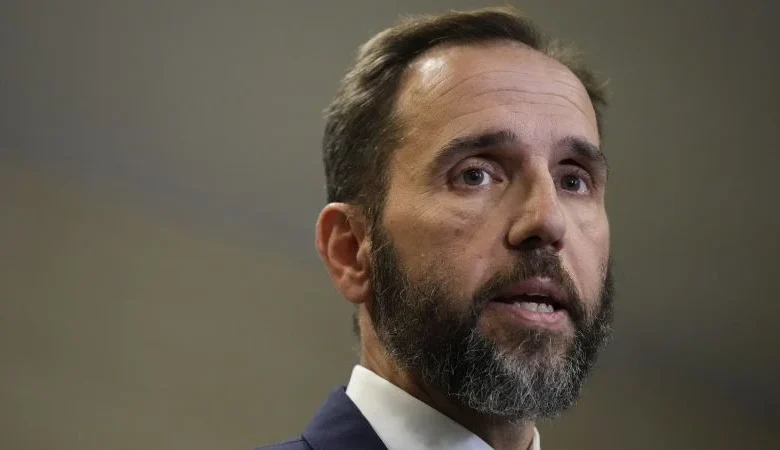
Former special counsel Jack Smith is set to testify Wednesday in a closed-door deposition before the House Judiciary Committee regarding his prosecutions of Donald Trump.
Smith plans to testify about Trump’s alleged mishandling and retention of classified documents and his role in attempting to overturn the 2020 election, according to sources familiar with the investigation. He also will seek to clarify issues surrounding the use of phone records.
But there may be details Smith may not be willing or able to testify about on Wednesday, such as parts of the second volume of his report around Trump’s handling of classified documents in Mar-a-Lago, the source added.
The high-stakes interview could go hours and carries significant risk for Smith since Trump has called for him to be prosecuted, and how Smith answers questions could carry risks with a federal judge in Florida, the Justice Department and the Republican-controlled Judiciary Committee.
Judiciary Chairman Jim Jordan, an Ohio Republican, subpoenaed Smith to testify privately, accusing Smith of running a “partisan and politically motivated” probe of Trump and conducting “abusive surveillance” of lawmakers, among other things.
Smith has continually denied his work was politically motivated and said that he is willing to testify publicly regarding his investigations into Trump’s alleged mishandling of classified documents at his Mar-a-Lago resort and the attempts to overturn the 2020 presidential election culminating in the January 6, 2021, US Capitol riot.
“The idea that politics would play a role in big cases like this, it’s absolutely ludicrous and it’s totally contrary to my experience as a prosecutor,” Smith said during an interview in October with former federal prosecutor Andrew Weissmann at the University College London.
“Jack is looking forward to answering the committee’s questions, sharing the legal basis for his investigative steps, and discussing the evidence of President Trump’s alleged efforts to overturn the 2020 election and his unlawful possession of classified documents at Mar-a-Lago,” Smith’s attorney Peter Koski said in a statement to CNN.
Smith, a longtime public corruption prosecutor, was appointed by Attorney General Merrick Garland in November 2022 to oversee the investigations after Trump announced he was running for president again.
He brought criminal charges against Trump in 2023. The former president pleaded not guilty in both cases and neither went to trial. The case on mishandling classified documents ended with District Judge Aileen Cannon, a Trump appointee, nullifying Smith’s office. The 2020 election and January 6 case was hamstrung by a landmark Supreme Court decision and dropped after Trump was re-elected.
Trump has continued to say that he did not do anything wrong on January 6, and since taking office for a second term, he has pardoned over 1,000 people who had been charged in connection to the violent attack.
Jordan has said the Republicans are interested in how the investigation into Trump came to be, how the special counsel’s office interacted with the bipartisan House Select Committee that investigated January 6, and the efforts by investigators to obtain information about members of Congress related to the US Capitol riot.
Some of those efforts took place before Smith took over when other established Justice Department offices and the FBI were running the investigations.
In his letter to Smith demanding testimony, Jordan said he believed Smith’s team had attempted to silence Trump about his case after charging him and abused investigative steps and their interactions with defense counsel. However, many of those issues had been mediated in the court system.
Of particular note, lawmakers have been learning more about private phone records of senators and a congressman that were collected during the early January 6 investigation, called “Arctic Frost.”
“There’s no predicate that we can find for the solicitation of these telephone records, which I think emphasizes the political weaponization that was behind all this effort, and we’re still getting more information,” Senate Judiciary Committee Chairman Chuck Grassley, an Iowa Republican, said in October.
Lawmakers said that FBI Director Kash Patel showed them the subpoenas that were for toll records. The records showed phone numbers and the length of calls, but not the content of the calls.
Smith plans to use his deposition to correct mischaracterizations about his work, including his use of toll records, which are a typical type of information gathered secretly during criminal investigations, according to sources familiar with the investigation.
The Judiciary Committee on Tuesday also demanded interviews with four additional officials who worked with Smith on his investigation and were involved in subpoenaing phone records for several members of Congress.
Smith’s team released a 137-page final report on the probe before Trump was sworn into office for a second term. But Cannon has previously prohibited the release of details from Volume II and blocked it from being shared with Congress.
Sources familiar with the investigation also say that Smith will be restricted from answering any questions regarding grand jury materials, citing that grand jury secrecy still applies even after the jury has completed their work.
The Justice Department has given Smith’s legal team some guidance on what he can answer in advance of the deposition, according to a person familiar with the situation.
However, what happens to Smith may not be up to him given the makeup of the Republican-led committee and the Trump White House and Justice Department.
If he declines to answer certain questions, lawmakers could accuse him of obstruction and ask the Justice Department to launch a criminal probe. If Smith allegedly divulges too much and violates grand jury secrecy or reveals confidential details without authorization, he could risk blowback from the Justice Department or a federal judge.
Several of Smith special counsel’s office investigators have appeared for testimony behind closed doors on Capitol Hill already.
The Judiciary Committee has already made a criminal referral on one special counsel’s office deputy, Thomas Windom, for allegedly obstructing the congressional investigation when he declined to answer some questions.
Windom struggled with the guidance the Justice Department gave him on what to answer to the House committee and even went to the chief judge of the federal district court in Washington, DC, for guidance before his second round of testimony.
Judge James Boasberg suggested at one point Windom may want to decline to answer questions about his work with Trump’s grand juries by asserting his Fifth Amendment rights.
“I certainly understand [Windom’s lawyer] and Mr. Windom’s desire not to be stuck between the horns of the dilemma, as you said, that he could be prosecuted either way,” Boasberg said in a hearing, according to a transcript obtained by CNN of the previously unreported hearing.
Classified documents prosecutor Jay Bratt also declined to answer questions in a deposition by asserting his Fifth Amendment protection from self-incrimination.
CNN’s Evan Perez contributed to this report.