How a $1M group lotto win ended in fraud charges — and how to protect your own lottery pool

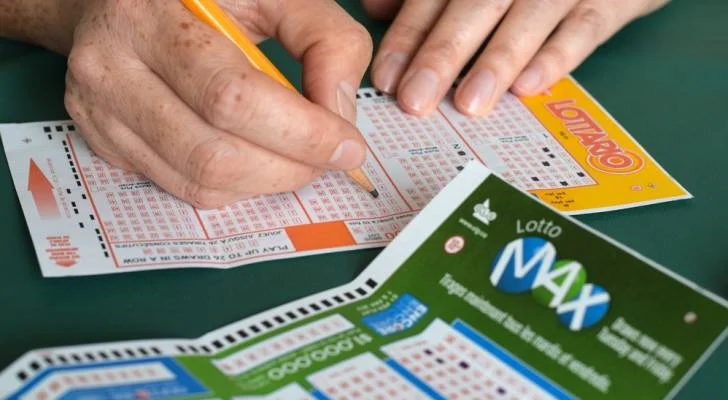
Lotto Max ticket
A 70-year-old Toronto man has been charged with theft and fraud after allegedly claiming a $1 million prize on a group lottery ticket and keeping it all for himself. According to the Ontario Provincial Police (OPP), the ticket was part of a group play arrangement involving two other people, with the accused claiming the prize money in July (1).
The Ontario Lottery and Gaming Corporation (OLG) conducted a forensic review, and the case was referred to the police — the OPP launched an official investigation in September.
For Canadians who play the lottery as part of a group, whether with co-workers, friends or relatives, the case illustrates how a big win can quickly turn into a legal crisis.
According to police, the man submitted a claim to OLG, saying he was the sole winner of a $1 million prize from a Lotto Max ticket. He received his payment, but a review by the OLG’s forensic investigation unit raised concerns.
The case was referred to the police and their investigation determined that the ticket was part of a group-play arrangement. Police say the winnings should have been shared among three people, not just one. The man now faces charges including theft over $5,000, fraud over $5,000 and possession of property obtained by crime.
OLG released a short statement (2), saying it could not comment further while the case is before the courts. “OLG has a robust process with many levels of scrutiny and transparency in the prize claim process.”
Read more: Here are 5 expenses that Canadians (almost) always overpay for — and very quickly regret. How many are hurting you?
Pooling together your money with others in order to buy lottery tickets is a longstanding tradition in Canada. Sometimes these are one-off occurrences, but often a group will buy tickets on a regular basis.
However, if you don’t have a clear agreement in writing about what happens if you win, disputes can escalate quickly.
Miscommunication can be mistaken for fraud. For example if all you have is a verbal arrangement, disagreements become one person’s word against another’s. The case of the Toronto man shows why even small group jackpots should be treated with the same level of seriousness as a shared financial asset.
OLG does offer a formal process for buying shared tickets (3). On OLG.ca, group play allows a “Group Captain” to create a group and build “Group Packs” from which members buy tickets.
If the group wins, the prize is divided equally among participants. Smaller prizes are split automatically, while larger ones require documentation in order to be paid out (4).
OLG offers guidelines and practical steps you can take to reduce the risks when playing the lottery as part of a group:
-
Choose one person to act as the group’s captain. This person functions like the commissioner in a fantasy sports league — they coordinate members, collect payments and validate tickets.
-
Have an agreement in writing that states who pays what and sets precise rules for how winnings will be split; have all members sign it.
-
Keep detailed payment records.
-
Sign paper tickets right away and write “In Trust” by the signature to show the ticket belongs to the group.
If you suspect that the prize winnings have been unfairly claimed by a member of your group, you do have options. If you are in Ontario, your first step should be contacting the OLG Prize Centre. You could request a forensic review like the one conducted in the case mentioned at the start of this article. Another lengthier and likely more expensive option would be to go to small claims court for amounts less than $35,000.
The story about the Toronto man who allegedly claimed the $1 million in winnings for himself shows how fast a lottery pool can turn into a legal quagmire.
You might trust the people you’re playing with, but it’s preferable to have a transparent agreement about how your group play will work. Clearly state who’s paid for what and how the prize will be shared in the event you win. This reduces the likelihood of misunderstandings and protects everyone in the group from becoming embroiled in a nasty dispute instead of a big celebration.
We rely only on vetted sources and credible third-party reporting. For details, see our editorial ethics and guidelines.
CBC News (1); CityNews (2); OLG (3, 4)
This article provides information only and should not be construed as advice. It is provided without warranty of any kind.


![[Feature] Half of the GOTY nominees are indie games. Will we enter an era where games are recognized more for their quality than their scale?](https://cdn1.emegypt.net/wp-content/uploads/2025/12/Feature-Half-of-the-GOTY-nominees-are-indie-games-Will-390x220.webp)