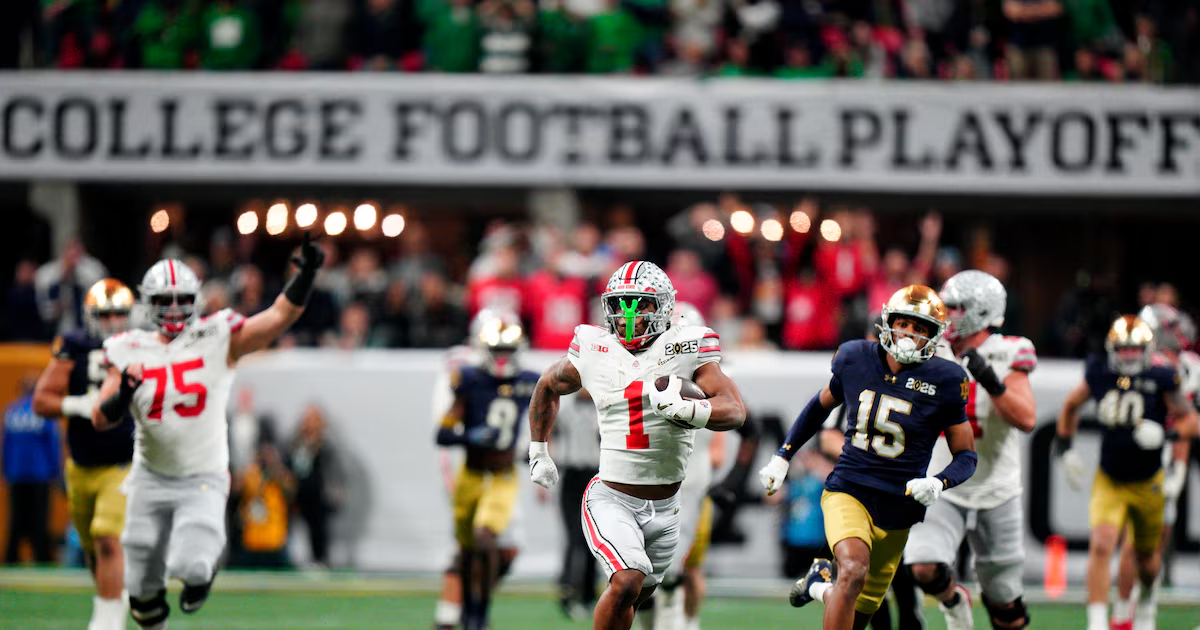
The College Football Playoff is nearly upon us.
As Texas A&M gears up to host Miami and Oklahoma faces Alabama, colleges insiders Lia Assimakopoulos and Shawn McFarland joined SportsDay columnist Kevin Sherrington in a quick roundtable about all things college football.
Here are some of the highlights:
Other excerpts: Carson Beck vs. Marcel Reed may determine Texas A&M-Miami in College Football Playoff
Texas College Sports
What does the future of bowl season look like? While there are certainly still incentives for teams to compete, are you surprised so many teams declined bids?
Assimakopoulos: The expanded College Football Playoff is great for everyone except non-playoff bowl games. The New Year’s Six bowls are all playoff games now, and the teams that make the top non-playoff bowls are typically coping with narrowly missing out on the playoff (i.e. Notre Dame). Outside of the Pop-Tarts Bowl, which may still have some draw because of the theatrics, it’s tough to motivate players, coaches or fans to care. It’ll only get tougher if the playoff expands to more than 12 teams in the near future. Maybe more bowls need to take the Pop-Tarts approach — but that wasn’t even enough to lure Notre Dame. It’s tough, and I don’t think there’s an easy fix.
McFarland: I can’t imagine non-playoff bowl organizers are incredibly comfortable right now, and if the postseason ever expands, it’ll only create more Notre Dame-esque situations in which spurned teams opt out. The head coach carousel and the portal don’t help, either, if bowl-eligible teams need to spend their Decembers in a state of total rebuild. Bottom line: If the teams and players are no longer inclined to care, why should the fans?
Sherrington: There are a couple of ways to go. First, you postpone the portal and signing day until after the playoffs. Puts a burden on the teams in the playoffs, but so be it. That’s why they have GMs. Postponing personnel moves might also postpone the hiring of coaches before the season’s over. The next thing to do is expand the playoffs to 16, get rid of the league title games and incorporate a couple more bowls in the process. The rest can hang on or die. Too many bowls as it is, anyway. No more participation trophies, please.
It seems like there will always be debate about the best format for the College Football Playoff. If you got to make one change for the 2026 season when it comes to the postseason, what would it be?
Assimakopoulos: I think a rule needs to be in place that teams who don’t play cannot move in weekly CFP rankings. They can only be moved by other teams passing or falling behind them. It makes no sense that Miami and Notre Dame could swap positions in a week where neither team played. The committee needed to decide which team was better earlier in the season, and the head-to-head result should’ve been pretty telling. I think Miami deserves to be in, but I understand Notre Dame’s frustration with being led on. And a bonus: if you make a championship game, the result must help OR hurt you *cough, cough* Alabama.
McFarland: I don’t necessarily hate the final result of the CFP committee’s deliberations this season. The Group of Five teams deserve a seat at the table, Miami should’ve been in over Notre Dame and Texas didn’t have a strong enough body of work. The process it took to get there (see: weekly rankings updates) should be reconsidered. Would Notre Dame be this upset if the committee didn’t have it ranked ahead of Miami a mere five days before the two teams flipped? Well, probably, yeah, but the optics would’ve looked a lot less messy.
Sherrington: For all of Notre Dame’s indignation, TCU fell out of the playoff field after a 52-point win in 2014. No one outside North Texas cared. The problem is, it’s hard to quantify the best teams without common opponents and similar schedules. The committee needs a better computer, and it needs to tell the SEC, yes, we can kick a three-loss Alabama out two years in a row. Frankly, if you lose a quarter of your games, you shouldn’t be under consideration. And tell Notre Dame you’re always going to be on the bubble if you don’t join a league and play in a league title game.
What do you make of powerhouse teams changing future schedules to avoid difficult non-conference games? Should the Oklahomas and Texas A&Ms of the world schedule cupcakes so they can sneak into the CFP with two-loss SEC seasons?
Assimakopoulos: At that point, wouldn’t it be more valuable to play a true preseason against better teams where the games don’t count at all? For the sake of the game, I hope exciting non-conference matchups don’t go away. But at the same time, I get it. I also think teams, like Texas, need to understand that there’s a risk and a reward. If Texas beat Ohio State, it would’ve been pretty much guaranteed a spot in the playoff barring a horrific collapse in SEC play. If you’re gonna reap the benefits, you have to be willing to face the consequences. And if you’re not, then I hope the committee will factor those decisions into its strength of schedule metric.
McFarland: There’s two answers here. The logical one: Yeah, absolutely, because a one- or two-loss SEC team will always be in a favorable position. The earnest one: No, because, c’mon, wouldn’t that just effectively neutralize the point of non-conference play? Plus, if everyone schedules cupcakes, then the goalposts are only going to shift and add even more emphasis to conference play and performance against shared opponents. You can tweak the way you compete, but you can’t run from competition altogether.
Sherrington: Steve Sarkisian can huff and puff, but he didn’t miss the playoffs because he lost to Ohio State and Georgia. He missed because he lost to Florida, didn’t look good in several other wins and won just two road games. Notre Dame is out because it lost to Miami, but, without that and the A&M game, how good was the Irish’s schedule? Only ranked wins were over USC (20th) and Pitt (22nd). Let me tell you, the coaches on the committee put a lot of stock in those tough non-conference games. A close loss over a blueblood means more than a big win over a nobody.