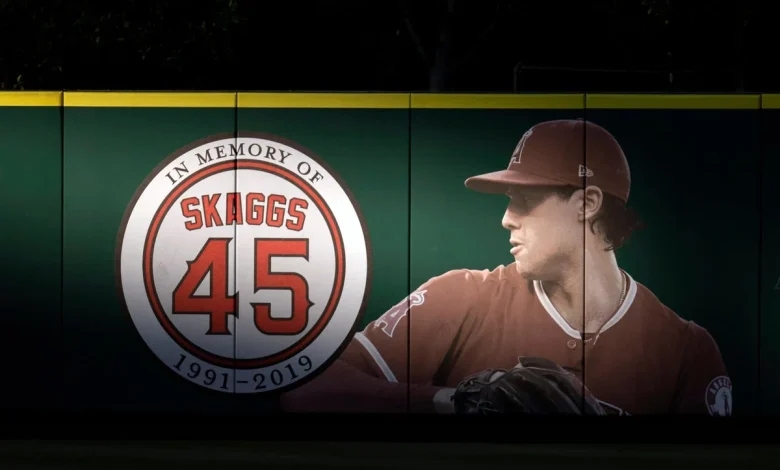
The Los Angeles Angels have settled the wrongful death lawsuit brought against them by the family of pitcher Tyler Skaggs. Four days after deliberations began, but before the jury could reach a verdict, the two sides reached an agreement, the judge announced on Friday.
The terms of the settlement are not public.
The landmark case lasted nearly three months. Had they lost, the Angels would have become the only U.S. professional team to be found civilly liable for the death of one of its players.
Skaggs died on July 1, 2019, after ingesting a fentanyl-laced pill provided by Eric Kay, the Angels’ ex-communications director, who is currently serving a 22-year federal prison sentence.
On Wednesday, the second day of deliberations, the jury asked a written question of the Court: “Do we as the jury get to decide the punitive damages amount? There is no field for it?”
The question was notable, given that punitive damages had been requested by the Skaggs attorneys as a way to punish the Angels for their conduct. Negotiations ramped up the following day, according to sources briefed on the discussions but not authorized to discuss them publicly. Those negotiations wrapped up late Thursday night, and a deal was reached shortly after the jury began deliberating on Friday.
Skaggs family attorneys told jurors over the course of the civil trial that the Angels knew Kay was battling a serious opioid addiction for years, but that it was never adequately addressed. The plaintiffs said the team failed to follow their own policy in handling Kay, as well as Major League Baseball’s policy.
The Angels began this trial by arguing to the judge that they should be able to re-litigate the facts of Kay’s 2022 criminal trial, and contend that the fentanyl pill didn’t kill Skaggs. In a Sept. 22 ruling, the judge ultimately decided that defense wouldn’t be allowed.
The team pivoted, arguing that they acted properly and reasonably in addressing Kay’s addiction, and that Skaggs was a drug addict and dealer whose actions were “reckless.”
Relations between the two sides were contentious throughout the proceedings. The Angels accused the Skaggs side of hiding multiple witnesses, while the Skaggs side accused the Angels of “gaslighting” throughout the trial, and accused one Angels executive witness of perjury.
Nearly every day of testimony included numerous sidebars, and during witness questioning there were objections at almost every turn.
During his rebuttal to closing arguments, Skaggs attorney Daniel Dutko implored jurors to take into account the organization’s refusal to take accountability for its actions.
“Two hours of talking to you,” Dutko said. “Not one time did the Angels take any responsibility for anything. … The picture that they painted of Tyler Skaggs is not a picture that anybody knows.”
The Angels could still face other consequences, beyond the cost of the settlement. MLB commissioner Rob Manfred said in November that the league planned to review all the testimony from the nine-week trial — leaving open the possibility that the league will address this result in some capacity. During the trial, an MLB spokesperson publicly refuted the testimony of an Angels VP, who said the team “worked with” the league in treating Kay’s addiction.
This story will be updated.