‘Hamnet’: Read The Screenplay For Chloé Zhao’s Take On What Drove Shakespeare To Create His Magnum Opus

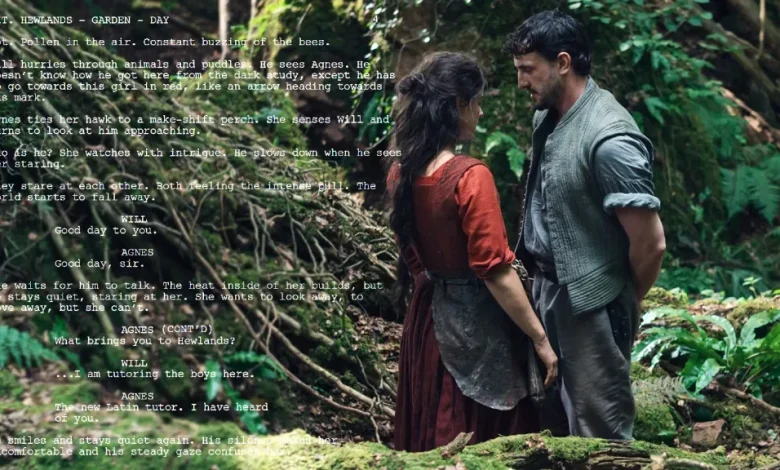
Deadline’s Read the Screenplay series spotlighting the scripts behind the awards season’s most talked-about movies continues with Hamnet. Directed by Chloé Zhao, the film was co-written by Zhao and the book’s author Maggie O’Farrell, whose novel, Hamnet: A Novel of the Plague, serves as the source material.
The romantic drama had its world premiere at the Telluride Film Festival and won the People’s Choice Award at the Toronto Film Festival, a strong indicator of Oscar success. That has borne out in the awards noms; the film has picked up 11 Critics Choice noms including Best Picture and Best Adapted Screenplay, six Golden Globe noms including those two categories, and it made the AFI’s Top 10 Movies of 2025 list. It began its theatrical rollout November 26.
Starring Jessie Buckley as Agnes, Paul Mescal as Will Shakespeare, and Jacobi Jupe as Hamnet Shakespeare, the heart-wrenching story imagines the life and death of Hamnet, who tragically succumbs to the bubonic plague at age 11. His loss is said to have profoundly influenced the playwright, leading him to later write his classic tragedy Hamlet.
The true protagonist in he story is Agnes Hathaway (historically known as Anne Hathaway, but referred to as Agnes in the novel/film). She is portrayed as a free-spirited woman deeply connected to nature and herbal remedies — a mysterious outsider in her community.
The first act dedicates significant time to the passionate, unconventional courtship and marriage between Agnes and Will, a young Latin tutor who is struggling under the thumb of his harsh father. It establishes a powerful, magnetic but eventually strained bond between two artistic souls.
The plot is driven by the untimely death of Hamnet, vividly depicting the immediate, visceral grief of the family, particularly Agnes, who is left alone in Stratford while William is establishing his career in London.
Hamnet’s death creates a profound rift between the parents. Their shared grief is experienced in isolation, with William finding an outlet in his work and Agnes retreating into herself, unable to connect with her husband’s distant, intellectual processing of the pain.
The final act explores the popular theory that Shakespeare channeled his grief over his son, Hamnet, into his great tragedy Hamlet. The film culminates in Agnes secretly attending the first performance of the play, initially seeing the use of her son’s name as a betrayal, but eventually finding a complex form of tribute and reconciliation in the transformative power of the art.
The script’s primary achievement is humanizing the legend. It strips away the myth of “The Bard” to tell a deeply intimate, emotional story about a mother, a father and the devastating cost of their son’s life and death, arguing that this domestic tragedy was the wellspring for a literary masterpiece.
Read the screenplay below.