Open this photo in gallery:
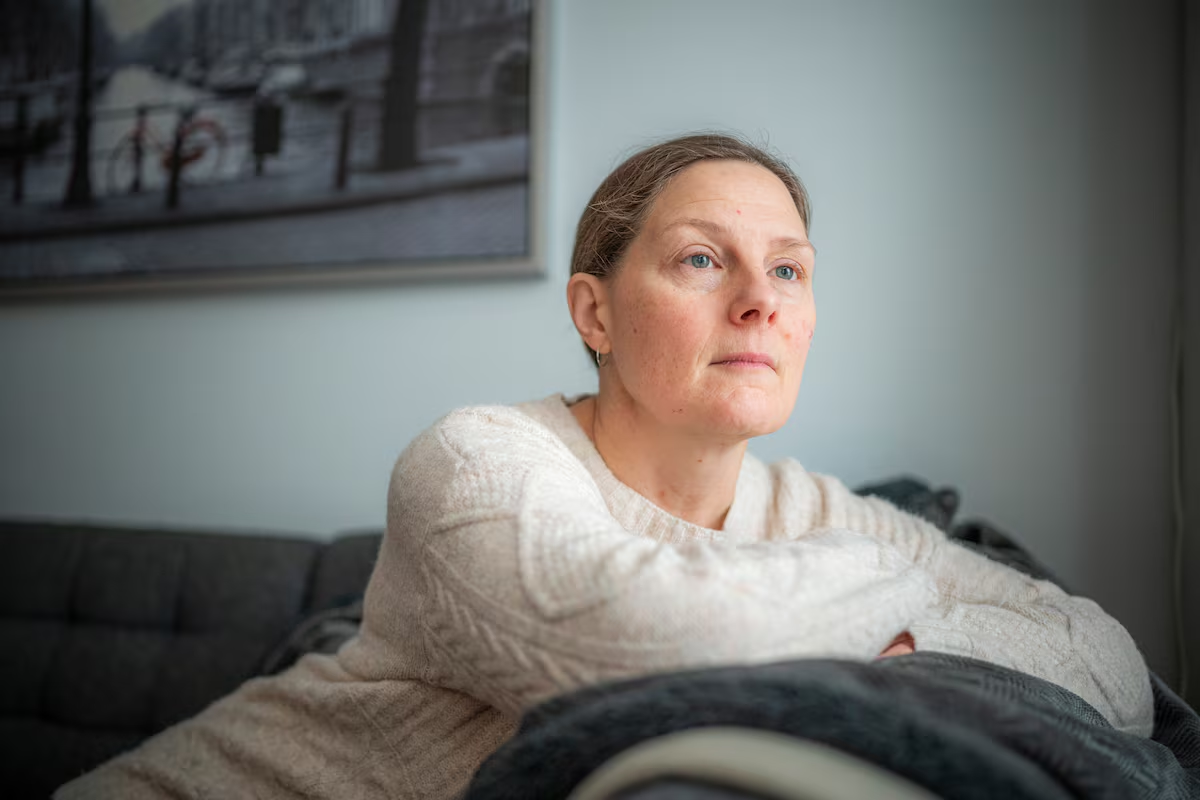
Christine Guptill attended a holiday party earlier this month and caught the flu. She was later diagnosed with pneumonia and an ear infection.Ashley Fraser/The Globe and Mail
At a neighbourhood Christmas party in Ottawa earlier this month, there were all the usual holiday delights: festive decor, treats and even a visit from the big man up North. It was an evening to remember for Christine Guptill, but not in the way she had imagined.
Tucked into a party room at Royale Ranch, a horse farm in the city’s south, there were nearly 40 people at the party – half children, half adults. Ms. Guptill said some children were coughing and she overheard one family say they had left their sick kid at home.
A couple days later, the flu hit Ms. Guptill hard, and by the following weekend, she was diagnosed with pneumonia and an ear infection. She could hardly get up from the couch, alternating between Tylenol and Advil to ease the pain.
“It really kicked my butt,” said Ms. Guptill.
Respiratory virus season is here. These reminders from an ER doc can help keep you healthy
This year’s flu season is shaping up to be one of the worst in recent years, driven by low vaccine uptake and the circulation of a problematic strain – influenza A(H3N2) subclade K – that might be a mismatch for this year’s shot, meaning it may offer less protection.
National surveillance data updated on Friday show flu activity is increasing rapidly. Nearly 28 per cent of tests came back positive for the virus during the second week of December, which is similar to the highest value recorded in the past three seasons. Last season, it was 27.6 per cent in mid-February.
Public-health experts across Canada are urging the public to get vaccinated against the flu, stressing that it is the best defence against severe illness, hospitalization and death, even if the vaccine is not a perfect match.
Earlier this week, public-health officials in the Ottawa and Eastern Ontario regions issued a “stark reminder” of the severity of the virus after the deaths of three children, between the ages of 5 and 9, from flu-related complications. The deaths occurred during the first two weeks of December.
Doctors urge people to get flu vaccine as Ottawa hospital sees a surge in cases
Meanwhile, hospitals across the country are seeing a flood of flu cases in their emergency departments. In Quebec, CHU Sainte-Justine and the Montreal Children’s Hospital have told families to avoid the ER if their child’s condition does not require immediate care. Alberta officials on Friday said the same as some hospitals in the province have had to add temporary beds and extra staff to deal with the influx.
The Ontario Hospital Association said on Tuesday that the daily number of confirmed flu cases was up by 150 per cent last week. Additionally, hospital admissions were up by 84 per cent and newly confirmed admissions to intensive care had increased by 127 per cent.
“Influenza A positivity is now higher than any of the last three seasons, with increases across all age groups,” said Anthony Dale, president of the association, in a statement.
It takes about two weeks after vaccination for antibodies to fully develop in the body and provide protection. Dr. Dale said that is why it’s important that people get vaccinated as soon as possible and follow other public-health measures, such as handwashing and staying home when sick.
Earlier: Hospitals prepare for intense flu season as doctors urge public to get vaccine
Laurie Block, whose daughter fell ill with the flu in early December and is still recovering, said she wishes her family had gotten their shots earlier. For one reason or another, they hadn’t made it a priority.
Her three-year-old daughter was diagnosed with flu and rhinovirus after two visits to the emergency department for a persistent fever.
“Now, we are on antibiotics and hopeful she will be back to herself soon,” said Ms. Block, who lives in Squamish, B.C., and described the past few weeks as stressful and full of many “sleepless nights and painful days.”
Similar to Ms. Block’s family, others told The Globe and Mail that the early and intense flu season caught them by surprise.
It was late November when Rachel Cooper, parent council co-president at McMurrich Junior Public School in Toronto, said the flu made its rounds among students at the school. She said parents had ordered pizza slices in advance for a lunchtime fundraiser on Nov. 27. But there was a stack of boxes left over that day because so many children were absent.
“We had 20 or so extra pizzas which is, based on how many pizza slices are ordered, about 120 kids,” said Ms. Cooper.
Open this photo in gallery:
Ms. Guptill says she wishes she had worn a mask to the party and that people took precautions more seriously.Ashley Fraser/The Globe and Mail
For Emeline Edgett, a fourth-year student at Sheridan College in Oakville, Ont., studying music theatre, flu symptoms came on quickly as she was between performances of her class production of Into the Woods last week.
Nausea turned into chills, fatigue and a fever as she was getting ready for the second show in a single day. She powered through the sickness to perform. Many of her classmates did the same.
“It went through the casts of all the fourth-years in a very short amount of time,” she said.
The viral surge has also led to an increased demand for personal protective equipment, such as masks and testing kits.
PPE Supply Canada said in a statement that it has seen a “measurable increase” in demand over the past month for masks and testing kits. It added that there has been interest from both individuals and organizations, such as pharmacies, workplaces and care facilities, across the country.
The company said mask purchases are up by almost double compared with the same time period last year, but there has been a more significant shift with at-home test kits, specifically the kind that can rapidly detect and differentiate between COVID-19, influenza A and influenza B.
Ms. Guptill in Ottawa said she wishes she had worn a mask to the Christmas party – she usually does in group settings – and that people took precautions more seriously.
“Basically, I wish we’d learned more from our experiences with COVID than we seem to have,” she said.