Assassin’s Creed Shadows on Switch 2 started life as a “very slow” port that almost cut a key feature, but the game’s devs detail how they brought the full experience to Nintendo’s handheld

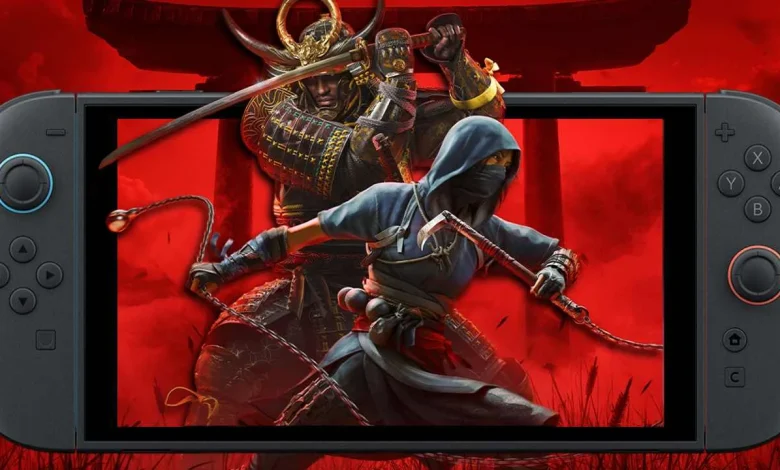
Ubisoft’s Star Wars Outlaws may be the most impressive Nintendo Switch 2 port to date, but the company’s Assassin’s Creed Shadows port doesn’t come too far behind. The current-gen only open-world is filled with intricate simulations across a massive, almost-single world, and it’s now all playable on Nintendo’s latest handheld.
Speaking to FRVR, rendering technical architect Nicolas Lopez, rendering project lead programmer Sebastien Daigneault, and engine project lead programmer Bruno Champoux detailed the unique challenge of bringing the game to the Nintendo Switch 2, a process that started with a largely unplayable version of the game.
“The visual and performance evolved significantly from the start of development. Early on, we reused parts of the Switch 1 support from Immortals: Fenyx Rising,” the trio explained. Built on an earlier version of the Anvil 2.0 engine, this underrated open-world adventure was an extremely impressive open-world game on Nintendo’s original Switch, but it didn’t feature many of the killer technical features present in Assassin’s Creed Shadows.
The team explained that “the rendering architecture had changed, so the first builds of Shadows [on Switch 2] were buggy, incomplete, and very slow”. For the Nintendo Switch 2, the team made a “series of ‘smart cuts’ to maintain visual quality”, including disabling dynamic cubemaps, replacing ray-traced global illumination with baked global illumination, and even changing the tree wind animations to be less intensive on the game’s hardware.
“In handheld mode, the game is already pushing both the GPU and CPU very hard, and there isn’t much headroom left without taking significant risks.”
Don’t expect any major resolution improvements to the game’s handheld performance, but hopefully the handheld mode’s colours can be fixed in a future patch.
While the team Is “keeping RTGI [ray-traced global illumination] as something we’d like to explore in the future” for Switch 2 releases, it was cut from the game just like on Xbox Series S. However, the team was able to keep its “micropolygon” technology, Ubisoft’s take on Unreal Engine 5’s Nanite that eliminates level-of-detail pop-in by dynamically adjusting models as players move closer or further away from them.
The team explained that getting the game’s micropolygon technology working on the system was “initially thought impossible” with the team originally seeing the tech’s inclusion “as a risk, but early tests confirmed that Switch 2’s streaming bandwidth was sufficient.”
“The main challenge was ensuring low latency streaming and efficient compute execution, particularly in undocked [handheld] mode,” they explained. “Overall, while being a current-gen game did add complexity, Anvil’s scalable architecture allowed us to adapt Shadows effectively to Switch 2’s capabilities.”
While Assassin’s Creed Shadows is playable on Valve’s Steam Deck, the docked version of the game on Nintendo Switch 2 is a clear jump in graphical prowess due to specific Switch 2 optimisations, while handheld remains quite similar in performance and looks. The Shadows team explains that the Switch 2 “demands a different optimisation mindset than PC-based devices like Steam Deck” with “more platform-specific compilers and GPU behaviours, so leveraging the hardware requires a deeper understanding of its specifics”.
When asked if there is any possibility of handheld mode getting a patch for a higher resolution, the team explained why that likely isn’t possible. “In handheld mode, the game is already pushing both the GPU and CPU very hard,” they explained, “and there isn’t much headroom left without taking significant risks. The GPU in particular is heavily filled with compute workloads, so we feel we’ve reached a good overall balance between resolution and fluidity. That said, if additional optimisations are found over time, they would naturally result in higher dynamic resolution.”
AC Shadows’ Micropolygon technology allows all of these assets to dynamically adjust in detail without popping in, making for a smoother and more lifelike feel as you get closer to objects.
The team explained that there are some added complexities when taking a game designed for higher-end machines and shrinking it down onto lower-spec hardware. With handheld gaming now capable of playing console experiences with some added work, the team explained that ensuring a good handheld experience requires planning “for these platforms early in production. Games should be able to scale down to lower specs, and the user interface should be adapted for smaller screens, touch-aware controls, larger fonts, and clear layouts all help create a smooth experience.”
As for the future of Nintendo Switch 2 games, the Assassin’s Creed Shadows teams do expect one major advantage of the handheld to get better as the generation continues: DLSS. As Digital Foundry have reported, Nintendo’s platform is using very specific versions of Nvidia’s upscaling technology which the Shadows team tells us provides “better image quality than Anvil TAAU even when upscaling from lower resolutions”, but there’s space for even better versions of the tech as time goes on.
“There’s definitely room for improvement over time as both the technology and platform support evolve,” the team told FRVR. “Future iterations could further enhance image quality or efficiency, allowing us to push visuals even higher while keeping the game running smoothly.”
The AC Shadows team explained that the most important aspect of bringing the colossal RPG to Nintendo Switch 2 was keeping the game’s “dynamism” while maintaining good performance. There are clever cuts, but the game maintains its open-world, its wind simulation and dynamic LoDs, and even its complex physics systems (albeit in a cut-down form) that allows players to slice through wooden doors and cloth while battling their foes.
While the game’s handheld image quality isn’t as clear as Ubisoft’s own Star Wars Outlaws, AC Shadows on Nintendo Switch 2 is very impressive and is one of the most intensive games playable on the new console. When asked what the team are most proud of with this port, they explained that simply running “the same game content as on other consoles” and being able to have “our virtual geometry system, Micropolygon, running on the platform” are the highlights.
While Ubisoft didn’t confirm specific titles, the team did tease they are continuing work on Anvil’s Switch 2 support which should see additional games come to Nintendo’s handheld in the future.