Before you splash your loose change, take a closer look for €2 coins that are deemed rare and could fetch a pretty penny at auction. Here’s everything you need to know
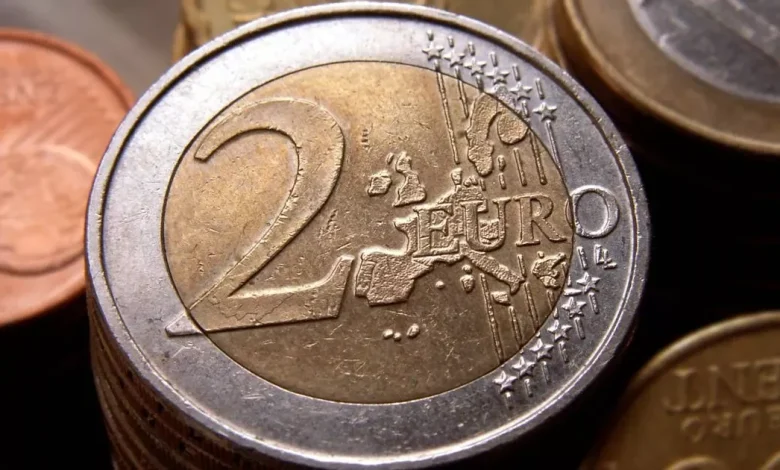
Certain two euro coins can be very valuable(Image: AndreasWeber via Getty Images)
Check your pockets or down the back of your couch for this rare €2 coin that could fetch a lot more money at auction.
The piece in question can be traced back to Ireland’s inaugural year of euro adoption. It stands out for both its artistic design and pioneering technical elements. Similar to all Irish euro currency, the national face was designed by renowned engraver Jarlath Hayes.
It displays the emblematic Celtic harp, which is an iconic symbol of Ireland’s cultural heritage. The harp occupies the coin’s centre, bordered by “Éire” to the left and the minting year, 2002, to the right.
Encompassing this central area are the 12 stars representing the European Union, intended to symbolise harmony amongst all member nations.
The standard face of the €2 coin is uniform throughout the eurozone, though two separate versions exist. Currency produced from 2002 to 2006 displays an earlier European map with fewer boundary lines shown, which can be appealing to collectors.
Content cannot be displayed without consent
Irish 2002 Euro coins can be valuable to collectors because it’s the first year they were issued. Although most 2002 Irish €2 coins are common, there are some that are sought-after by collectors.
The details you need to look out for are rare minting errors that could make the pieces much more valuable. These include die cracks and breaks, rotated dies and incorrect edge inscription. To check for these flaws, hold coins under a bright light and use a magnification device if necessary.
Errors aren’t the only lucrative details you should hunt for. The Irish Mint produced started kits at the end of 2001 that contained the new coins. Pieces from these packs – especially in their original packaging – could be worth a pretty penny nowadays.
On eBay, we discovered coins selling for nearly €50, with those featuring misprints occasionally commanding figures exceeding three times that amount.
Five ways to identify rare coins
1. Look at the year and mint mark – Some years have lower mintages, which tend to be sought-after. Look for mint marks or special symbols that indicate a limited edition or a specific mint.
2. Hunt for commemorative and special editions – Each eurozone country issues 2-euro commemorative coins, often in limited quantities.
3. Assess the country of origin – Coins from countries with lower populations (Monaco, San Marino, Vatican City, Andorra) are produced in much smaller numbers and are therefore rarer.
4. Check for errors or misprints – Coins with minting errors (double strikes, off-centre designs, missing elements) can be very valuable.
5. Ask the experts – You can book an appointment with a professional or use apps and online searches to see if the coins could be worth more than you’d expect.