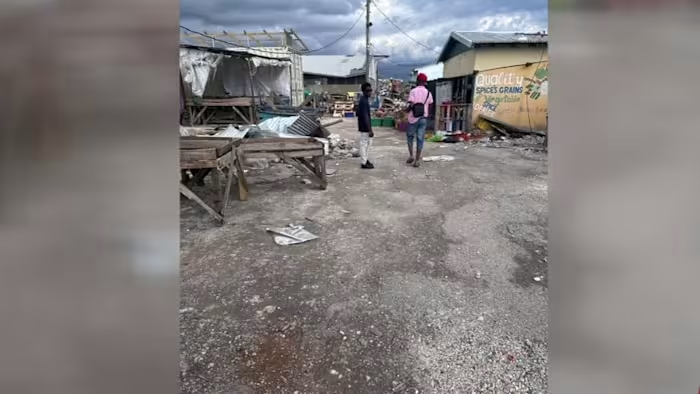
JACKSONVILLE, Fla. – More than a month after Hurricane Melissa devastated Jamaica’s western coast, many communities remain without power and running water, leaving residents to cope with primitive conditions as recovery efforts continue.
The Category 5 hurricane, which made landfall near New Hope, Jamaica, on Oct. 28, left widespread destruction across several parishes, with Westmoreland among the hardest hit regions.
“His mother, grandmother, cousins, nieces, nephews, aunts, uncles, the list goes on, and they were all affected in Westmoreland, where the direct impact took place,” said Amber Harrison Lewis, whose family lives in the impacted area.
Hurricane Melissa developed from a tropical wave on Oct. 16 before intensifying rapidly in the Caribbean Sea. The system matched the 1935 Labor Day hurricane’s record for the most intense central pressure at 892 millibars. The storm claimed at least 100 lives in Jamaica and 40 in Haiti.
In Negril, Westmoreland, residents continue to struggle without basic utilities. “No water, no power,” Harrison Lewis said, describing conditions her family faces. The devastation extends to other parishes, including St. Elizabeth, St. Ann and Hanover.
RELATED | Relief organization brings hope to hurricane-ravaged Jamaica as people wander streets for food, water, and help
Even concrete structures that withstood the hurricane’s winds now face new challenges. Harrison Lewis’s mother-in-law’s home, while still standing, suffers from extensive water damage with leaks in every room. In the storm’s immediate aftermath, communication was so limited that family members only learned of their relatives’ safety through messengers traveling from the eastern side of the country.
“It’s pretty much a blackout after 5:30; there’s no lights. They have kerosene lamps and flashlights. And those that are fortunate have generators,” Harrison Lewis said.
The Jamaican government continues to organize fundraising efforts, though officials acknowledge recovery will require extensive time and resources. Areas that once thrived, particularly on the western side of the country, now appear barren.
Harrison Lewis urges people to remember that the crisis continues long after media attention fades. “Don’t let it be a viral moment,” she said. “Remember that these are people, and just because you saw clips of things happening a week ago, it’s still happening. It’s not something that is just going to blow by, and we are going to move on.”
For information about recovery efforts and donations, visit www.state.gov.
Copyright 2025 by WJXT News4JAX – All rights reserved.