Listen to this article
Estimated 4 minutes
The audio version of this article is generated by text-to-speech, a technology based on artificial intelligence.
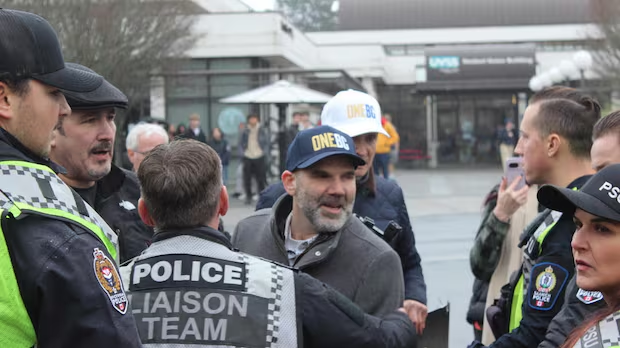
Supporters of the OneBC party gathered on the University of Victoria (UVic) campus Tuesday for an unsanctioned event — condemned by Indigenous groups for spreading residential school denialism rhetoric — that ended when police arrested one of the speakers for trespassing.
OneBC Leader Dallas Brodie and supporters, including former Mount Royal University professor Frances Widdowson, gathered on campus after not asking for the university’s permission and the university explicitly warning them the event was unsanctioned.
A UVic official told OneBC members they were trespassing and asked them to leave, according to a statement from Saanich Police Department spokesperson Jason Hallman.
The majority of them decided to leave, and were escorted off campus by police. However, one person was arrested under the Trespass Act, Saanich police say, and has since been released.
Tim Thielmann, OneBC chief of staff, identified Widdowson as the person arrested by police.
On Tuesday morning, UVic’s acting president Qwul’sih’yah’maht, Robina Thomas, released a statement saying that OneBC didn’t submit a request to host the event on campus, and didn’t tell the university of its plans.
“As such, this event is not sanctioned by our university and is not authorized to take place on our campus,” she wrote.
Thomas said members of the community “are experiencing harm” as a result of the event, and the university honours children who died at residential schools, survivors of residential schools, their families, and Indigenous communities.
Jim McMurtry, who was fired from his job as a teacher for his comments about residential schools and is now a member of OneBC, was escorted off UVic campus by police. (Ethan Barkley)
Brodie told reporters earlier that day that she, Widdowson and Jim McMurtry intended to speak on campus despite not being authorized by the university.
“They issued a notice saying you’re not permitted to come here, but we’re going anyway,” Brodie said.
“I think it’s actually really good when we’re engaging people directly, it’s a positive thing for universities to have these things going on.”
She said that Widdowson intended to talk in a “street epistemology” style to tell students “that there’s another side to this story and that they need to understand that there have not been 215 bodies found at the Kamloops Indian Residential School.”
At the event, OneBC supporters were met by protesters.
Thielmann says several smoke bombs were thrown at them and one of the party’s volunteers holding a camera was “punched.”
When reached Tuesday afternoon by CBC News, the Saanich Police Department said no incidents of assault had been reported.
Brodie and fellow OneBC MLA Tara Armstrong have proposed controversial legislation, including removing Truth and Reconciliation Day as a holiday, banning those with publicly funded roles from making land acknowledgments, and banning gender-affirming care.
Smoke bombs from protesters opposed to an unsanctioned event by OneBC held at UVic’s campus Tuesday. (Ethan Barkley)
In a statement ahead of the event, the Union of B.C. Indian Chiefs said it was “deeply concerned that this event, under the guise of freedom of speech, will promote residential school denialism.”
“Calls to exhume physical remains of children are a red herring and blatantly disregard the abundance of well-documented archaeological, archival and testimonial evidence which demonstrate that First Nations children died under abusive conditions at Residential Schools across Canada,” the statement said.
“This is not a matter of semantics or political debate.”
After the OneBC event concluded, hundreds of students continued to rally in solidarity with residential school survivors, said Lindsey Andrew, director of events for the University of Victoria Students’ Society.
“This is a campus that believes survivors and that believes in truth, and believes in truth and reconciliation,” Andrew said.
“That was free speech … that was a community response.”