Many England supporters left Perth last week wondering how their team had just lost the first Test. Just as soon as Brendon McCullum and Ben Stokes might have reconciled an answer to that, their minds turned to an equally vexing question: how do you beat Australia in a day-night Test?
England arrive in Brisbane having closely studied Australia’s pink-ball success with Stokes’ men now needing to replicate it against a home team that have not only pioneered and championed the format but also dominated it.
In 14 Tests played under lights, the Aussies have lost just once. Even that defeat, to West Indies in January last year, was by a tight margin (eight runs) and required a herculean individual performance (Shamar Joseph’s seven-wicket fourth-innings burst).
Pink ball ‘great for the game’ as Head eyes Gabba challenge
Australia have played the day-night format more than any other team (their tally of 14 Tests is double the next most, England’s seven) and have hosted more than half of the total games (13 of 24 day-night Tests).
“It’s become something that traditionally Australia have been very good at,” Marnus Labuschagne, the leading day-night Test run scorer, said on Monday. “We’ve learned over time the different moments of the game and how to play them. Hopefully that can be an advantage for us going into this game.”
As the rest of the world has tapped the brakes on floodlit Tests (none of England, Pakistan and South Africa have hosted one since 2017 after earlier trials, while Sri Lanka and Bangladesh have never done so), Australia have forged ahead. They played two during their last home Ashes in 2021-22.
Since that tour England have played just one, beating New Zealand at Mount Maunganui in 2023.
To reckon with the question of how to topple the Aussies, one first must understand why they have been so successful.
As with their red-ball achievements during the Pat Cummins era, Australia’s pink-ball supremacy has largely rested on their bowling attack being formidable and their batters doing just enough.
Australia have captured all 10 of their opponents’ wickets all but once in 28 bowling innings dating back to the inaugural day-night Test in 2015-16. The only exception was when South Africa declared nine wickets down to bowl under lights.
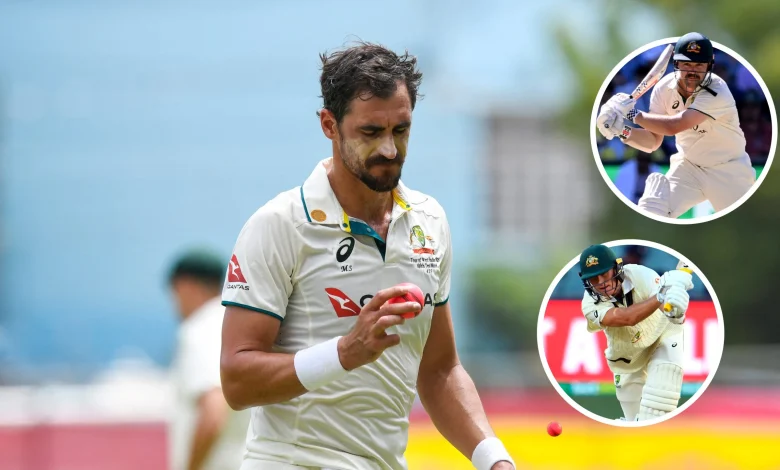
Mitchell Starc’s 81 wickets is close to double the next most in day-night Test, with numbers two, three and four on that list being Nathan Lyon, Pat Cummins and Josh Hazlewood.
“Looking back at a couple of highlights of previous games played in Australia, it certainly is very evident how their new-ball bowling goes,” England paceman Brydon Carse said ahead of Brisbane’s fourth day-night Test beginning Thursday.
“They strike early and I think that’s going to be important.
“Whether that’s certain lines that we’re bowling or maybe a touch fuller to let it swing.
“They’ve played some really good cricket with the pink ball, so I’d like to say that we’ve had a look at some of the stuff that they’ve done over the previous years.”
Some have described pink-ball Tests as a lottery. Australia’s dominance suggests otherwise. But there is no doubt the format lends itself more to extreme outcomes than red-ball Tests.
Over their past seven day-night Tests, the Aussies have twice bowled teams out for historically low totals; they knocked India over for 36 in Adelaide in 2020-21, before skittling the Windies for just 29 in Jamaica earlier this year. In contrast, Australia have bowled their opponents out for sub-50 scores just four times in 878 red-ball Tests over 143 years.
It helps that Starc, with a pink-ball bowling average of 17.08, has played all 14 of Australia’s day-night Tests. With Cummins and Hazlewood currently both sidelined, the left-armer’s importance will be even more pronounced this week.
“I think the stats would probably say that,” Labuschagne said when asked if Starc was the best bowler in the format’s short history.
Sizzling Starc dials in for career-best haul
“It’s high pace, it’s late swing and you combine them and in the right conditions at the right time, the pink ball … swings later and more inconsistently, which makes it hard to line up.”
Where Australia keep their opponents to an average first-innings score of 211, they then typically bat big (by day-night Test standards) with an average first-innings total of 315. Only twice have they been bowled out for less than 330 in their first dig.
Their contributors with the stick have been more varied than with the ball. Labuschagne’s success in day-night games came earlier in his career during his golden run through 2019-21. More recently, it is predictably Travis Head who has been their most important contributor.
The left-hander has bashed hundreds (101 in Hobart against England in ’21-22, 175 against the Windies in ’22-23, 140 against India last summer – the final two in Adelaide) in three of his past four pink-ball Tests. It may be no surprise Australia lost the other one when he made a king pair against the Windies in ’23-24 in Brisbane.
As important, though, has been Australia’s ability to withstand pressure with the bat at key junctures.
Labuschagne pointed to his grinding 67-run stand with second-gamer Nathan McSweeney against Jasprit Bumrah and co. under lights in Adelaide last year as allowing Head to then take India down in more favourable day-light conditions the following day.
“At night, I think the pink ball can swing quite late and can sort of swing without necessarily the (bowler having the) right wrist position,” said Labuschagne.
“Sometimes the ball can be bit off its axis and it still swings because the conditions here – the humidity, the moisture in the air – the ball really does swing.
“So maybe trying to give up a few options down the ground, especially not trying to force the ball too straight (is important). The red ball is quite conventional, it swings a little bit earlier, you-see-it-out-of-the-hand swing.”
So what hope have England got?
Look past the many lop-sided results in Australia’s favour (their average winning margin by runs is 210, all but one of their four wins batting last came with at least seven wickets in hand, while there are two innings wins in there to boot) and instead at the three close day-night Tests they have played in.
Smith’s opposing captain in the first pink-ball Test was, by chance, McCullum when the now England coach was still at the helm of New Zealand. The Black Caps were neck and neck all through a see-sawing match in which Australia overcame being 8-116 replying to NZ’s 202 (the hosts seized a slender, but telling, first-innings lead) and later on some skilful swing bowling from Trent Boult to limp home by three wickets under the third night’s lights.
Then there is the Windies’ unlikely triumph at the Gabba last year. Joseph’s stunning 7-68 match haul was the champagne moment, but the 149-run first-innings stand between Kavem Hodge and Joshua da Silva after the visitors slumped to 5-64 proved equally important in the context of their eight-run victory.
But the most Bazball-adjacent example of possible Australian pink-ball fallibility came in the 2016-17 Test against Pakistan, also played at the Gabba. Misbah-ul-Haq’s men were given no hope of chasing 490 to win, yet Asad Shafiq rallied the visitors to the third-highest fourth-innings total ever on a placid pitch that offered little when the pink ball softened.
It took some late Starc brilliance to dislodge Shafiq with a searing bouncer despite the pillow-soft state of the Kookaburra to clinch a tense 39-run win.
Of all teams, England, whose most famous wins under Stokes and McCullum have featured big fourth-innings chases, would enjoy nothing more than to go one better by pulling off the kind of last-gasp win Pakistan got within touching distance of.
2025-26 NRMA Insurance Men’s Ashes
First Test: Australia won by eight wickets
Second Test: December 4-8, The Gabba, Brisbane (D/N), 3pm AEDT
Third Test: December 17-21: Adelaide Oval, 10:30am AEDT
Fourth Test: December 26-30: MCG, Melbourne, 10:30am AEDT
Fifth Test: January 4-8: SCG, Sydney, 10:30am AEDT
Australia squad (second Test only): Steve Smith (c), Scott Boland, Alex Carey, Brendan Doggett, Cameron Green, Travis Head, Josh Inglis, Usman Khawaja, Marnus Labuschagne, Nathan Lyon, Michael Neser, Mitchell Starc, Jake Weatherald, Beau Webster
England squad: Ben Stokes (c), Harry Brook (vc), Jofra Archer, Gus Atkinson, Shoaib Bashir, Jacob Bethell, Brydon Carse, Zak Crawley, Ben Duckett, Will Jacks, Ollie Pope, Matthew Potts, Joe Root, Jamie Smith (wk), Josh Tongue, Mark Wood