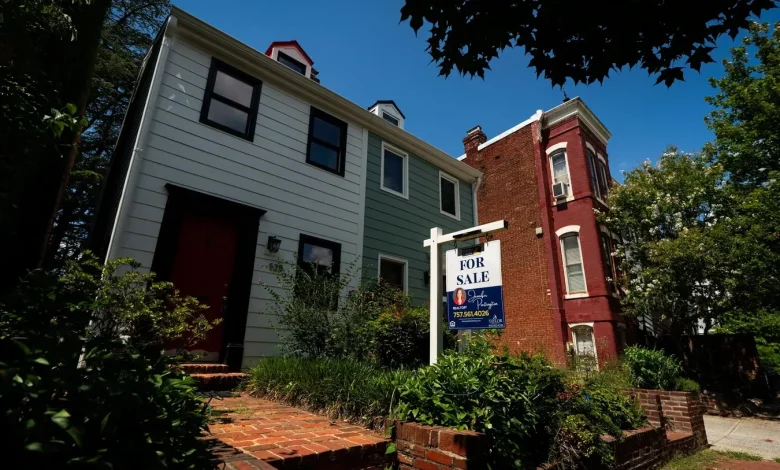
A suburban home with a ‘For Sale’ sign, reflecting uncertainty around mortgage rates in 2026 as the Federal Reserve weighs interest rate cuts.
© 2025 Bloomberg Finance LP
Mortgage rates have fallen in 2025, dropping from 6.91% at the start of the year to 6.23% in late November for a 30-year mortgage. That’s partly because the Federal Reserve has cut interest rates, with further cuts viewed as likely in 2026 by fixed-income markets. However, since mortgage costs reflect expectations for interest rates, additional cuts in 2026 won’t necessarily lower mortgage costs unless the Fed cuts more than anticipated. Housing remains relatively unaffordable, according to the Atlanta Fed.
What To Expect For Mortgage Costs In 2026
Fixed income markets see a range of outcomes for Fed decisions in 2026 which are likely to, in turn, impact borrowing costs. That’s because Fed decisions on short-term borrowing costs and what they signal about economic conditions tend to impact longer term borrowing rates, too. The Fed Funds rate currently stands at 3.75% to 4%, with a reasonably high chance that the Fed moves interest rates lower at their next meeting on December 10. In 2026, rates are expected to trend lower, but the magnitude of any decline is uncertain. Currently, fixed income markets project that the Fed Funds rate should end 2026 around 3%. If so, then mortgage rates may not move too much. However, if rates remain closer to current levels, that could put upward pressure on mortgage costs. If rates fall closer to 2%, which markets view as possible but less likely, that may help bring mortgage costs lower.
Unemployment As A Key Metric
Borrowing costs are likely to be influenced by trends in the U.S. labor market. For now, the market appears to be softening, with unemployment gradually rising. Some recent jobs reports have been delayed or canceled because of the government shutdown. If the economy weakens sharply, interest rates are likely to move lower, helping reduce mortgage rates. If, as in recent years, unemployment proves less severe than feared, mortgage rates may stay at or above current levels.
Other Drivers Of Rate Changes
Beyond economic factors, President Donald Trump is expected to nominate a new Federal Reserve chair soon. He is likely to pick a candidate who favors lower rates. In 2025, Trump nominated Stephen Miran to the Fed, who has consistently voted to bring interest rates down. Though the Federal Reserve is a broad committee of policymakers, a chair seeking to move rates lower is likely to have some impact on interest rates. However, there is also a risk that Trump’s pressure could weaken the Fed’s independence, which might spook financial markets.
Also, Freddie Mac and Fannie Mae, which have been under government ownership since the 2008 financial crisis, may see some form of privatization. Because these entities handle most mortgages, this could affect mortgage costs as well. However, the timeline for any privatization is unclear.
Mortgage Rate Outlook
Interest rates are expected to be lower in 2026 based on further cuts from the Federal Reserve. If those cuts are larger than currently expected (perhaps because of weakness in the job market and subdued inflation) mortgage costs could decline slightly in 2026. However, much will depend on economic conditions. Ironically, if mortgage costs do fall in 2026, it may be because overall economic conditions are weakening, which could be a negative factor for many prospective homebuyers.