Sir John Stanley, Thatcher’s PPS and Housing Minister who devised and piloted Right to Buy

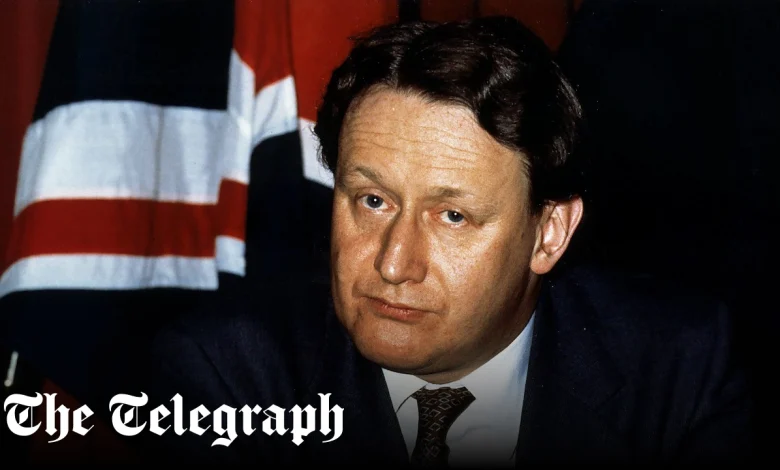
Stanley never received full credit for reviving the private letting market by introducing shorthold tenancies, or for piloting the flagship Right to Buy policy – which he had devised at Central Office – through the House and facing down Labour councils who resisted it; in his four years as housing minister 500,000 council tenants bought their homes.
Yet even on an issue as popular as this, he triggered a 30-minute strike by peers (and earned a rocket from Lord Soames, their leader) by rejecting their amendments while they were still considering the Bill.
He was at the centre of a more damaging storm when forced to admit that two written answers to Straw which he had approved were not those the MP subsequently received. The resulting internal inquiry reinforced the impression that Stanley was not on top of his officials, though Heseltine shouldered the blame.
In 1983 Mrs Thatcher moved him sideways to the MoD as Armed Forces Minister, again under Heseltine; a place on the Privy Council followed. Here again events undermined him; he was stuck in a lift just before Defence Questions and had to be briefed through a chink in the door while engineers worked to free him.
He also became a target of Tam Dalyell’s campaign to prove Mrs Thatcher had lied over the circumstances in which the General Belgrano was torpedoed during the Falklands conflict. After Ponting’s acquittal on charges of breaking the Official Secrets Act by leaking information about the sinking, Dalyell called on Stanley to resign for misleading the Commons by signing a memorandum which did not state that the rules of engagement had been changed.
Stanley was lucky to survive, though again the fault was not his. He did, however, give as good as he got in the decisive debate, and Mrs Thatcher invited him round for drink.
He is best remembered at the MoD, however, for ordering an RAF sniffer dog to Norway to check the aircraft in which he was due to return. Mission completed, the animal was condemned to six months’ quarantine.
He survived Heseltine’s resignation over Westland, and after the 1987 election moved to the Northern Ireland Office under Tom King. Given responsibility for security, Stanley spent all possible time in Stormont Castle while other ministers criss-crossed the province.
When he did venture out, he demanded the bulldozing of a house overlooking traffic lights where he was delayed. Told it had to stay because it belonged to a prominent Loyalist, Stanley insisted an RUC officer be posted there to wave him through; the Chief Constable, Jack Hermon, volubly countermanded the order.
Stanley was also haunted by the backlash from his decision when at the MoD to allow Pte Ian Thain, who had served three years of a life sentence for shooting an unarmed civilian in Ulster, to return to duty, though not in the province. It came as little surprise when he was sacked in July 1988; an ever-loyal Mrs Thatcher had him knighted that autumn. He would, however, return to the field of defence in 2001 as a member of the Nato assembly.
On the back benches he kept a low profile until in 1992 he joined the Foreign Affairs Committee. His probing of the conduct of Tory ministers in the Pergau Dam affair, when Malaysia was given £234 million for an uneconomic dam to sweeten an order for arms, earned him new respect.
Stanley was a sceptic on rail privatisation, and a vigorous champion of constituents affected by plans for the Channel Tunnel Rail Link, pressing ministers hard for fair compensation.
He retired from the Commons at the 2015 election.
John Stanley married Susan Giles in 1968; they divorced in 2005. In 2006 he married Elizabeth Brooks, née Tait, who survives him, along with a son and a daughter of his first marriage; another son predeceased him.
Sir John Stanley, born January 19 1942, death announced December 3 2025