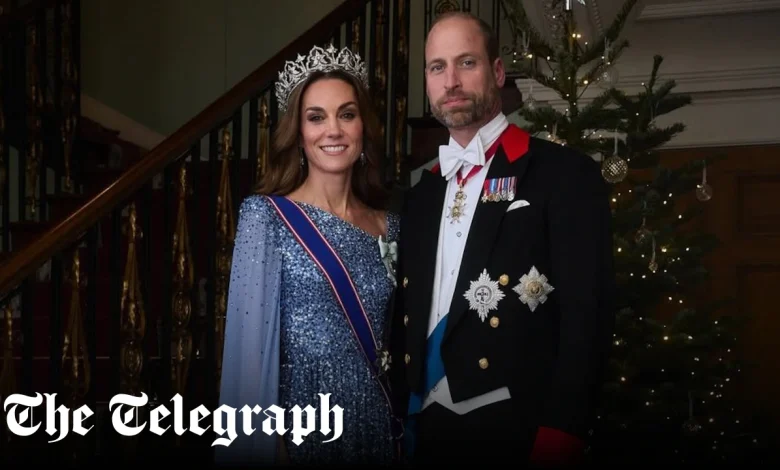
We know that Catherine’s ensemble is about more than formal evening grandeur. Every element of her look is a deployment of soft power, and is as valuable to the state visit package as the seating plan, the menu, the speeches and so on.
So while the gown was a showstopper, the most significant detail in her look was the tiara – Queen Victoria’s Oriental Circlet. It’s the first time Catherine has worn the headpiece, which was designed by Prince Albert for Queen Victoria. Albert, of course, was German, and the tiara one of many tokens of his love for the monarch. The Princess’s decision to wear it is likely intended to symbolise and celebrate Anglo-German relations
The tiara was created by Garrard in 1853, and Albert’s design was inspired by the arch and lotus motifs in jewels presented by the East India Company at the Great Exhibition in 1851. It was originally set with opals, one of his favourite stones, along with 2,600 diamonds. Those opals were later replaced with rubies by Queen Alexandra, who believed opals to be unlucky.
Queen Victoria referenced her husband’s design talent in her diary in 1843, writing, “Albert has such taste and arranges everything for me about my jewels.”
“The Princess is more conscious than ever of balancing a modern sensibility with nods to royal history and the continuity of a long lineage, which she and her husband represent,” observes Bethan Holt, Telegraph fashion director and author of The Duchess of Cambridge: A Decade of Modern Royal Style. “She rarely wears new tiaras, so it feels especially significant that she’s chosen the Oriental Circlet, perhaps as a reference to Queen Alexandra once wearing it on a state visit to Germany.”
The almost violet shade of her dress was thoughtfully chosen too. It continues a blue theme from earlier in the day, when she greeted the visiting dignitaries in a blue Sarah Burton for Alexander McQueen coat. It’s thought that Catherine and the Queen were nodding to “Prussian blue”, which is said to have been created by accident in 1704 by Berlin-based colourmaker Johann Jacob Diesbach.