Them’s Fighting Words with Roddy Doyle review: A fun portrait of 21st-century teenage creativity

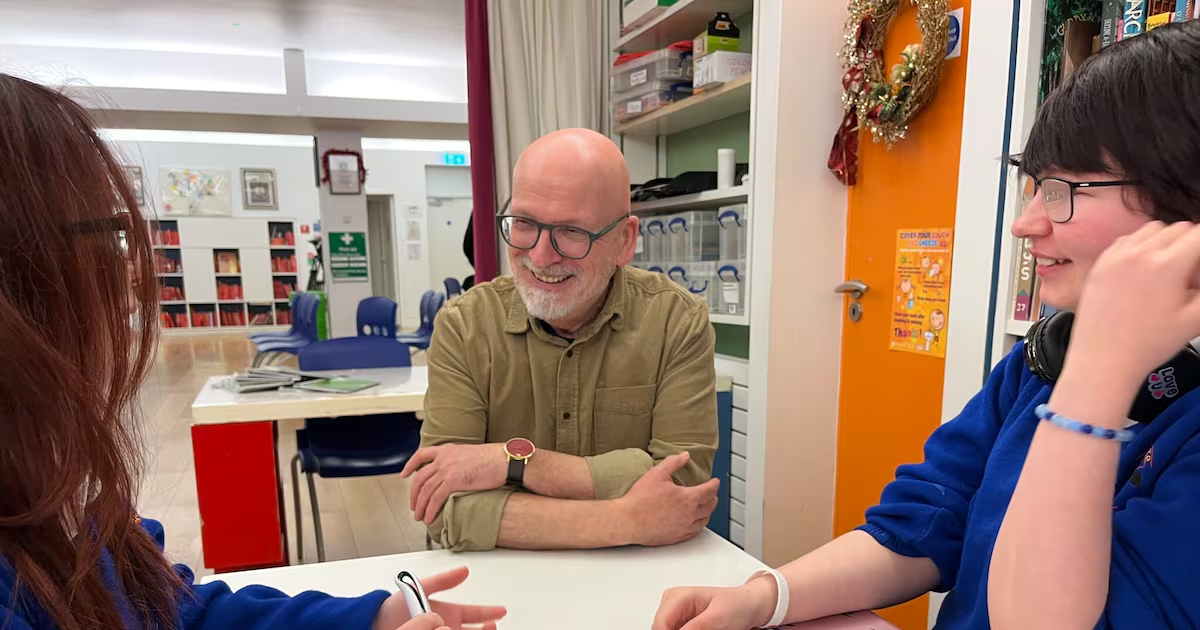
Anyone who attended a grim Christian Brothers school will feel a pang of envy towards the students receiving writing tips from Booker winner Roddy Doyle and Oscar nominee Lenny Abrahamson in Them’s Fighting Words (RTÉ One, 9.35pm). The pupils are encouraged to reach for the stars – a novelty in an education system that historically inculcated in young people the belief that they must never get above themselves, lest they receive a clip around the ear as payback.
Doyle established the Fighting Words workshop together with Seán Love, previously of Amnesty International Ireland, in 2009 – the name inspired by Doyle’s father and his regular declarations at the dinner table, “them’s fighting words”. The good work that continues to be done by the charity from its headquarters in the shadow of Croke Park on the north side of Dublin is celebrated in this agreeable if workmanlike documentary, which focuses on transition year students from Coláiste Eoin in Finglas who attend its weekly classes.
Students attending Fighting Words tend to come from diverse backgrounds, with many the children of migrant families. Doyle notes that in some cases they did not grow up speaking English at home and that their take on the language enriches English as spoken in modern Ireland. “The arrivals – the hyphenated Irish so to speak – are adding to the power of the language we already have,” he says.
They’re a mixed bunch – from shy music lover Sidney to live-wire TJ. It’s great to see their creativity fostered: even those who flat-out hate writing, including a student named Rihanna, are encouraged to find other outlets. In Rihanna’s case, that involves a podcast where she gets to interview Doyle.
Irish education obviously needs more of this, though it is amusing to watch Fighting Words programme co-ordinator Mark Davidson put a positive spin on whatever the students produce – even when the pupils themselves largely can’t be bothered. Everything is “interesting” and “amazing” – you can imagine a scallywag letting the air out of Davidson’s tyres only to be complimented for their unorthodox take on the narrative form.
Still, the documentary could do with more context. It is taken for granted that writing fiction is a worthwhile enterprise for students, when it might have been useful to back this up with data. After all, even world-class fiction writers often struggle nowadays to make a living. And that’s before we factor in the looming threat of AI.
Doyle obviously believes that, for all these negatives, good writing is still a positive – but why not have him explain why? He says at the start that it is “perverse” that fiction writing is not on the school curriculum – but it feels like he should have been pinned to his collar ever so slightly and invited to expand on that thought. What, moreover, are his feelings towards the Irish language – and how does that intersect with Fighting Words and its mission to foster a love of writing?
Such quibbles aside, this is a fun portrait of 21st-century teenage creativity – and a celebration of the heights to which education can soar when it casts off the defeatism and low expectations that were for decades a cornerstone of the Irish school experience.