Don’t miss the last full moon of 2025 as the ‘Cold Supermoon’ takes to the autumn sky on Dec. 4

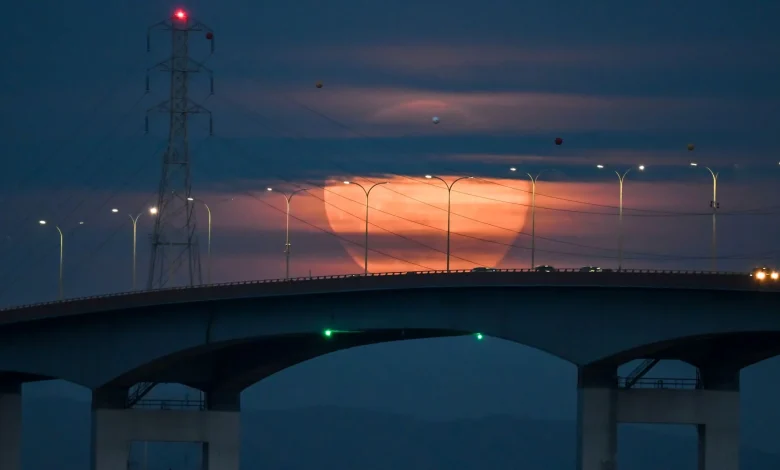
Get ready stargazers, the final full moon of 2025 rises tonight! Here’s what to expect when the “Cold Supermoon” looms large over the eastern horizon at sunset on Dec. 4.
The exact moment of December’s full moon phase will take place at 8:13 p.m. EST (2313 UTC) on Dec. 4, at which time the lunar disk will appear fully illuminated opposite the sun in Earth’s sky, shining brightly above the eastern horizon. The December full moon is sometimes known as the “Cold Moon” in reference to the plummeting temperatures that are common this time of year and also as the “Long Night Moon,” to reflect the lengthening nights and shorter days as the northern hemisphere sinks deeper into the winter months.
This month’s full moon will occur as Earth’s natural satellite passes within 90% of perigee, the closest point to our planet in its 27-day elliptical orbit, giving rise to a majestic “supermoon.” Its close proximity to Earth can make a supermoon appear up to 14% larger and 30% brighter than the smallest full moon of the year — sometimes referred to as a micromoon — when viewed with the naked eye.
You may like
What to expect from the final full moon of 2025
Skywatchers in the U.S. will get a spectacular view of the lunar disk when it rises over the eastern horizon at sunset on Dec. 4, as its reflected light drowns out that of the nearby stars of the constellation Taurus and the Pleiades open star cluster.
Celestron NexStar 8SE
(Image credit: Amazon)
We reckon the Celestron NexStar 8SE is the best motorized telescope out there to see the Cold Supermoon. It is a little pricey but for what you get, it’s good value. For a more detailed look, you can check out our Celestron NexStar 8SE review.
The moon may adopt a striking yellow-orange hue as it rises close to the horizon as Earth’s atmosphere scatters the bluer wavelengths of sunlight reflecting from its cratered surface thanks to a phenomenon known as Rayleigh scattering. The lunar disk may also seem larger than usual thanks to a separate phenomenon known as the “moon illusion” wherein our brain tricks us into thinking that the lunar disk is bigger than it actually is when it’s close to the horizon compared to when it is overhead, with no points of reference.
December’s full moon will also appear to ride higher in the sky than it has in recent months, to compensate for the increasingly shallow path traversed by the sun through the daytime sky in the months leading up to the winter solstice on Dec. 21.
Look to the lunar disk with nothing but the unaided eye to pick out the vast basaltic plains called lunar maria — or lunar seas — which formed billions of years ago when lava flooded a network of impact basins before hardening to resurface vast swathes of its ancient surface. A small backyard telescope will help reveal large craters and mountain ranges on Earth’s natural satellite.
Hoping to get a closer look at the moon? Then be sure to check out our guide to the best binoculars and telescopes for exploring the night sky, along with our picks of the top cameras and lenses for immortalizing the next big skywatching event.
Editor’s Note: If you would like to share your photo of the full “Cold Moon” with Space.com’s readers, then please send your photo(s), comments, and your name and location to spacephotos@space.com.