NSW Health said Kunjin virus had been detected at Cowra in the state’s west.
The virus was found in a blood sample from a sentinel chicken on November 20, collected as part of NSW Health’s routine surveillance.
A potentially deadly mosquito-borne virus has been detected in NSW. (Getty)
NSW Health’s director of health protection Dr Stephen Conaty said the detections so early in the summer season were concerning.
“Mosquito numbers will likely increase with warmer weather, and we remind everyone in NSW to protect themselves against mosquito bites, which can cause diseases such as Japanese encephalitis and Murray Valley encephalitis, and infection with Kunjin virus, Ross River virus and Barmah Forest virus,” Conaty said.
There are now 60 NSW LGAs that are considered to be higher risk of Japanese encephalitis virus.A vaccine for JE is available and free for eligible people. (Getty)
Residents and travellers to these LGAs should take particular care to avoid mosquito bites.
“There is a safe, effective and free vaccine to protect against Japanese encephalitis (JE),” Conaty said.
“This vaccine is free to anyone who lives or routinely works in these 60 LGAs west of the dividing range and in northern NSW, and for people who work in some other high-risk occupations.”
JE vaccine is available through general practitioners, Aboriginal health services and pharmacists.
People who meet the eligibility criteria should make an appointment ahead of time and let the provider know it is for the JE vaccine.
These providers may require a few days’ notice so they can order the vaccine and may charge a consultation fee.
A booster dose may be recommended for some people with ongoing risk of exposure, one to two years after completing their primary course.
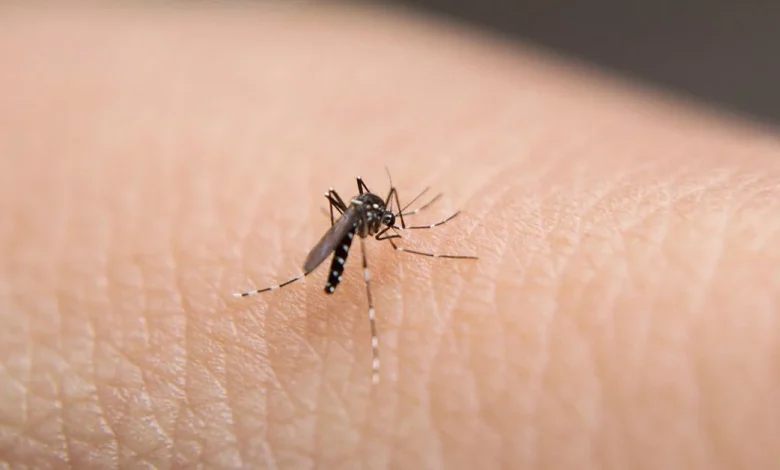
People are urged to use insect repellent. (Getty Images/iStockphoto)
Other than the JE vaccine, there is no vaccination or specific treatment for Kunjin virus or other mosquito-borne diseases in Australia.
Most people infected with Kunjin virus will suffer no symptoms.
Those who do may suffer fever, enlarged lymph nodes, rashes, swollen and aching joints, headaches, muscle weakness, and fatigue.
Those who do show symptoms should seek medical treatment immediately.
Severe infections can lead to lifelong neurological complications and even death.
The best way to avoid infection is to avoid being bitten by mosquitoes, which are more active between dusk and dawn.
People can take actions such as applying insect repellent to exposed skin, wearing long sleeves and leggings with socks and covered footwear, and staying inside at dawn and dusk when mosquitoes are most active.
Mosquito-borne diseases cannot be transmitted directly between humans or from any other animal.
Information on eligibility for a free JE vaccine is available online here.Information on mosquito protection can be found here.