NHL Awards Watch: Nathan MacKinnon, Cale Makar and Matthew Schaefer dominate early races – The Athletic

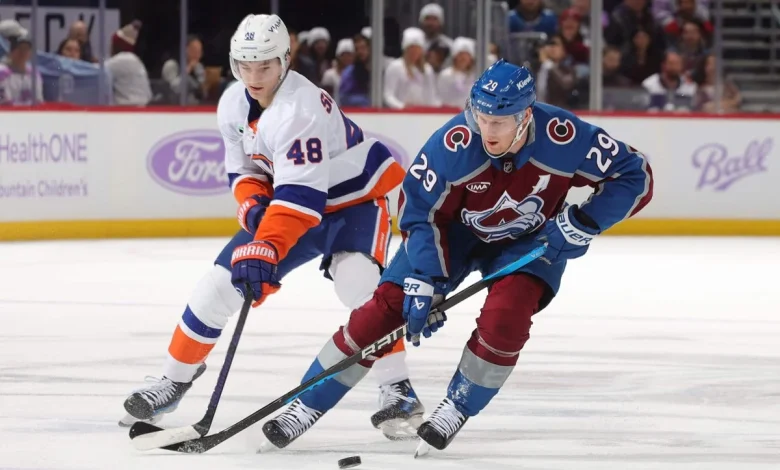
Throughout the season, I’ll be breaking down the numbers behind the race for each major player award: the Hart, the Norris, the Calder, the Selke, the Vezina, the Art Ross and the Rocket Richard. Numbers of course aren’t everything, but they add much-needed context to the awards race and can help shine a light on players deserving of more recognition while adding caveats to other players who may have some warts. This post will present the top 10 for each category based on a set criteria of guidelines. There is plenty of room for discussion and debate within (and outside) those guidelines.
Welcome back to another year of NHL Awards Watch. We’re now officially past the quarter mark of the 2025-26 season, making it a good time to start looking at the key awards races.
While it’s still way too early to form any conclusions, enough time has passed to start building some narratives: Colorado’s best players are unreal, Matthew Schaefer is special and Jeremy Swayman is back. A lot will change from now until game 82, but here’s how we’re looking to start.
Based on my interpretation of the numbers, here’s how each of the key races currently shakes out.
Data as of Nov. 30
Hart Trophy
Given to the player judged to be the most valuable to his team.
Criteria: Skaters ranked by Net Rating percentile relative to position.
The Colorado Avalanche are unstoppable and their two best players have been directly at the heart of that. Nathan MacKinnon and Cale Makar have been the best players in hockey this season.
MacKinnon is arguably having his best season to date, scoring at a 66-goal and 144-point pace while obliterating opponents at five-on-five. That the Avalanche are up 35-9 in his minutes already is absurd and he’s the easy Hart front-runner with how dominant he’s been on the league’s best team.
Makar, though, is a big part of that. The duo forge a special connection with the Avalanche up 23-6 in their minutes together. Makar taking on tough minutes with Brock Nelson away from MacKinnon shouldn’t be ignored either. While MacKinnon’s offense is undeniable, Makar does make up some ground defensively because of that.
Down the list are some noteworthy defensemen anchoring their teams and the current Vezina favorite. Among the remaining forwards, Jason Robertson looks like he’s back to the form he flashed in 2022-23 when he finished fourth in MVP voting. He’s been the focal point of Dallas’ five-on-five success with a team-leading 56 percent expected goals rate while also outscoring opponents 24-11.
Brandon Hagel and Jack Eichel round out the forward group with their five-on-five games being key factors. The Lightning earn 61 percent of xG with Hagel on the ice while the Golden Knights are at 58 percent with Eichel, both in tough-minute roles. Hagel may feel like a bit of a surprise, but his relative-to-teammates impact on xG of plus-1.05 is the best mark in the league among top-of-the-lineup players. He’s really good.
What about the league’s top scorers?
Noticeably absent from the list above are Connor McDavid (plus-6.1 Net Rating), Leo Carlsson (plus-5.3), Connor Bedard (plus-4.5) and Macklin Celebrini (plus-4.5), who currently occupy the league’s top five in scoring after MacKinnon.
All four are a lot closer by Offensive Rating, but are lower in Net Rating thanks to average or worse defensive impacts. Celebrini and Bedard have been porous on bad teams and while their difficult situations are accounted for, it’s not quite enough to get to MVP level. They’ve had special seasons that look franchise-level, but it’s hard to clear the high bar of MVP caliber with sub-45 percent xG rates.
Carlsson’s underlying numbers look better but only 13 of his 33 points have come at five-on-five, where he ranks 41st among forwards. As for McDavid, the Oilers are somehow getting outscored in his minutes, which is notable enough to keep him out of the top 10.
Norris Trophy
Given to the defenseman who demonstrates throughout the season the greatest all-round ability in the position.
Criteria: Defensemen ranked by Net Rating.
Cale Makar is the best defenseman in the world and already looks extremely likely to run away with his third Norris trophy. He is on pace for 105 points and is crushing tough minutes to the tune of a 59 percent xG while outscoring teams 33-10 at five-on-five. Makar leads all defensemen in Offensive Rating and is also sixth in Defensive Rating. His all-around work has been incredible, as is usually the case. No one’s doing it like him.
After Makar there’s an intriguing blend of old guard, young blood and pleasant surprises.
Adam Fox is having a great “comeback” season for those who wrongly believed he even needed one. He’s close to point-per-game status, but the more interesting wrinkle for him this season is that he’s been given matchup minutes for the first time in his career — and he’s acing the assignment. That said, going on LTIR on Sunday with a left shoulder injury will likely hamper his chances.
Zach Werenski and Josh Morrissey are both back in the top five with similarly strong combinations of production and play-driving, while Miro Heiskanen looks primed for his first top-five Norris finish if he keeps this up, given his sterling reputation.
Shea Theodore is technically part of the usual suspects crowd, but the way he’s getting there this season is different and noteworthy. It’s not dynamic offense, it’s pure shutdown ability with a league-leading plus-five Defensive Rating. In heavy matchup minutes, Vegas is allowing just 2.17 xGA/60 and 1.2 GA/60 with Theodore on the ice.
Amongst the new crowd, it’s truly special that Matthew Schaefer is already on this list and seems to be getting better every game. Since November, when Schaefer started playing on the Islanders’ shutdown pair, he’s earned 56.5 percent of expected goals and 74.5 percent of actual goals — and just 2.17 xGA/60. Right under him is Moritz Seider who has arrived as a franchise defenseman, doing his best Drew Doughty impression.
As for the pleasant surprises, Jakob Chychrun is having a terrific season after signing a big extension. The scoring is nice, but it’s been great to see him handle a tougher role on one of the league’s best pairs. In a similar vein, J.J. Moser has really stepped up for Tampa Bay amidst all the team’s injuries. He’s second to Theodore in Defensive Rating.
What about Quinn Hughes?
A plus-4.9 Offensive Rating puts him in the league’s top five among defensemen — but his minus-1.7 Defensive Rating is concerning enough for exclusion.
Selke Trophy
Given to the forward who best excels in the defensive aspects of the game.
Criteria: Forwards who play over 16 minutes per game, receive 15 percent of their team’s short-handed minutes and face top-line forward competition, ranked by their Defensive Rating.
With no Aleksander Barkov this season, the Selke trophy race will likely be this season’s most fascinating.
To start, Nick Suzuki is the leader by Defensive Rating in a fairly wide open field. With Suzuki on the ice, the Canadiens give up just 2.27 xGA/60, 0.24 fewer relative to his teammates. The Canadiens are up 17-7 in his five-on-five minutes and his line has been dominant all season. The one qualm with Suzuki is his lack of penalty-killing, but he’s up to almost one minute per game over the last month. That’s good enough for me.
After Suzuki things get a lot tighter with a lot of worthwhile options. This list will be ever-changing all season, but right now I’m impressed by Mikael Backlund’s impact, which may be flying under the radar on a poor Flames team.
Backlund is dominating defensively in tough minutes, allowing just 1.72 xGA/60 and 2.16 GA/60 — both much stronger than the team average. The offense may not be there, but defensively he’s delivering. Backlund’s extreme usage — including some nasty defensive zone start numbers — is important context relative to some of the field here and is what gives him the edge in a close race. Mitch Marner, Leon Draisaitl and Matty Beniers have all put up excellent results, but it’s worth noting that none of the three are playing their team’s matchup minutes. Their results are strong enough to be in the running as worthy threats, but for now I’m leaning Backlund.
Further down the line, Tyson Foerster is creating a name for himself with another strong defensive season. Mika Zibanejad has been doing well in a shutdown role. Sebastian Aho has taken over Jordan Staal’s usage and done well. Brock Nelson is the underrated cog in the Colorado machine, morphing into a shutdown force to free up MacKinnon. And Shane Pinto is starting to build a strong defensive reputation.
What about Nico Hischier?
The Devils are giving up 2.97 xGA/60 with Hischier on the ice this season, 0.23 more than his teammates. Playing the fourth-toughest minutes in the league brings his Defensive Rating up to plus-0.9, which is good — just not enough for Selke consideration at the moment.
Calder Trophy
Given to the player selected as the most proficient in his first year of competition in the NHL.
Criteria: Rookie skaters ranked by Net Rating percentile relative to position.
There are a lot of ways to show just how unbelievably good Matthew Schaefer has been out of the gate, and they all point to an extremely special player.
It could be that he’s playing 23.3 minutes per night, is starting to crush matchup minutes and is on pace for almost 60 points as an 18-year-old defenseman. It could be that his plus-6.7 Net Rating is not only almost three goals up on the next best rookie skater, it places him in the top 10 among all defensemen. But my favorite Schaefer fact might be this one: The only rookie since 2007-08 who has had a better projected Net Rating than Schaefer’s plus-12.8 is Connor McDavid, who was at plus-13.6.
Schaefer is genuinely looking generational, and I don’t say that lightly. If he stays healthy and can keep most of this up all year, he should be a Calder lock. Perhaps unanimously so.
The real fight might be for who gets to be a finalist behind Schaefer. Alex Nikishin and Ivan Demidov are the top skater choices right now with both doing well in sheltered roles. Nikishin has a strong 56 percent xG rate, while Demidov is scoring at a 65-point pace despite playing just 14 minutes per night. Between the pipes, Yaroslav Askarov and Jesper Wallstedt are living up to the hype with some excellent seasons. Asakrov has the slight edge at the moment, but Wallstedt has been better on a per-game basis.
That’s a strong secondary class, but none of them hold a candle to Schaefer. He’s impossibly good.
What about Beckett Sennecke?
With a plus-0.5 Net Rating, Sennecke wasn’t far off and I’d imagine he climbs the list as the season goes on given his production. But defensively he’s giving a lot back with 3.68 xGA/60 at even strength, one of the worst marks on the Ducks.
Vezina Trophy
Given to the goalkeeper adjudged to be the best at this position.
Criteria: Goaltenders who have played half of their team’s games or more, ranked by goals saved above expected courtesy of Evolving-Hockey and MoneyPuck.
An injury to Connor Hellebuyck should open the door wide for a new Vezina winner for the first time since 2023. Hellebuyck is still in the top five, but one month off (or more) will likely hinder his chances.
The current leader should probably be Jeremy Swayman who is bouncing back terrifically after last year’s struggles. His .916 save percentage is well above what’s been expected of him in Boston and he’s currently saving just over one goal above expected per game. He’s also starting to separate himself from the rest of the field with a three-goal lead over fellow American Spencer Knight. If you’re wondering how the Bruins and Blackhawks currently have winning records, these two are why.
Not far off are some usual suspects. Andrei Vasilevskiy has once again been sensational for the Lightning and his work is made even more impressive by a slew of defensive injuries in front of him. Logan Thompson is Canada’s answer to its goaltending malaise and is once again one of the top GSAx goalies (with Darcy Kuemper not far off). Ilya Sorokin and Igor Shesterkin both figure to be in the mix as usual.
The best story in net so far, though, has to be Dan Vladar. Over the previous three seasons, Vladar’s minus-17 GSAx ranked eighth-worst among all goalies, narrowly ahead of Ville Husso. This year he’s in the top 10.
What about Scott Wedgewood?
He’s been a terrific story this season and his .918 save percentage ranks third among goalies to play 10 or more games. But playing behind Colorado’s defense helps Scott Wedgewood get there. By GSAx he sits just behind Kuemper at plus-8.0.
Art Ross Trophy
Given to the player who leads the National Hockey League in scoring points at the end of the regular season.
Criteria: Skaters ranked by their projected end-of-season point total.
Slower-than-usual starts from the Edmonton duo and Nikita Kucherov has put MacKinnon firmly in the driver’s seat for the Art Ross trophy. He currently has an eight-point cushion on McDavid with a game in hand and while it’s never wise to count out McDavid, the model now expects both MacKinnon and McDavid to score at the same pace going forward (121 points per 82).
Macklin Celebrini is the most interesting threat on the list. He ranks lower due to his lack of a track record scoring at this level, but that’s not always relevant for young players taking the next step. Like MacKinnon’s own massive jump in 2017-18, Celebrini’s ascent might have more staying power than suggested here.
Rocket Richard Trophy
Given to the NHL’s top goal scorer.
Criteria: Skaters ranked by their projected end-of-season goal total.
The goal-scoring crown also feels like MacKinnon’s to lose, and he’s no stranger to the 50-goal level. Last year’s 32-goal campaign, though, is holding his projection back slightly — enough to expect Kirill Kaprizov and Leon Draisaitl to make things interesting.
Morgan Geekie is shockingly tied with MacKinnon for the league lead and has been the league’s best goal scorer over the last calendar year. While it is probably safe to expect his scoring pace to tail off slightly given his previous track record, his last year at this level suggests he’s got the ability to be a real Rocket wild card.
Data via Evolving-Hockey, Hockey Stat Cards, Natural Stat Trick and NHL.