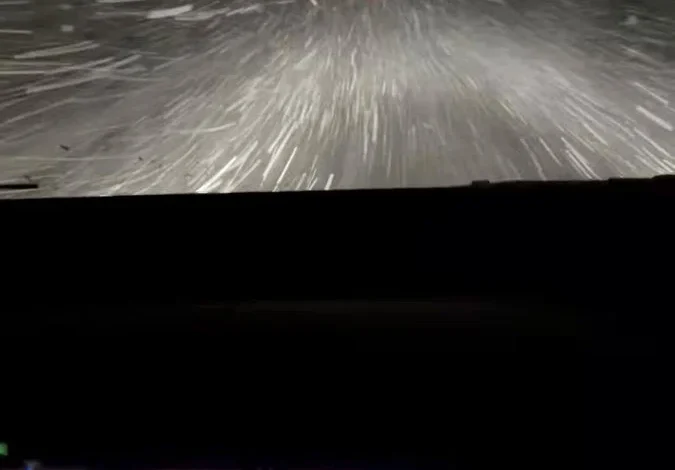
Tesla’s Full Self-Driving (FSD) technology has recently demonstrated an impressive feat in South Korea, tackling a challenging blizzard with remarkable precision. This advancement signifies a pivotal moment for autonomous vehicles, showcasing their potential to maintain safety and efficiency in adverse weather conditions, a key concern for potential electric vehicle (EV) owners in regions like the UK.
Mastery Over the Elements: Tesla FSD’s Winter Performance
The recent incident in South Korea with Tesla’s FSD version 14 highlights the system’s capability to manage driving in snowy conditions. By maintaining a consistent speed of 45 mph, the vehicle demonstrated extraordinary stability and navigational skill, ensuring both passenger safety and vehicular control. For UK drivers, accustomed to the unpredictability of winter weather, such developments could pave the way for broader acceptance of autonomous driving technology.
Technological Advances Behind Tesla’s FSD
Tesla’s FSD relies on a combination of cutting-edge hardware and sophisticated software algorithms. The system uses advanced neural networks to interpret sensor data, enabling it to make split-second decisions crucial for safe navigation. This technology allows the vehicle to distinguish between snow-covered road markings and unexpected obstacles, a critical feature when driving in snowstorms.
Implications for the UK Market
The implications of Tesla’s latest demonstration for the UK market are significant. With winter road conditions being a perennial challenge, the potential for autonomous vehicles to handle such environments autonomously raises their desirability among UK consumers. This could lead to increased investment in charging infrastructure and government policy support to facilitate the transition towards electric and autonomous vehicles.
Addressing Safety Concerns: A Step Forward
Safety remains a principal concern surrounding autonomous driving technologies. Tesla’s successful trial in snowy conditions addresses some of these apprehensions, proving that advanced systems can operate safely and effectively without human intervention in less-than-ideal conditions. By showcasing these capabilities, Tesla is not only enhancing its brand image but also contributing to changing public perception regarding the safety and reliability of autonomous vehicles. This change is crucial in the UK where the adoption of new vehicle technologies often follows a risk-averse path.
The Road Ahead for Autonomous Driving
Tesla’s FSD triumph in South Korea is more than just a technological showcase; it’s an indication of the potential for future autonomous vehicles. As infrastructures evolve and public sentiment shifts towards accepting AI-driven solutions, the landscape for self-driving cars in the UK is poised for an evolution. The adaptation of these technologies could eventually lead to not just safer roads but more efficient traffic management and a reduction in carbon emissions.
In conclusion, Tesla’s leading-edge technologies pave the way forward, not just for the UK, but globally. By validating their systems in a variety of challenging conditions, they are setting benchmarks for what autonomous driving systems can achieve, ultimately shaping the future of transportation.
Join Tesla Mag to access exclusive content, attend member-only events, and connect with enthusiasts worldwide. Don’t miss this unique opportunity to be part of the electric revolution!