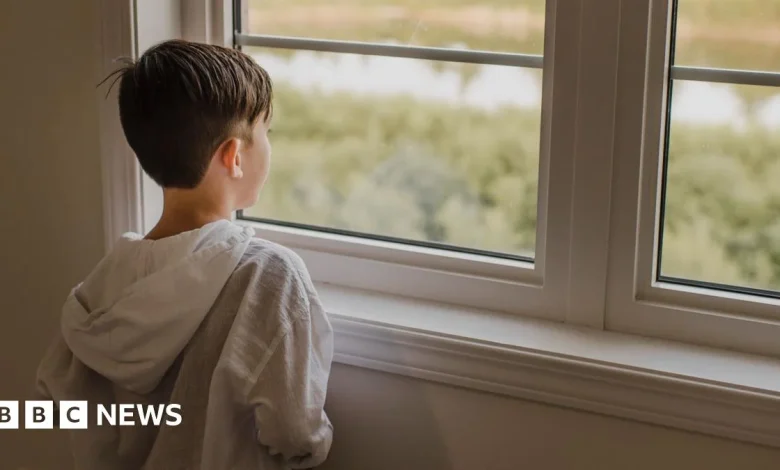
In England alone, more than 172,000 children are living in temporary accommodation.
To address this, the government plans to end the “unlawful placement” of families in B&Bs beyond six weeks.
Councils are currently only meant to house families with children in B&Bs as a last resort, and for a maximium of six weeks, the law says.
But figures from April to June 2025, external show that more than 2,000 children had been living in B&Bs for longer than that.
Child poverty levels are currently at a “historic high”, the government says, with 4.5 million children – roughly a third – living in relative poverty after housing costs. Three quarters of these come from working families.
McGovern said the strategy is about putting a “proper roof over our children’s heads”.
Speaking to BBC Breakfast, she said it “really, really shocked me” that in the five years to 2024 74 children – including 58 babies – died and “one of the causes that was attributed to their death was the effect of temporary accommodation”.
She added that the government wants to make sure no newborn babies are discharged from hospital into B&B accommodation, which she is “sorry to say does occasionally happen”.
“If that’s still happening by the time I’ve finished my job I’ll consider myself a failure,” she said.
The government’s child poverty strategy comes after announced it would scrap the two-child benefit cap in April, expanded free school meals to all children from families receiving Universal Credit, and introduced free breakfast clubs.
“Too many families are struggling without the basics: a secure home, warm meals, and the support they need to make ends meet,” Prime Minister Sir Keir Starmer said.
Meanwhile, the Institute for Fiscal Studies (IFS) said there was “considerable uncertainty over how large a reduction in measured poverty these policies will ultimately deliver, partly due to genuine economic uncertainty”.
On ending the two-child benefit cap, it said it was forecast to account for 450,000 of the children lifted out of poverty by the end of the Parliament, with the remainder attributable to expanding free school meals.
Other announcements, including on temporary accommodation, were targeted at “much smaller groups of people”, the IFS said.