Who is Rio Ferdinand, World Cup draw host? The soccer, the drugs ban and the many memes – The Athletic

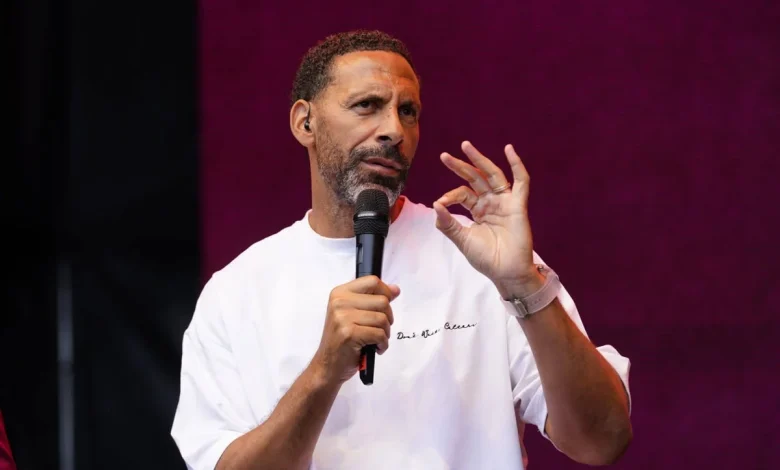
The Athletic has live coverage of the FIFA Men’s 2026 World Cup draw.
Perhaps it was predictable, but when FIFA announced who would be part of the presenting team for the World Cup draw, there was only one actual footballer on the list.
Elbowing his way for attention among faces familiar in the U.S. — Tom Brady, Wayne Gretzky, Eli Manning, Aaron Judge and Shaquille O’Neal — was former England and Manchester United defender Rio Ferdinand.
Ferdinand is an interesting choice to host the ceremony: after his retirement from playing in 2015, he became a lively and ubiquitous media presence, but not as a presenter, more an analyst or, if you’re taking a less kind view, something of a hot-take merchant.
But if someone with footballing bona fides is what FIFA were after, he certainly has that.
‘Peckham to Washington DC’ wrote Ferdinand on Instagram after the announcement, referring to the traditionally working-class (since heavily gentrified) area of south London that he grew up in.
Ferdinand started out at his local (ish) club West Ham United and was earmarked for the top from a very early age. He made his senior club debut in May 1996 and that summer was invited to train with England’s squad for the European Championship as a sort of footballing internship, alongside fellow West Ham youngster and future great Frank Lampard.
Over the next few years he established himself as one of the best young defenders in Europe, and in November 2000 Leeds United paid £18million ($24m at today’s exchange rates) — at the time a world record fee for a defender, and the record for any British player — to sign him.
After starring at the 2002 World Cup, he moved for another record fee — £30m this time — to Manchester United, and it was there that he became one of the great players of his era. With United he won the Premier League six times and the Champions League in 2008. Along with Serbian defender Nemanja Vidic, he formed one of the most enduring defensive partnerships in football: they were a perfect blend of styles, with Vidic the granite bruiser, Ferdinand the elegant and skilful stylist.
For England, he was selected in three World Cup squads (he did not make an appearance in 1998) and won 81 caps, but it could have been many more.
In September 2003, he was scheduled to take a drugs test after a training session, but went shopping instead, claiming he forgot. He was quickly reminded and returned to the Manchester United training ground, and later passed a test, but the Football Association still took a dim view and banned him from all football for eight months, meaning he missed the 2004 European Championship.
He was denied further caps when the back end of his international career was then curtailed. In 2012, England team-mate John Terry was under suspicion of having racially abused Anton Ferdinand, Rio’s younger brother, during a Premier League game: because of this, Terry was stripped of the England captaincy, which led to the resignation of manager Fabio Capello. Terry was later acquitted in a criminal trial, but he was found guilty by a Football Association tribunal and banned for four games.
However, it was viewed that Terry and Ferdinand could not be part of the same England squad for the 2012 European Championship, so Capello’s replacement Roy Hodgson had to choose between the two: he chose Terry, and despite later attempts to bring Ferdinand back into the fold, he never played for England again.
After retiring from playing, he became one of the most prominent pundits on TV, mostly working for BT Sport and then TNT Sports on Champions League coverage, and being largely notable for viral/social media moments that you may have been seeing a lot since he got the FIFA gig.
Rio Ferdinand, centre, was a long-time presence as a pundit on Champions League coverage (Mike Egerton/PA Images via Getty Images)
There was the time, during his former team-mate Ole Gunnar Solskjaer’s initial spell as Manchester United manager, when he urged the club to “get the contract out, put it on the table, let him sign it, let him write whatever numbers he wants to put on there”. That one didn’t age brilliantly.
There’s also the clip from 2018 in which he urges everyone to “just enjoy” Cristiano Ronaldo and Lionel Messi, rather than comparing the two.
That became a social media meme, although it did not prove as popular as the one of him at the 2024 Champions League final.
In reaction to Vinicius Junior scoring the clinching goal in Real Madrid’s 2-0 win over Borussia Dortmund, Ferdinand simply repeated “Ballon d’Or” over and over — nine times, in fact — pausing between each for just long enough for everyone to think he had finished, only for another one to emerge. It was a little like when someone makes a joke, doesn’t get the expected response, so tells it again, but slightly louder this time. The whole thing was given an extra layer of richness a few months later when Vinicius Jr did not, in fact, win the Ballon d’Or.
He left his role as a TV pundit earlier this year, partly to move to Dubai with his family (the tax implications of which raised some eyebrows when he told the BBC he was a “man of the people” this week), and the majority of his output now comes on his YouTube channel.
Still, his hosting of the World Cup draw will not be the first time he has fronted a high-ticket production. Just before the 2006 World Cup, he hosted a ‘Punk’d’-esque hidden camera TV show called ‘Rio’s World Cup Wind-Ups’, in which several of his England colleagues were pranked and secretly filmed.
It included such japes as Gary Neville being charged for speeding, Wayne Rooney being made to believe a small child’s dog had been put down, and making David Beckham think he was being kidnapped, not long after he had to employ extra security due to similar threats against his family. At the end, Ferdinand would leap from a hidden location, Ashton Kutcher-style, and declare that the victim had been ‘merk’d’.
He’s come a long way since those days.