By Joshua Tyler
| Updated 14 seconds ago
Why does your favorite show only produce six to eight episodes a season, when twenty-six episodes used to be the norm?
Why does it take two to three years to produce those small numbers of episodes, when shows used to crank out a season every year?
Why does a beloved serious drama or sci-fi show suddenly start doing musical episodes or a puppet episode?
Why do the storylines and dialogue on every television series now resemble the work of a mid-level, overwrought 1980s soap opera?
Why is everything on television suddenly shot in front of a green screen, instead of going to a location or building a simple set, despite episodes of even the most basic television program costing as much as a full movie production?
Why does every television show, even shows for kids, seem to be pushing a political agenda, whether or not it has anything to do with the show?
Why does everything new look bland, boring, and lack color? Why are scenes filmed in so much darkness that you can’t see what’s going on?
The answer to all these questions and every question you might have about the modern degradation in the quality of screen entertainment is the same answer. That answer is this: Television shows are no longer made for the audience. They’re made for the people making them.
It becomes obvious when you start watching old cast and crew interviews from shows produced during the 1990s. Most of those interviews invariably centered around how grueling television production was, how much work it took to get a show made, how much time it sucked up, how intense the schedule was, or how hard they worked to make sure they gave you the best thing possible.
The difficulty, the insane amount of work involved in making television, is why movie actors used to stick with movies as much as possible. Now, movie actors and television actors are interchangeable, and it’s not because movie stars suddenly felt like working longer hours.
Watch cast and crew interviews from anything produced now, and instead of talking about how hard they worked, you’ll see people joking around about how much fun they had on the set or talking about how much they liked craft services. Sometimes they’ll even openly reveal things like, everything was shot on green screen, because they didn’t want to have to drive more than a block from their house to get to the set.
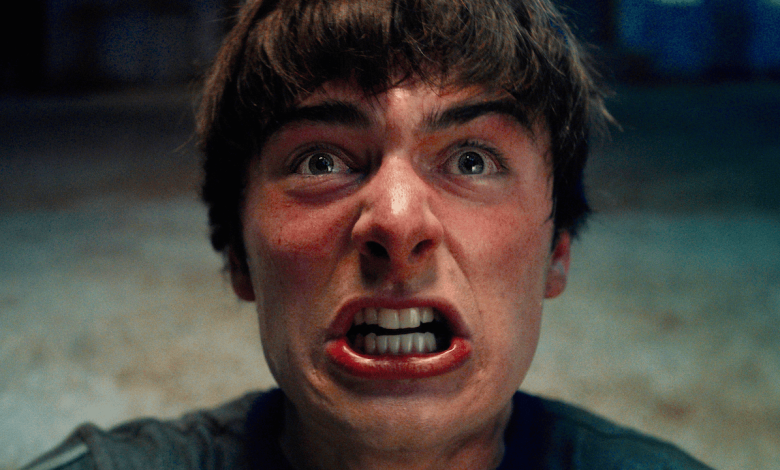
Totally not green screen scene in Stranger Things season 5.
Stranger Things Season 5 infamously spent around $100 million per episode. It’s an insane amount of money to produce a television show, and it makes it one of the most expensive things Netflix has ever produced.
Yet most scenes in the fifth Stranger Things season look like the cast is standing in front of an LED wall in a warehouse. Where’d the money go? Most of the cast members, and it’s a really big ensemble, made around $5 to $10 million each.
Stranger Things Season 5 was designed to give the cast and crew one final, big payday before the show goes off the air. Not to deliver a quality product that its viewers will enjoy.
Star Trek: Strange New Worlds did a musical episode last year. Meanwhile, the average Star Trek fan is a 55-year-old male engineer who recently joined a chess club and likes playing Civilization on the weekends. He looks something like this:
The average Star Trek fan.
Obviously, it wasn’t made for the Star Trek fans watching the show. Who then likes musicals? Actors. Actors who all grew up performing in high school musicals and learning to sing and dance as a backup to acting.
Musical episodes like the one Strange New Worlds did are made for the cast. Not the show’s audience of chess players and neuroscientists. And you can tell when you watch it, because they’re all having a blast.
The Star Trek: Strange New Worlds musical episode
In addition to making lots of money, not working very hard, and enjoying their favorite hobbies on set, actors also like showing off their emotional range. It’s why nearly every Star Trek: Strange New Worlds episode invents some reason for Spock to become involved in an emotional situation, even though he’s not supposed to have any emotions.
This is the poster for Star Trek’s newest show:
It’s a drama series about teen angst, sort of like Dawson’s Creek. Who is that show for? It’s obviously not for people interested in Star Trek, a show about the future and exploration.
Starfleet Academy is a series for writers and actors. It, like nearly every modern television show, is based on the desire of creatives to show off their ability to convey emotional depth. Meanwhile, Star Trek is a show about ideas, not emotional depth.
It’s also why nearly every television show now seems like you’re watching a bad Mexican telenovela. It’s not for the audience; to any sane viewer, that sort of programming seems ridiculous and went out of style in the late 1980s. To the actors performing it, though, they’re giving an award-worthy performance.
This phenomenon even extends into animation. After years of waiting, the anime series One Punch Man returned for a third season only to deliver an animated show mostly comprised of lazy, low-detail still frames. Fans have rioted, but they’re also still watching it. This means that the people who made One Punch Man season 3 will still receive a huge payday for doing less than the bare minimum, even while the audience watching it gets an unsatisfying experience.
Do You Like Boardrooms With No Background Animation? You’ll Love One-Punch Man Season 3
Once you start seeing it, you won’t be able to stop seeing it.
What about all the political propaganda being worked into everything? It’s virtue signaling so the show’s creatives can brag to their friends about their activism. It has nothing to do with making the end product good for you.
Why are there only eight episodes of a show in which all that happens is a guy runs around in an office building, and why are they only released every two or three years? Because it’s easier, and the streaming production industry has become so totally self-focused that they can get paid the same for doing less of it.
Why is your favorite show terrible now? Because it’s not made for you. It’s being made for the people making it.