F1’s ‘manipulated’ Abu Dhabi race still haunts the sport, but 2025 should be different – The Athletic

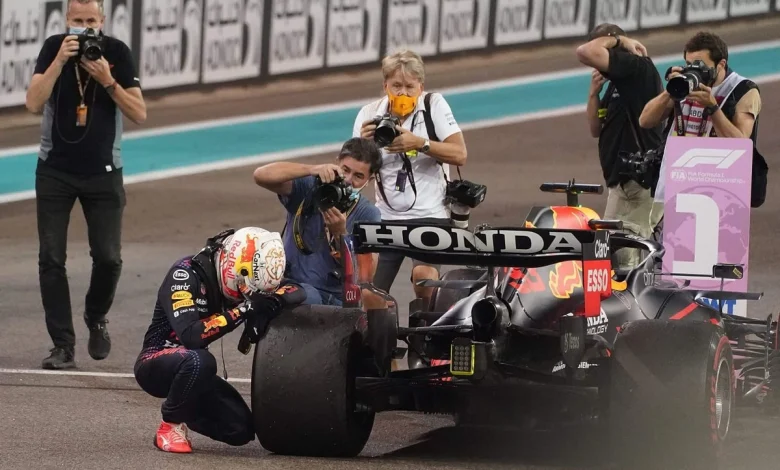
ABU DHABI, United Arab Emirates — “Toto, it’s called a motor race, OK? We went car racing.”
Michael Masi’s words to Toto Wolff, the outraged Mercedes team principal, over the radio moments after the checkered flag in Abu Dhabi, remain seared into the memory of Formula One fans.
Masi, the F1 race director, had just presided over one of the most significant controversies in the sport’s history. At the end of a tense, tough season where the battle between Lewis Hamilton and Max Verstappen – who entered the final race tied on points – and their respective teams had often spilled over, a fumbling of the rule book had settled the championship on the very last lap.
In his eagerness to restart the race after a safety car period, Masi had incorrectly instructed only the cars between Hamilton, who had dominated the race, and Verstappen to unlap themselves.
He should also have waited one more lap to resume the race — which would have timed it out and finished behind the safety car — but ignored the rulebook and rushed through a return to green for the final lap, where Verstappen passed a helpless Hamilton to snatch the title away.
Hamilton was left crestfallen, complaining on the radio that the race had been “manipulated.” The FIA’s inquest would later find that Masi acted in good faith and that his decisions were human error — costly errors at that. Masi lost his job, and Hamilton and Mercedes would fail to win a record eighth title together before he departed for Ferrari in 2025.
The scars of Abu Dhabi 2021 still run deep. Earlier this year, Wolff told The Telegraph there was “one lunatic who can basically destroy the record of the greatest champion of all time.” For Hamilton, the injustice has served as fuel and motivation for the final chapter of his career, as that elusive eighth world title may now seem, given a miserable first year with Ferrari.
But the ghosts of that race will linger as F1 speeds into its first title showdown since 2021, with Verstappen facing McLaren drivers Lando Norris and Oscar Piastri this time around.
The 2025 title fight has lacked the kinds of incidents that put Masi and race control’s decisions in the spotlight before the Abu Dhabi finale in 2021. Verstappen and Hamilton had crashed twice, at Silverstone and Monza, and the Red Bull driver routinely tested F1’s racing rules. In Saudi Arabia, he was penalized for leaving the track during battles with Hamilton. He was also sanctioned there for brake testing Hamilton while giving up the lead. Verstappen was also controversially not penalized for his aggressive defense against Hamilton in Brazil, the race before Saudi Arabi.
Racing rules have remained a thorny topic for F1 ever since, flaring last year in a couple of on-track battles between Verstappen and Norris. In June of this year, the FIA published a document outlining its racing guidelines to improve transparency. Still, a spate of penalties that left drivers divided led to talks over the Qatar Grand Prix weekend about how to improve the situation, with some feeling the stewards were treating clashes too black-and-white rather than as ‘racing incidents’. Should there be any clashes involving the title protagonists this weekend, there is at least a publicly available framework for reference, imperfect as it may be.
The tension levels were also very different going into the 2021 finale between Red Bull and Mercedes. Its respective team principals, Christian Horner and Wolff, were regularly embroiled in a back-and-forth in the media, with Horner saying in Qatar that year there was “no relationship” between them. The crashes involving Hamilton and Verstappen, notably the Silverstone clash that ended in a 50G crash for Verstappen, and strong comments from Horner and Red Bull motorsport advisor Helmut Marko about Hamilton’s on-track conduct only further fanned the flames.
The fallout from the 2021 Abu Dhabi GP still reverberates (Mario Renzi / Formula 1 via Getty Images)
Ahead of the final race in Abu Dhabi, race director Masi added extra sections to his pre-event notes, which are sent to all drivers and teams. He highlighted sections of the FIA’s International Sporting Code that reminded teams they were entirely responsible for the actions of their team members, and that actions deemed unsporting could result in points deductions. It was a warning shot to all involved to behave.
There is no repeat of the FIA’s move going into the 2025 finale. The existing race director, Rui Marques, who took sole charge of duties in the closing stages of last season, issued his race notes as usual, with no extra caveats or reminders subtly targeted at the world championship contenders.
Team sources at both McLaren and Red Bull also told The Athletic there are zero additional concerns about the potential officiating of the race, given the stakes involved. One team source, speaking on condition of anonymity, also emphasized the championship picture was far less toxic than it was in 2021.
But outside the teams, sadly, there is a toxicity that remains in realms beyond the paddock. The abhorrent abuse, including death threats, that was targeted at Mercedes driver Kimi Antonelli after the Qatar Grand Prix, following a mistake that allowed Norris to overtake for fourth place, was a sad reminder of the issues that remain.
Given the frequency with which tinfoil hats have quivered this year with various outlandish conspiracy theories, the closer we get to Abu Dhabi, any perceived foul play on Sunday could trigger an avalanche of unwarranted abuse.
Verstappen returns to Abu Dhabi this weekend for another winner-take-all finale (Mark Thompson / Getty Images)
This may be a very different championship situation compared to 2021. Still, given how Abu Dhabi unfolded that year, the actions from race control are inevitably going to be in the spotlight. This time around, the FIA is in a much stronger position to handle any incidents, having made its operations more robust over the past four years.
The officiating of a race is now overseen by a wider ‘race operations’ group that has four main elements: race control at the track (led by the race director); the stewards; the FIA’s remote operations center in Geneva, Switzerland; and a technical support hub. The technical support hub has 172 different channels of audio and video of the on track action it can use to help support decisions, and has improved its technical capabilities in recent years, including the use of AI for matters such as track limits.
The remote operations center in Switzerland is now a replica of race control at the track, and all departments have direct communication channels. A minimum of 14 people per race are helping inform the decisions, not just one, and tasks are clearly defined in race control. A job such as calling the safety car in is now assumed by the deputy race director, in collaboration with the race director. Unlike 2021, teams also no longer have direct radio channels to the race director.
Overall, the FIA now has more resources and more people to make more informed decisions. Steps such as publishing penalty guidelines and racing rules this year — even if drivers may disagree with them at times — have offered welcome transparency, and there hasn’t been the same scrutiny or recurrence of incidents this year as in 2021.
Abu Dhabi 2025 feels like a very different championship decider. Relations between the competing teams are different, and there is a mathematical breathing room that has made it less of a ‘winner-takes-all’ scenario.
That doesn’t mean that, especially nearing the end of those 58 laps on Sunday, there won’t be some flashbacks to one of the most controversial days in F1 history.