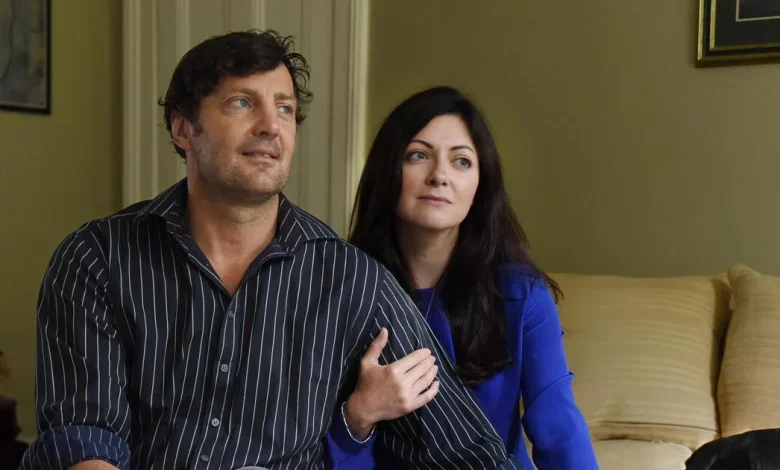
HSE CEO Bernard Gloster has apologised to Cork couple Rebecca and Pat Kiely for the death of their baby Christopher in 2019 and will shortly announce an external review into the tragedy.
In March 2019, the Kielys were told the unborn child Rebecca was carrying had a fatal foetal abnormality and would not survive the pregnancy or would die within a day of delivery.
The advice given was it would be best to proceed with a termination.
Two weeks after the procedure, a final result came through from tests that had shown up the abnormality. Instead of confirming the result, which they had been told was definitive, this showed that a catastrophic error had been made. Their unborn baby, a boy, was healthy.
Their trauma has, they believe, been compounded by how the whole matter was dealt with by the hospital and state.
Speaking to the in 2021, Mr Kiely said: “We are different people than we were before this.
“Part of that is down to the tragedy, but the other thing is closure. There is still the ongoing risk as far as we are concerned. The risk to other couples has not been addressed.”
On Saturday, the Kielys said they do not wish to comment any further than they have done at this time.
HSE CEO Bernard Gloster. File Picture: Sam Boal/Collins Photos
Mr Gloster met the bereaved parents and apologised for their devastating loss.
“While nobody can undo the harm the Kielys have suffered, it is my strong view, and that of the Minister for Health, whom they have also recently met, that they deserve at least to have this documented and unequivocal apology on behalf of the health service,” he said on Saturday.
He told them he will open an independent external review of the case. This will include a focus on “learning across our services”, he added.
“I recognise that no words or actions can undo the loss suffered by Rebecca and Pat,” he said.
A lead for the review is not yet appointed but the HSE has begun a search for an appropriate person.
Mr Gloster has also told the NMH about the review and asked them to take part.
In June 2021 the couple settled a High Court action in relation to the tragedy.
Under the settlement, the defendants, including the hospital, agreed to confirm in writing to the Minister for Health that the DNA extracted from the foetus “showed no evidence of chromosome 18 abnormality and specifically no evidence of mosaicism of Trisomy 18 – although that cannot be completely excluded in the absence of a second cell type. However, these data are consistent with, and most likely representative of, a chromosomally normal baby boy”.
The proceedings were against five consultants operating under a business partnership called Merrion Fetal Health in Dublin; the National Maternity Hospital and a laboratory, the Greater Glasgow Health Board.
Health minister Jennifer Carroll MacNeill had raised this case with former health minister Stephen Donnelly when she was a backbencher.
“I met with Rebecca and Pat on a number of occasions, including when I became Minister for Health, ” she told the Saturday evening.
“It is important that we have a culture of openness and transparency in our health service and I welcome that an independent review of the case will be commenced by the HSE.”
‘It has taken years of extraordinary pain and resolve to reach this point’
The Kielys welcomed the announcement and public apology on Saturday evening.
“Christopher would now be six years old. It has taken years of extraordinary pain and resolve to reach this point,” Rebecca and Pat said.
“Our priority has always been to understand how this happened, why it happened, and why it seems that established safeguards were not applied to our care.”
The bereaved parents said while the NMH admitted full liability in 2021 that “there has never been an investigation, nor an apology” for this.
“We will continue to engage constructively with the review process, and our hope is that its findings will improve future care,” the Kielys said.
They also wished to acknowledge engagement from health minister Jennifer Carroll MacNeill and her department colleagues.