Responding to the inquiry, Kellock said: “As there are a number of processes still very much under way, it is not appropriate to comment on the specifics at this time.
“Hospitality businesses across Melbourne are under immense strain, and it’s likely to remain a challenging industry for some time.
“With the dedication and loyalty of suppliers, landlords, customers and staff, a business has the best chance of continuing to serve its community – which is what 1800 Lasagne has always aimed to do and hopes to continue to into the future.”
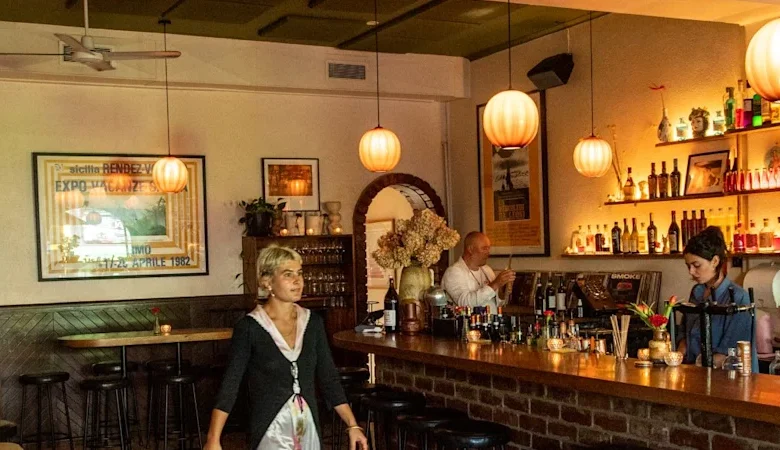
1800 Lasagne started as a pre-ordered home delivery service in 2019, known only by word of mouth in Melbourne’s inner north.
The business – and simple offering of its signature baked layered pasta dish – gained traction during Melbourne’s first few COVID lockdowns in 2020.
Loading
By November 2020, the business had become wildly popular and expanded to open a restaurant on High Street, Thornbury.
Kellock built the brand strongly over the next few years.
According to the liquidator’s report, 1800 Lasagne’s sales grew from $712,000 in its first year to $3.8 million in the 2024 financial year – the year in which it secured a hat from The Age’s Good Food Guide.
Despite the business’s popularity, 1800 Lasagne was never able to keep up with its expenses and ran losses every year since its inception.
Liquidators allege the business traded while insolvent for 4½ years, and that its directors could be held personally liable for the debts it racked up in that period that the business was unable to pay.
“Our initial estimate of a potential insolvent trading claim for 1800 Lasagne Bar is circa $2.7m based on our assessment of the increase in liabilities during the period 31 March 2021 to 30 July 2025,” the liquidator report says.
Kellock’s Sydney-based business partner Jeremy Gordon resigned as director of 1800 Lasagne in May, according to ASIC records.
Staff at 1800 Lasagne will have the federal government pick up some of the money they are owed. Credit: Ashley Ludkin
According to the liquidator’s report, Kellock put the business’s struggles down to a range of reasons.
These included, according to the report: “Under capitalisation, difficult trading conditions, and cost of living pressure that led to trading losses that could not be continued to be funded by related parties; failed expansion plans; and historical tax liabilities that could not be paid when they fell due.”
Loading
The liquidators allege that along with allowing the business to trade while it was insolvent, the directors may have also breached their duties by repaying themselves for money they had loaned the business ahead of other creditors, in what is known as “unfair preference payments”.
The federal government will cover a portion of the $390,000 that is owed to staff by the business given it is now in liquidation. The majority of that money is unpaid staff superannuation.
The liquidator’s report noted that Kellock could be held personally liable for the business’s unpaid taxes and for some business debts after providing a personal guarantee.
The liquidator report said: “The current directors have personal guarantees and personal liability for the likes of tax obligations, meaning that whilst 1800 Lasagne Bar may not be able to pay these liabilities, there is the ability for creditors to pursue these claims individually and directly against the directors.”
In September, the Tax Office launched fresh legal action against Kellock in the County Court to enforce a director penalty notice which holds the 1800 Lasagne’s big cheese personally liable for $423,000 in unpaid staff super and other taxes accrued by 1800 Lasagne and Suntop Plaza.
Start the day with a summary of the day’s most important and interesting stories, analysis and insights. Sign up for our Morning Edition newsletter.