‘People want me to fail’: The woman in charge of enforcing Australia’s social media ban feels the heat

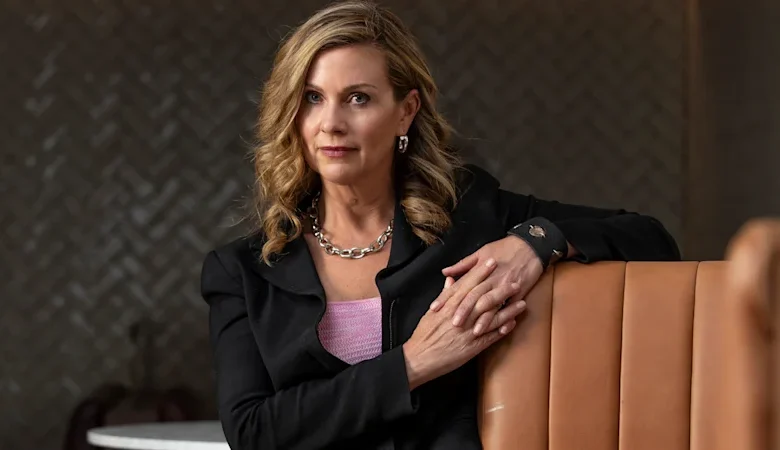
The existing constitutional challenge, brought by two 15-year-olds backed by the Digital Freedom Project, targets the legislation itself. “We’ll see what happens,” she says. “If the court makes a decision, we’ll abide by it. It may be that the Commonwealth wins. It may be that some changes need to be made to the policy. Who knows? I’m just going to move forward, given there hasn’t been any legal constraint placed on us.”
The Digital Freedom Project, a campaign group established to oppose the government’s under-16 social media ban, filed a challenge to the nation’s highest court last month on behalf of two teenage plaintiffs, 15-year-olds Macy Neyland and Noah Jones.Credit:
Still, the burden is starting to show.
“It isn’t every week that you become a defendant in a high court trial,” she says.
“You’re asked to testify before the US Congress. You have this incredible pressure to roll out something that’s never been done – that is actually totally dependent on the tech giants using all of their brilliance and technical capability to implement this well.”
Loading
And those tech giants? “They have such an aversion to it because it does represent a little bit of the first domino. There are so many countries who have decided to do this, and they’d like nothing more [than] for this to be a failure.”
From Wednesday, Facebook, Instagram, TikTok, Snapchat, YouTube, X, Reddit, Kick, Threads and Twitch must take “reasonable steps” to prevent under 16s from holding accounts, or face fines up to $49.5 million. Meta has already begun deactivating accounts; other platforms are rolling out age verification through facial scans, ID checks and AI-powered behavioural analysis.
Even reluctant platforms are falling into line. Reddit told Inman Grant that it disagrees with being designated an age-restricted social media platform but said it would comply, using identity verification service Persona. Elon Musk’s X is deploying its AI chatbot Grok for facial age estimation. “Interesting to see how efficacious that is,” Inman Grant says. “And how spicy.”
She’s candid about what comes next. “There are going to be teething issues. Some companies are going to do this better than others. Things aren’t going to be perfect.” But she warns against expecting overnight transformation. “There will be a story every day about this kid in Perth getting around it with a sock puppet account. We’ve got to keep the longer game in mind.”
Inman Grant is also candid about the law itself. She would have written it differently if it were up to her. “No piece of legislation is perfect, but this one was deliberated fairly quickly,” she says. She had asked government for a harm-based framework that would let her differentiate between lower-risk platforms such as Pinterest and high-risk sites. Instead, she was given a blunt “sole and significant purpose” test. “It’s an age bill,” she says. “It’s not an omnibus safety bill.”
Politically, the ban is shaping as a potential win for the prime minister, who has recorded a message to all Australian school students to be played in classrooms across the country this week. He’s also written to all premiers and chief ministers, thanking them for their support.
New polling shows 67 per cent of Australians support the ban, though only 35 per cent believe platforms will effectively enforce it. Just 29 per cent of parents plan to fully enforce it at home. One in three have told government researchers they’re “likely” to help their children circumvent it.
What sustains her, Inman Grant says, is remembering why this fight matters. She cites internal Meta documents from US court discovery, documents showing the company’s own researchers knew their platforms were harming children.
Loading
“I was shocked to see one document from Meta where they referred to tweens as having a ‘herd mentality’,” she says, her voice hardening. “‘Go target them, get them on while they’re early, and then they’ll become adults someday.’
“These aren’t just harmful and deceptive design features. There is a whole infrastructure and an ethos that is putting profits before child protections.”
Inman Grant spent 22 years in the technology industry before becoming a regulator. She took a job with Twitter in 2014, intoxicated by its Arab Spring promise to let ordinary people speak truth to power. Two years later, she quit, unable to defend the company’s failure to protect vulnerable communities and women from targeted abuse.
Now she watches AI companies repeating the same playbook. “They’re behaving exactly the same way social media companies did 20 years ago: moving fast and breaking things, asking for forgiveness rather than permission.” Regulation of AI companions and chatbots is coming in March.
Loading
Her worst fear? “A child out there who may not have supportive scaffolding, who may be vulnerable, who does feel very cut off.”
The long game keeps her going. Generation Alpha – kids now aged five to seven – will grow up without expecting social media before 16, “around the same time they learn to drive”. The world is watching: Europe, Malaysia, New Zealand are all considering following Australia’s lead.
On Wednesday, when the law takes effect, Inman Grant won’t be celebrating. On Thursday, she’ll issue information notices to every major platform demanding baseline data: how many under-16 accounts existed, how many were deactivated, what technologies were deployed.
But when asked what she’s really looking for when December 10 arrives, her answer is honest.
“What I’m really going to be looking for is to make sure I’m standing upright on December 11.”
Get news and reviews on technology, gadgets and gaming in our Technology newsletter every Friday. Sign up here.