The Bench Agenda: Let the people sit!
Channeling the original Wilsonian 14 Points, we offer 14 policy suggestions for incoming mayor Wilson.
By Erica C. Barnett and Josh Feit
Seattle Mayor-Elect Katie Wilson doesn’t fit the old-school Seattle leftist stereotype personified by the avenger coalition of socialists and NIMBYs who have historically aligned in a reactionary nativist coalition to oppose new housing. Wilson is too 21st century for such hokey self-righteousness. She’s more AOC than Bernie Bro—a nerd who examines the numbers, facts, and human consequences of city policies. We are confident her measured MO will guide her inspirational affordability agenda.
Channeling the original version of Wilsonianism, we hope the mayor-elect will consider the aspirational PubliCola agenda we’re laying out below with a 14-Point manifesto.
1. Reopen the Comprehensive Plan
The city’s comprehensive plan—the document that governs future growth in Seattle—was supposed to be finished in 2024, but got delayed again and again by the torpid Harrell administration, which revised the plan repeatedly to lower (then slightly increase from that nadir) density limits. The city council still hasn’t passed the entire plan, pushing the zoning details off until 2026, along with the fate of urbanist amendments that died this year,.
A “docketing resolution” for next year will take up proposals to restore nine neighborhood centers—central nodes in neighborhoods where apartments will be allowed. (Harrell had city planners remove these higher-density areas from his proposal, so the city never fully studied them). Other proposals the council punted this year include the elimination of minimum parking requirements and a proposal to allow apartment buildings taller than six stories in neighborhood centers near frequent transit stops.
We think these changes are necessary and that the council should pass them as soon as possible next year. But since the comp plan is already delayed, why not take some more time with it and get the right plan for this urbanist moment?
Our modest—if aspirational—proposal: Wilson should send down legislation to allow allow six-story apartment buildings everywhere—and use her organizing chops to drum up support for the idea among renters, who’ve been the loudest voices opposing Harrell’s plan to preserve Seattle’s exclusionary status quo.
Maritza Rivera is going to fume that there hasn’t been enough “outreach and engagement” to single-family homeowners no matter what you do, so you might as well go big.
Oh, and while you’re at it? Allow bars and restaurants, not just small convenience and grocery stores, in every neighborhood—and let them stay open past 10pm!!—ECB
2. Funded Inclusionary Zoning (FIZ)
The problem with the noble policy of forcing developers to include affordable housing in any new multifamily development is that the projects often don’t pencil out. In turn, nothing gets built at all. Seattle’s mandatory housing affordability program (MHA), an inclusionary zoning mandate that requires developers to either include affordable units in new buildings or pay into a fund to support affordable housing construction, has actually contributed to a drop-off in new housing development.
Taking a cue from Portland, where a successful inclusionary zoning program recently saw projects worth hundreds of new units opt in during its first six months, Wilson should do the unthinkable: Give developers a property tax break to make the mandate pencil out. In other words, we shouldn’t tax things we want (affordable housing) by raising the cost of building it. We should encourage it by making affordable housing profitable to build.
Before you gasp at the idea of giving developers a tax break for building affordable housing, consider: We have a longstanding program, the state’s multifamily tax exemption (MFTE) program, that does just that. The problem is: That program isn’t a mandate. Developers don’t have to build affordable housing if they don’t want to.
FIZ, Funded Inclusionary Zoning, would combine the two affordable housing housing programs the city already relies on, MHA and MFTE—coupling the mandate to include affordable housing and the tax break to build it. —JF
3. The Night Mayor
The City’s Office of Economic Development has a Nightlife Business Services Advocate. Their job is to help after-dark venues like nightclubs and bars navigate licensing and compliance. Under Mayor Wilson, the role should be expanded beyond entertainment to support a full-blown evening ecosystem. Let’s have a well-staffed Office of the Night Mayor to promote, coordinate, and support a city that not only has vibrant nighttime businesses (tax breaks to help daytime businesses stay open later, please), but also weaves social services, night owl buses and shuttles, and vital commerce like drugstores into a thrumming evening environment that serves and supports everyone from night shift workers to 9-to-5ers who need to get shit done in the evening.
First initiative the Office of the Night Mayor: Identify murky streets and make them safer and more navigable with new lighting. Light it up, Mayor Wilson. —JF
4. Let CARE do their jobs
The city council is preparing to rubber-stamp the latest contract with the Seattle Police Officers Guild, which has already been effectively approved by the five-member council majority who sit on the city’s contract negotiating team. We’d be happy—and impressed—to see the council reject and reopen the contract to add some real accountability measures in exchange for paying new officers $126,000 a year, but we’re not holding our breath.
One thing that can be reopened without a huge political lift, however, is the memorandum of understanding SPD signed with CARE—the Community Assisted Response and Engagement Team. While Harrell touted the fact that the new agreement will allow CARE to respond to low-risk 911 calls without a police escort, the MOU imposes new rules on the team that will make it hard to respond to most crisis calls.
Under the new rules, CARE responders can only respond to people who are physically outdoors, not inside a vehicle or any indoor space, and must abort the response effort if they see any indication a person has been using drugs or has committed any type of crime. They’re also banned from responding to encampments or if a person appears to be having a serious mental health crisis, among many other new restrictions.
These rules, which prohibit CARE from responding in most of the situations where they would be most useful, are untenable and will harm CARE’s ability to provide an alternative to sending armed officers to deal with people in crisis.
Given that the city just added $7 million to the budget to expand the CARE Team to 48 responders, it’s critical that the city allows them to do their jobs, even if the police union opposes it. —ECB
5. The Urban Pass
Inspired by NYC’s successful congestion pricing program (which has dramatically reduced car traffic, increased travel speeds, decreased greenhouse gas emissions, and is on track to raise $500 million its first year), Wilson should institute an Urban Pass for Seattle.
The Urban Pass would riff on the basic congestion pricing concept: Drivers could buy the pass for a monthly fee, which would give them discounted parking in the city’s 32 paid parking zones—districts that correspond to the highest-demand destinations in the city, such as Capitol Hill, Ballard, and South Lake Union.
Unlike NYC’s congestion pricing revenue, however, the money wouldn’t go to the transportation budget. Instead, it would fund multi-family housing in the low-density neighborhoods where many of the visitors to these high-demand areas live—including outside the city of Seattle. Clearly, the people who drive in to visit these popular neighborhoods are fond of density too. So let’s give them some.
Adding more housing in low-density neighborhoods would also make frequent transit more sustainable in these parts of our city and the region. (As for the loss to the city on parking fees, SDOT should raise those base prices in concert with the Urban Pass discounts.) During her campaign, Wilson praised NYC’s congestion pricing model. Now that she’s in office, we hope she was in earnest. —JF
6. Make City Government Transparent Again
In recent years, we’ve seen the city moving to limit access to public information on every front, a trend that only accelerated during and after the pandemic. While the mayor can’t take direct action against individual public information officers who use their city positions to dissemble and mislead, she can set a tone of transparency with a few simple, immediate actions.
Start with the department that has the greatest aversion to transparency, SPD, by revising the 2017 city rule that the police department has been using to justify sitting on public disclosure requests for years. Under this rule, public disclosure officers are allowed to “group” multiple requests into a single request and to consider records requests from the same person or outlet consecutively rather than simultaneously. SPD has interpreted this rule to mean they are allowed to add any new requests from the same person into one giant mega-request, considering one sub-request at a time and putting any new requests at the back of the line. Instead of waiting for the Seattle Times to prevail in litigation (the Times is suing SPD over its anti-disclosure practices), just get rid of grouping altogether and make SPD’s public disclosure unit live up to its name.
Second: Hold open press briefings. Mike McGinn had his issues (and we reported on them), but one of his best moves was to periodically hold open meetings for the press with nothing specific on the agenda. Sitting at the table, rather than standing behind a rostrum, McGinn would take questions on just about any topic—a practice that not only made it possible for non-mainstream outlets to talk to the mayor directly on a regular basis, but that gave McGinn credibility as a mayor who valued transparency and was capable of answering detailed policy questions without a press staffer hovering nervously nearby to redirect and cut off questions. (The visually boring format also cut down on TV reporters with gotcha questions). The non-mainstream press will love you for having real conversations with us after four years of scripted responses, and the public will appreciate your commitment to open and transparent dialogue.
Third: Bring back the city directory! Former mayor Jenny Durkan removed the directory of city employees’ phone numbers and email addresses from the city’s website in July 2021, saying the underlying database was out of date. A promised “replacement solution” for this resource, which was the only place the public could access contact information for most people who work at the city, never materialized, and PubliCola has been periodically updating our own public database of city employees ever since. (It’s currently out of date because the city has been dragging its feet on my latest records request for the information, which I filed in June.). Restoring the directory—and bringing Seattle in line with state agencies and King County, whose employee directories are public—would signal transparency and bring back a resource many Seattle residents seeking to reach the right person at the city directly once found indispensable. —ECB
7. You’ve Heard of Transit Oriented Development (TOD). It’s Time for Parks and Schools Oriented Development—POD and SOD.
Since Erica is calling on Wilson to re-open the Comprehensive Plan (and rightfully so, given Mayor Harrell’s years of disinterest at best and outright sabotage at worst), let me propose two comp plan amendments: Upzones around parks and upzones around schools. The city’s highest-performing schools and most salubrious parks seem to serve more affluent and lower-density neighborhoods, meaning a privileged economic class has better access to them. Let’s make it so more people, including renters, can live near parks and schools by building more apartments nearby. —JF
8. Shady Zones
NIMBYs have successfully weaponized tree canopy as a tool for stopping new development.
For the record: Urbanists are pro-tree canopy. Instead of building a single homes on single lots (which required sprawl and deforestation in the first place) urbanists are for building more densely, which by definition houses more people—leaving more room for greenery.
But as the Anthropocene accelerates into potential catastrophe, cities will need more sources of shade than tree canopy alone. YIMBYs should flip the script and weaponize development as shorthand for shade. To counter the shadows-are-bad mantra that has dominated building permit debates for decades, pro-development voices need to point out that the built environment can be a source of protection and cooling.
Ever find yourself choosing the shady side of the street on downtown sidewalks, seeking refuge in the cover of buildings? To fashion a truly resilient city, we need to start thinking in terms of awnings, walls, gazebos, park shelters, and yes, buildings themselves as vital cover from the extreme impacts of climate change.
We’re looking to Mayor Shady Wilson to add cooling infrastructure to the city’s resiliency agenda. —JF
9. Close the Sweeps Loophole
Another rule that’s ripe for revisiting is a city policy that has empowered Harrell’s Unified Care Team, a 116-member group of city employees that removes encampments, to sweep people and tents from public spaces with little or no notice and no referrals to shelter or other services.
The rule was designed to guarantee 72 hours’ notice and a referral to shelter before the city sweeps an encampment. But it contains a loophole previous mayors have exploited to sweep people from place to place for years. The rule allows sweeps with no notice or offer of shelter or services if an encampment constitutes a hazard or “obstruction”—a term Durkan and Harrell both interpreted broadly to include anyone located on public property. Editing this legislation to define “hazards” and “obstructions” narrowly will reduce the number of pointless sweeps, like the ones that have been going on for months Ballard, and make it less common for encampment residents to lose everything, including contact with their case managers, when they have to move. Pitching a tent in the middle of a heavily used playfield is an obvious obstruction, while sleeping in a secluded area of a public park obstructs nothing.
Homelessness will be a defining issue of Wilson’s tenure, so this is just one of many necessary steps. We think it’s a prerequisite for ending the kind of indiscriminate sweeps Wilson campaigned against.—ECB
10. Transit Validation
Just as big employers subsidize ORCA cards, so should big destinations: Lumen Field. T-Mobile Park. Climate Pledge Arena. Benaroya Hall. McCaw Hall. All these spots—particularly Benaroya, which is literally a stop on the Link light rail line—should zap a discount back into your ORCA card when they scan your ticket. (Three cheers to Pacific Science Center, one institution that already does a version of this. And I know Climate Pledge has its own Kraken app that includes free transit, but it’s the opposite of user-friendly and should just be rolled in with the ORCA pass).
As her first agenda item as a Sound Transit board member, Mayor Wilson, the former Transit Riders Union leader, should champion a program to subsidize rides to our city’s cultural destinations. —JF
11. Free the street vendors!
The city and county have made a very big deal recently about their efforts to crack down on street food vendors who lack the proper permits, but haven’t exactly made our city a hospitable place for licensed food vendors to operate legally in the first place. The city currently requires food trucks and street vendors to navigate a byzantine maze of rules and restrictions. For example, if you want to sell food near a residential area or public park, that requires a whole secondary approval process. This approach treats vendors like industrial polluters that should be kept away from people and each other rather than amenities that improve neighborhoods and commercial districts.
Launch a full assessment of the city’s street vending rules and get rid of unnecessary red tape that keeps people in most parts of Seattle from enjoying tacos, soft serve, kebabs, and all other kinds of portable food. The people want to eat! —ECB
12. The Bench Agenda
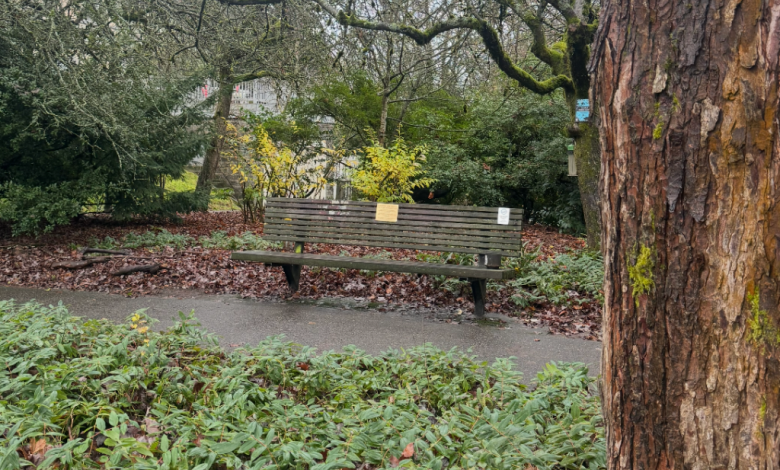
You know how the former Bloomberg administration in NYC is famous for building more than 300 miles of bike lanes? The Wilson administration should seek a similar legacy by flooding Seattle with benches. Start with a bench at every bus stop, complete with shelter to dovetail with the shade zones. But we also need benches dotting parks, in commercial hubs, in residential areas. And no—correlation fallacy!—benches don’t increase the homeless population. Homelessness already exists. Benches can simply make it more visible. Giving homeless people a place to rest isn’t such a bad thing. —JF
13. Defund (parts of) the Police
Wilson’s detractors, including the $1.8 million pro-Harrell PAC, tried to claim she plans to defund the police (and is responsible for the entire police defunding movement), an absurd but inflammatory claim that probably alarmed some people into supporting the incumbent. In a recent interview with Seattle Nice, Wilson reiterated that she supports hiring more officers and has no interest in defunding the police themselves, but is open to looking closely at spending on nonessential functions.
Our proposal, to paraphrase centrist city council members elected in 2023: Audit the fucking police budget (that is, examine discretionary spending and recent adds), and pare back spending on stuff we don’t need and that is actively harming communities.
One easy target: SPD’s Real Time Crime Center and surveillance cameras, which, under Harrell, have begun to proliferate in neighborhoods across the city. Harrell and SPD tried to ease civil liberties concerns by claiming it’s essentially impossible for the federal government to get hold of footage from the 24/7 cameras. But all the Trump Administration really needs is a subpoena—or a cop with access to the footage and an axe to grind against immigrants or people seeking abortions or gender-affirming care.
Police surveillance cameras have been around for decades, and there’s little evidence that they make a meaningful impact on crime. The cops dispute this, as do Harrell and other pro-surveillance officials around the country. But even if the cameras do occasionally provide evidence that SPD couldn’t get another way (such as the vast network of private cameras they’ve always used in investigations), that isn’t a worthwhile tradeoff for expanding surveillance in the age of Trump. We don’t have to build the panopticon!
14. Hang Out with State Sen. Jessica Bateman
Mayor Wilson: As you fill up your calendar with important get-to-know-you meetings, please set aside some time to meet with Olympia’s pro-housing, pro-density, pro-city rock star state Sen. Jessica Bateman (D-22). Bateman, of course, is the mastermind behind HB 1110, which forced foot-dragging cities like Seattle to allow four-unit multi-family housing (up to six-units if two of the units are affordable) anywhere single-family housing is allowed.
Mayor Harrell spent his time in quibbling obstructionism with 1110. Our suggestion to make Bateman your besty is our way of telling you to support rather than subvert the state’s progressive housing agenda, which has lapped Seattle’s progress toward density over the last decade.
Word is the upcoming session will come with pro-housing ideas like a land value tax, which would target low and underused properties like parking lots, prompting land owners to do more useful things like build housing. Seattle should be at the forefront supporting these efforts. —JF
That’s it for our Wilsonian 14 Points. Now, here are some low-hanging quick hits:
- Tax new pickleball facilities to expand public access to youth sports.
- Instead of pouring millions into “graffiti rangers” and other nonsense, create a fund that provides small grants to business owners for removing graffiti on their property.
- Figure out this scooter and e-bike stuff—you can start by banning Class 2 and 3 e-bikes with throttles, which are just small electric motorcycles, from shared trails used by cyclists and pedestrians.
- Seize the opportunity (instead of “grabbing the ball”): Don’t speak in sports metaphors.
Share this PubliCola Post
Like this:
Loading…
Related