COLORADO SPRINGS, Colo. — Concerns over the quality of ice at the venues being built to host Olympic hockey at the upcoming Milano Cortina Games are being mitigated by the NHL, which is sending experts to Italy to oversee the final stages of preparation.
“We’re basically moving everybody there to try to help get this done in a way that’s acceptable for NHL athletes,” said NHL deputy commissioner Bill Daly after Monday’s meeting with the Board of Governors wrapped. “I’m cautiously optimistic that’s all going to be fruitful.”
There was a lot of pessimism in the air in the lead-up to the game’s highest stakeholders convening at the Broadmoor Hotel this week. Concerns over the rinks not being built to NHL spec — 85-by-200-foot (26 metres by 60 metres) surfaces have been swapped out for surfaces that are just over 85 feet wide but only 196.85 feet long — saw some daylight.
But those were minor compared to the ones being expressed about ice quality.
NHLPA assistant executive director Ron Hainsey released a statement to Hockey Night in Canada’s Elliotte Friedman on behalf of the players Sunday. It read: “The health and safety of our players while playing on any ice surface will not be compromised.”
Daly echoed that sentiment Monday, saying, “If the ice is unplayable, the ice is unplayable.”
“Obviously, if the players feel the ice is unsafe, we’re not going to play,” he added. “It’s as simple as that.”
The NHL is taking a more active role in helping the International Olympic Committee, International Ice Hockey Federation and the Milano Cortina Foundation avoid that outcome.
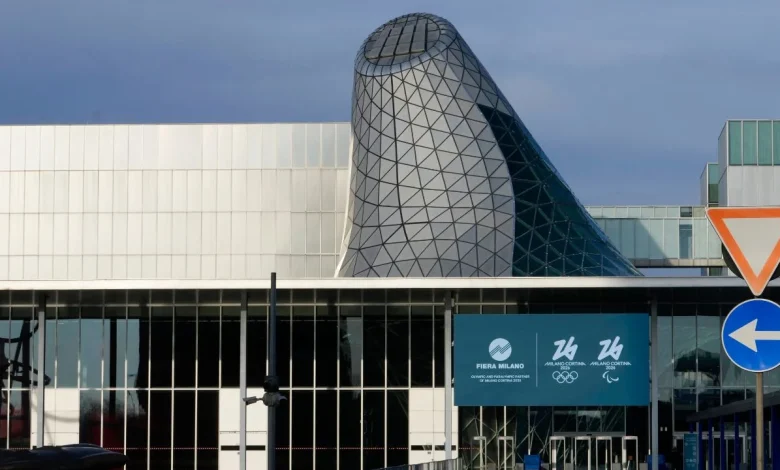
Meanwhile, progress on construction has Daly optimistic both the Santagiulia Arena and the Rho Arena in Milan will be completed by Feb. 2 and that a test event at the latter will go on as scheduled next week, while the one at the former will proceed as expected from Jan. 9-Jan. 11.
“They’re moving towards their goal,” said Daly. “There doesn’t seem to be anything insurmountable in getting to completion.”
The NHL and NHLPA have accepted the ice dimensions, which were the same for previous NHL Global Series games in Sweden earlier this season, and both the league and the PA have clarified to the IIHF that they expect the ice surfaces for the 2030 games to be made to NHL spec.
While members of Team Canada, including general manager Doug Armstrong, had been aware since the summer that the Milan ice surfaces were being made shorter, Daly said the first he’d heard of it was last week.
“It happened,” he said. “I think the IIHF had a different impression of what ‘NHL ice’ meant than maybe we would’ve. And even at the site visits, I’m not sure it was anything that was perceptible to anybody, right? It’s not like people bring tape measurers there, so for whatever reason, it came back the way it came back. It’s a structural issue; it would be impossible to correct.”
Earlier on Monday, the IIHF defended the decision to make the ice surfaces to the dimensions they’ve been made.
“While these dimensions differ slightly from a typical NHL rink, they are consistent with IIHF regulations, match the rink size used at the Beijing 2022 Olympic Winter Games and are fully consistent with the dimensions the NHL requires as part of its Global Series Game arena specifications,” they said in a statement released by the Milano Cortina Foundation earlier on Monday.
Hours later, once the Board of Governors meeting adjourned, Daly said no negative feedback on the size of the ice at the Global Series was received by the league from participating players. He added that the PA had canvassed its players and concluded that playing on the smaller Olympic surfaces wouldn’t be a safety concern.
The deputy commissioner appeared confident NHL players will be able to participate in these Olympics come Feb. 11, when the tournament begins, making it the first time they have since the 2014 Games in Sochi, Russia.
Daly said no contingency plans were being formed.
As for what would force the NHL to pull out of the Games and amend its schedule, it would strictly be about the quality of the ice not meeting the rigid standards required for this tournament.
“Our guys have made a lot of recommendations, and part of what distinguishes this type of tournament from just a regular game is you’re playing three games a day on the same sheet of ice for a prolonged period of time,” said Daly. “That’s tough on the ice, and the ice has to be a little bit more resilient than it otherwise has to be.”
He said he felt no reason to be pessimistic at this point.
“I’m getting positive reports about what they’re going to do, what the next plan is, what the next day is, what it looks like, how the parties are reacting, etc., etc.,” Daly concluded. “Today was a fairly positive day.”