Quick Read
- Major Mohit Sharma was a Special Forces officer killed in Jammu & Kashmir in 2009.
- He was posthumously awarded the Ashok Chakra for gallantry.
- The Bollywood film ‘Dhurandhar’ is alleged by Sharma’s family to be based on his life without consent.
- Filmmakers deny direct inspiration, stating the movie is fictional and based on composite events.
- Delhi High Court directed the censor board to review the family’s concerns before the film’s release.
- Major Mohit Sharma was a decorated Special Forces officer killed in action in Jammu & Kashmir in 2009.
- He was posthumously awarded the Ashok Chakra, India’s highest peacetime gallantry award.
- The Bollywood movie ‘Dhurandhar’ stirred controversy over alleged similarities to Major Sharma’s life.
- His family approached court, seeking protection of his legacy and a private screening.
- The film’s creators deny any direct connection, calling ‘Dhurandhar’ a work of fiction.
Who Was Major Mohit Sharma?
Major Mohit Sharma’s name is etched in India’s military annals as one of the bravest officers of his generation. Born in Rohtak in 1978, he joined the National Defence Academy in 1995, following a path that would test the limits of courage and endurance. By December 1999, Sharma had earned his commission in the Indian Army, joining the 5th Battalion of The Madras Regiment after completing training at the Indian Military Academy.
His early service in the Rashtriya Rifles in Jammu & Kashmir exposed him to the harsh realities of counter-insurgency operations. Sharma quickly distinguished himself, volunteering for the elite Special Forces—a choice that would define his legacy. After grueling training and probation, he became a part of the 1 Parachute Battalion (Special Forces), where he was awarded the Sena Medal for gallantry. In 2004, he reportedly infiltrated a Hizbul Mujahideen group under cover, successfully neutralizing two militants—a feat that underscored his tactical acumen and raw bravery.
His ultimate sacrifice came in 2009, during a daring operation in Kupwara, Jammu & Kashmir. Leading from the front, Sharma engaged militants in a fierce firefight. Though the encounter claimed his life, his actions saved others and thwarted a major threat. For his extraordinary bravery, Major Mohit Sharma was posthumously honored with the Ashok Chakra, India’s highest peacetime gallantry award. His wife, Major Rishima Sharma, received the award from then-President Pratibha Patil, a moment immortalized in photographs and national memory (Indian Express).
The ‘Dhurandhar’ Debate: Inspiration or Appropriation?
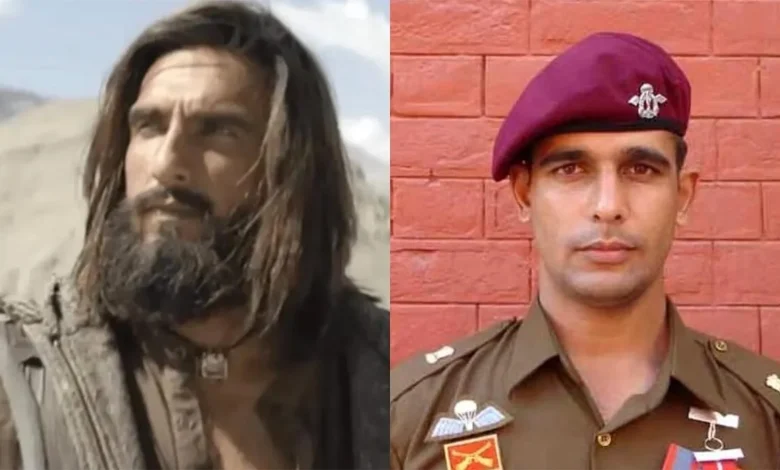
In late 2025, Major Sharma’s legacy found itself at the crossroads of cinema and controversy. The Bollywood action thriller ‘Dhurandhar’, starring Ranveer Singh, was promoted as a high-octane tale of undercover heroism. Rumors swirled online and within media circles that Singh’s character—a covert agent infiltrating a terrorist network—was modeled on Major Sharma’s real-life exploits.
His family, deeply protective of his legacy, felt the film drew unmistakable parallels to Sharma’s life and operations, especially his famed infiltration missions. They filed a petition in the Delhi High Court just days before the film’s release, demanding recognition, consultation, and a private screening to ensure respectful portrayal. Their plea argued that ‘Dhurandhar’ was being promoted in a manner that created the impression of being based on Major Sharma, all without the family’s consent or authorization.
Filmmaker Aditya Dhar and the production team maintained a firm stance: ‘Dhurandhar’ is a fictional story, albeit inspired by true events. They denied any direct link to Major Sharma’s persona or legacy. In their defense, the film’s creators stated that while the narrative draws from composite experiences of India’s Para-SF and intelligence operatives, the character is not based on a single individual (HerZindagi).
Fact Versus Fiction: What Does ‘Dhurandhar’ Portray?
‘Dhurandhar’ weaves a tale that begins with the infamous 1999 Kandahar hijack, moves through the aftermath of the 2001 Parliament attack, and follows the protagonist—Hamza Ali Mazari (Ranveer Singh)—as he goes deep undercover in Pakistan’s Lyari district. The movie dramatizes a covert mission dubbed ‘Operation Dhurandhar’, where Hamza must dismantle a formidable terror network. The cast features Sanjay Dutt as a Karachi police encounter specialist, Akshaye Khanna as a notorious Lyari gangster, and Arjun Rampal as an ISI officer intent on harming India.
According to HerZindagi, the film is loosely inspired by ‘Operation Lyari’, a real covert operation in Karachi’s Lyari area, which ran from 2012 to 2017. The operation targeted drug syndicates and gang leaders in a district once known as ‘Little Brazil’ for its vibrant street culture. However, the movie’s narrative amalgamates elements of Indian counter-terror operations and intelligence missions, painting a broad canvas rather than a direct biopic.
This blending of fact and fiction, while common in cinematic storytelling, can be a double-edged sword. It raises questions about where inspiration ends and appropriation begins—particularly when real families, with real grief and pride, feel their stories are borrowed without due respect.
Courtroom Resolution and Public Response
The Delhi High Court, upon hearing the family’s petition, issued directives to the Central Board of Film Certification (CBFC). The board was instructed to review all relevant concerns before certifying the film. If deemed necessary, the CBFC was to consult with the Indian Army to ensure no sensitive material was misrepresented. Ultimately, the censor board cleared the film for release, after considering these aspects.
Public reactions have been mixed. Some viewers, aware of Major Sharma’s legacy, sympathize with the family’s call for recognition. Others, drawn in by the film’s action-packed narrative, see ‘Dhurandhar’ as a tribute to the spirit of India’s undercover operatives, regardless of direct inspiration. Social media debates, fueled by speculation and emotion, have only deepened the intrigue surrounding the film and its real-life echoes.
Meanwhile, the family’s stance remains clear—they seek to protect Major Sharma’s legacy from being diluted or misrepresented in popular culture. Their legal action is not only about credit but about ensuring the dignity of a fallen hero remains intact.
Legacy and Lessons: Major Mohit Sharma’s Enduring Impact
Major Mohit Sharma’s story is not just one of gallantry; it is a reminder of the sacrifices made in the shadows, far from public view. His journey from Rohtak to the heart of Special Forces operations exemplifies the grit, intelligence, and selflessness demanded by such roles. His memory endures in military circles, family tributes, and now, the wider national conversation sparked by ‘Dhurandhar’.
As Bollywood continues to mine real-life stories for dramatic material, the Sharma family’s challenge prompts an important reflection. Where should the line be drawn between creative license and respectful representation? How can filmmakers balance inspiration with integrity, especially when depicting individuals whose legacies are cherished by their loved ones and by the nation?
Major Mohit Sharma’s case highlights the delicate interplay between heroism and storytelling. As his legacy is debated in courtrooms and cinemas, it is clear that true valor deserves both recognition and care—whether in uniform or on screen.