MI5 director general Sir Ken McCallum has offered sympathies “to the victims and families of those who were tortured or killed by the Provisional IRA’s internal security unit during the Troubles” following the publication of a report into the activities of Army double agent ‘Stakeknife’.
The final report of Operation Kenova – an examination of the activities of the Army’s top agent ‘Stakeknife’ in the IRA during the Troubles – was published on Tuesday.
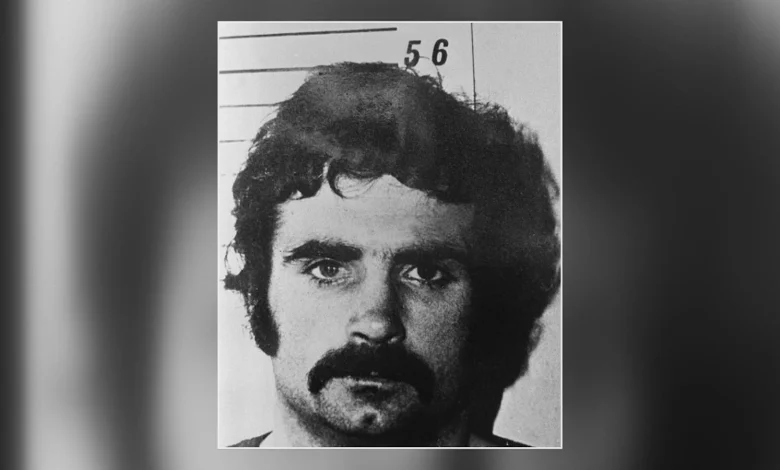
In its interim report, published last year, it found more lives were lost than saved. Stakeknife’s identity has never been confirmed. However, Belfast man Freddie Scappaticci was named as being the agent. He was part of the IRA’s notorious internal security unit which sought to route out spies.
Following the final report, Kenova chief Sir Iain Livingstone said there is a “compelling ethical case for the UK Government to derogate from the Neither Confirm Nor Deny (NCND) policy regarding the agent Stakeknife’s identity”.
MI5 delivered a tranche of material following the publication of the interim report. The material revealed the organisation had more knowledge of the agent’s movements than it first admitted.
Sir Iain said this was a “significant failure” on the part of MI5 and “undermined confidence” in communities of state cooperation.
PSNI chief constable Jon Boutcher voiced his concern at the late disclosure. He said there was a “unnecessary and protectionist approach to the disclosure of official records”.
“This results in wild conspiracy theories and inaccurate reporting,” he said.
He also appealed for the government to name the double agent saying its insistence it would damage national security was “bordering on farce”.
“I stated in the interim report that the identity of the Army agent Stakeknife would have to be confirmed at some stage and made clear that this would benefit and not harm the public interest. As explained in the final report, the identity of Stakeknife still cannot be confirmed and the full story of his operation still cannot be told, more than 30 years after he stopped providing intelligence.
“This outcome was imposed on Kenova by the Government for no good reason and I know it will be a great disappointment to the families affected and cause them further pain and suffering.
“The report deals with MI5’s late discovery and disclosure to Operation Kenova of a significant quantity of relevant material relating to the handling of Stakeknife. This was provided after the Kenova prosecution decisions had been taken and the interim report published, and long after MI5 had said that all relevant material held had been made available.
“The fact this material was provided so late and at a point when further investigation was impossible only caused further upset to the families who have already waited many years to find out what happened to their loved ones.
“I remain concerned that where matters relating to Northern Ireland’s legacy are involved, there continues to be an unhelpful, unnecessary and protectionist approach to the disclosure of official records. This results in wild conspiracy theories and inaccurate reporting.
“During the Troubles, the security forces acted with immense bravery and endured huge sacrifices and this should never be forgotten. I have huge regard for what they endured and the sacrifices so many made with their lives.
“However, post the conflict we must challenge practices that prevent information about Troubles-related cases being released for no good reason. This has a huge and detrimental impact in the confidence of our citizens towards policing and Government.
“This final report again outlines the challenges faced in conducting legacy investigations but it also highlights that, no matter how difficult such investigations can be, they must remain victim-focused and keep the needs of the families who have lost loved ones to the fore.
“For this reason, I remain very deeply concerned about the lack of legacy funding for PSNI to be able to properly and effectively deal with legacy cases so as to ensure families are provided with the information they deserve.”
MI5 director general Sir Ken McCallum added: “MI5 retrieved and provided to the Kenova investigation a very large volume of historical records.
“Regrettably, after this extensive disclosure process was complete, we discovered additional relevant information.
“MI5 informed Kenova and shared the material without delay.
“I apologised to Sir Iain Livingstone, and asked former Metropolitan Police Assistant Commissioner Helen Ball QPM to conduct an independent review to establish why the additional material had not been initially found. This review concluded that none of the material was deliberately withheld, but made recommendations on how MI5 could improve its processes for the future.
“MI5 is now implementing all of ex-AC Ball’s recommendations. I repeat today my apology for the late discoveries.”
Scappaticci was a leading figure in the Provisional IRA, and was part of its notorious “Nutting Squad” from around 1980 until the mid-1990s, which interrogated suspected informers during the Troubles.
In 2003, media reports claimed that Scappaticci had spied on the IRA for the British government, and that while working for both organisations, “was responsible for the torture and murder of dozens of alleged IRA informers”.
Scappaticci, from west Belfast, had always denied the claims before his death aged 77 in 2023.
Before his death he changed his name to Frank Cowley and had been living in England. In July 2025 – in an extraordinary ruling – ordered his will be sealed for 70 years.
Operation Kenova was launched to probe the activities of Stakeknife within the Provisional IRA and crimes such as murder and torture, as well as the role played by the security services.
The probe, which was undertaken by Bedfordshire Police and cost tens of millions of pounds, reported its interim findings last year, after Scappaticci’s death. Sir Iain Livingstone has led the operation after Jon Boutcher took up the position of PSNI chief constable.
While it stopped short of naming him as Stakeknife, it found that more lives were probably lost than saved by the agent’s actions.
Kenova’s 10 recommendations also include a call to designate the longest day, June 21, as a day to remember all those lost, injured or harmed as a result of the Troubles.
The probe was initially set up to investigate the activities of Stakeknife within the PIRA’s internal security unit and commenced in 2016.
It examined 101 murders and abductions linked to the unit responsible for interrogating and torturing people suspected of passing information to the security forces during the conflict.
In total, it discovered 3,517 intelligence reports from Stakeknife, including 377 in an 18-month period.
However, the report found that “time and time again”, the reports were not acted on, apparently prioritising the protection of the agent over those who “could and should have been saved”.
Last week, the Public Prosecution Service (PPS) in Northern Ireland announced that no prosecutions would be pursued after consideration of the last batch of files from the investigation.
Some 32 people, including former police, former military personnel and people linked with the IRA, were considered for prosecution on a range of charges from murder and abduction to misconduct in public office and perjury.
However, the PPS found there was insufficient evidence to pursue cases.
Sign up for our free weekly newsletter here.
Catch up with the latest UTV Live on ITVX
Want a quick and expert briefing on the biggest news stories? Listen to our latest podcasts to find out What You Need To Know.