Express Investigation | From land to votes, how a private firm took over Puducherry cricket association

The Cricket Association of Pondicherry (CAP) is a relatively small unit of the BCCI but, in the last seven years, it has become a showcase of how the lines between a private enterprise and sports administration blur — raising serious questions over governance, and conflict of interest in finance, land ownership and voting control.
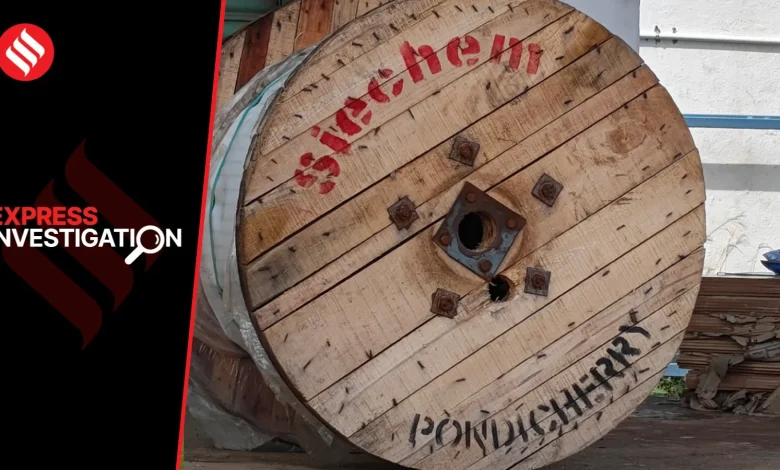
At the heart of CAP, holding all its strings, is P Damodaren, the owner of Siechem Technologies Ltd, a wires and cables company headquartered in Chennai with a factory in Puducherry. The CAP president till August, he is also at the centre of a complaint lodged by the Bharathidasan Pondicherry Cricketers’ Forum, a collective of former local players, with the BCCI’s Ombudsman and Ethics Officer.
The Indian Express reviewed the forum’s complaint and other official records while investigating an illegal pipeline for outstation cricketers in Puducherry cricket (read part I of the Express Investigation), visited the association’s facilities, and spoke to current and former players and officials. It found an overlapping ecosystem operating unchecked under the BCCI’s governance umbrella.
Consider this:
* The CAP is a three-cabin set-up within an indoor net facility inside a 43.27-acre campus owned by Siechem in Thuthipet on the western outskirts of the Union Territory, nudging the Tamil Nadu border. The campus includes a main cricket ground, with floodlights. At the close of the 2024-25 financial year, CAP records show that a total of Rs 89 crore was received in annual grants from the BCCI since 2018. Of this, annual reports show, Rs 53.19 crore, or nearly 60 per cent, is shown as having been spent on infrastructure at this private facility.
The BCCI distributes 70 per cent of the broadcasting revenue with its state units — in 2023, Indian cricket’s media rights for five years went for Rs 5,963 crore. Every year, after the board’s AGM, the states get partial payment of funds due to them. This amount is primarily utilised to cover operational costs — from funding the travel of men’s, women’s and age-group teams to their stay, grounds, salaries of coaches and players’ fee. If a state unit hosts an international game, the BCCI
pays for its conduct.
The financial support isn’t uniform — the newer units get less than other established centres since they don’t have the infrastructure to match. Smaller units, like Puducherry, that plan to install any cricketing facility, or update existing infrastructure, direct their requests to the BCCI. The board, after assessment, helps them.
A former BCCI official told The Indian Express that “a couple of checks and balances” are in place to ensure that state units use its funds solely for cricket development. “Each instalment is given to state units after they have submitted their balance sheet, passed at their respective AGM, to us. Once we receive that, our
own accounts team audits those balance sheets,” he said.
Story continues below this ad
The main CAP Siechem Stadium, which has hosted Ranji Trophy matches since 2018. (Express Photo by Lalith Kalidas)
The BCCI did not respond to a questionnaire from The Indian Express asking whether it conducted reviews or audits of the CAP’s activities before releasing funds — and the action taken, if any, on the complaint filed by the cricketers’ forum.
* Records also show the Siechem campus has been leased to the CAP since 2018 for Rs 1,000 per year. Initially leased for a 12-year period to the CAP, the terms were updated thrice, including a change of proprietorship in 2023 — from Siechem to Damodaren’s children Rohit and Pooja, both of whom are company employees. Clause 10 of the Siechem-CAP lease agreement, set to expire in 2039, states:
“The Lessee shall hand over possession of the land as per Schedule-I and other infrastructure to the Lessor on the expiry of the period of lease fixed herein or at any time during the period of lease by giving one year notice by either parties.”
This clause allegedly opens the door for the land with infrastructure, upgraded using BCCI funds, to revert into private hands.
A private vote bank
It’s not just the land where boundaries between CAP and Siechem are blurred.
Story continues below this ad
According to the official list of voters dated August 27, 2019 — the last such publicly available records — the CAP comprised 32 voting members in the 2019-2022 term: 13 life members, 16 affiliated club members, and three voting representatives from Mahe (Kerala), Karaikal (Tamil Nadu) and Yanam (Andhra Pradesh).
They show that at least eight of CAP’s life members were associated with Siechem. They included: Damodaren, MD of Siechem and ex-CAP president; GM Arunkumar, Executive Director of Siechem and ex-CAP president (2018-19 and 2022-23); D Padma, director in Siechem; Samar Paul, head of R&D in Siechem; P Patanjali, Adviser (engineering) in Siechem; N Dilli, former plant manager in Siechem; and other company employees, Pravin Kumar A S and B Bhuvaneshwaran.
During the 2019-22, 13 of 16 affiliated clubs were represented by Siechem employees. Annual reports uploaded on the CAP website since its inaugural term in 2018-19, do not include election results and voters’ lists for two three-year terms from 2022-25 and 2025-28 — the last poll was held on August 29, 2025.
The association began under Damodaren as a breakaway faction of the Tamil Nadu Cricket Association (TNCA), then headed by N Srinivasan who went on to become the BCCI secretary later.
Story continues below this ad
Other former players point out that after a hiatus, Damodaren revived the association after the Lodha committee initiated reforms in the BCCI, demanding a “one vote per state” policy in 2016 that heralded the rise of eight more teams later.
The updated lease term between Siechem and CAP is set to expire in 2039. (Express Photo by Lalith Kalidas)
‘A great gift’
The blurring of lines in governance is at the heart of the complaint sent on December 9, 2024, by the Bharathidasan Pondicherry Cricketers’ Forum to the BCCI’s Ombudsman and Ethics Officer: key positions in CAP held by Siechem employees; dominance of Siechem employees among voting members of CAP; absence of details about Life Members and Club Members since 2022 from the CAP website; land deal between Siechem and CAP “under the guise of Corporate Social Responsibility”.
According to the forum members, five of them have had to pay a price for taking on Siechem and CAP with the association banning Kalaivanan Selvam (34); George Samuel (26); Thennavan Nadesan (37); R Raghupathy (29), a former Ranji team captain, and, Surendar B (32) for “anti-CAP” activities.
Damodaren responded to the allegations raised in the complaint in an affidavit to the BCCI dated May 5, and a rejoinder on May 26, according to records reviewed by The Indian Express.
Story continues below this ad
On Siechem employees cornering CAP voting rights, he stated: “The CAP’s auditors’ certificate clearly states that only five Life Members employed in Siechem and 1 Cricket Club and all of them happen to be charter Members as early as 2006. Not a single membership has been given to anyone post BCCI affiliation, which took place in 2018.”
On the Siechem-CAP land deal, he wrote: “The execution of the lease deed was necessitated by the Government of Pondicherry’s delay in providing facilities as reassured by the Chief Minister’s letter, which compelled CAP to seek immediate support to commence cricketing activities.”
And, on his and Siechem’s contribution to CAP, Damodaren stated that CAP would have had to incur an estimated cost of Rs 864.33 crore in “interest alone” in addition to a principal loan amount of Rs 100 crore for total expenditure within the Siechem complex as of May 2025.
“Therefore, practically, I have gifted approximately Rs 1000 crores to CAP in long run. It’s a great gift to Pondicherry cricket for which I’m proud to help my native place because I can afford to. The present market value of the CAP campus is estimated to be Rs 100 crores, which stands as a testament to the extraordinary financial and infrastructural support extended by me and my company,” Damodaren wrote.